
How 2026 World Cup crowds compare to other tournaments
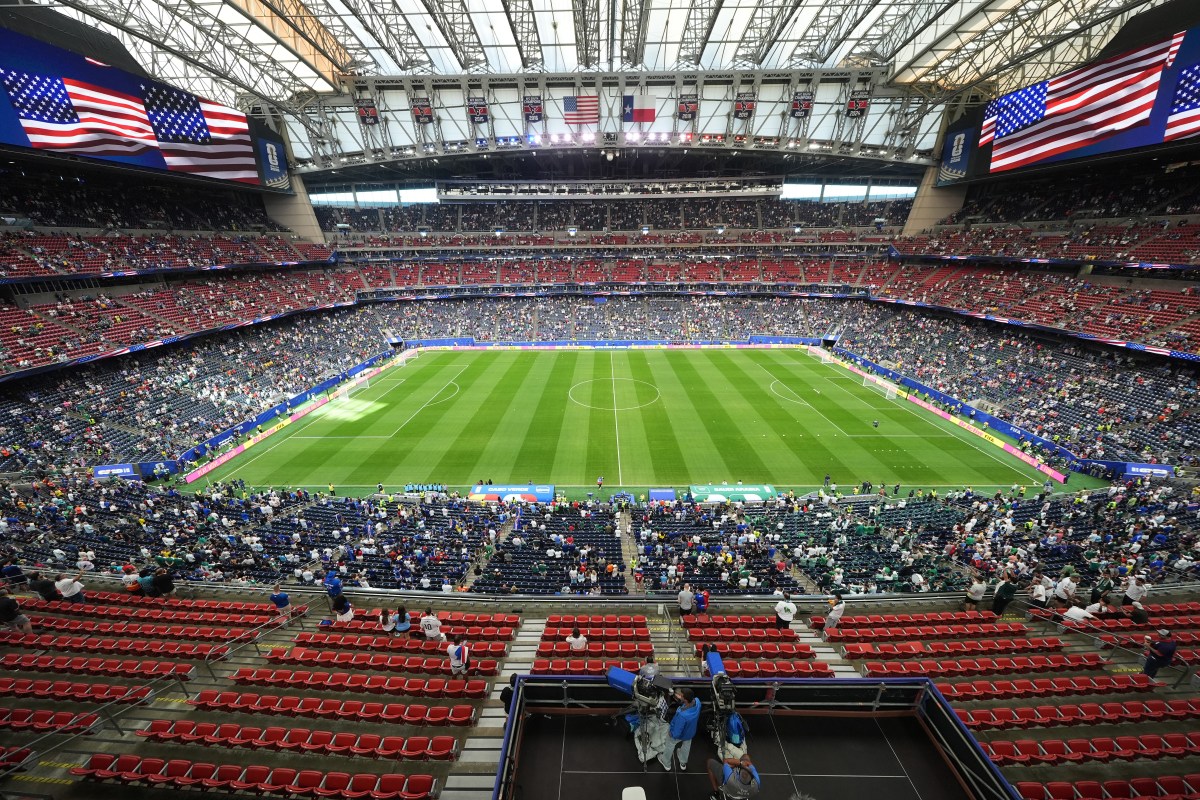
The 2026 FIFA World Cup has been rewriting the record books for attendance, with President Donald Trump among those highlighting the tournament’s booming crowd numbers.
The president wrote in a post on his social media platform Truth Social on Sunday: "The FIFA Numbers are far greater than any World Cup in History. This is a Great Tribute to the United States of America."
FIFA has also backed up the hype with hard figures, as last week the tournament surpassed the longstanding 1994 record for total attendance.
During Thursday's FIFA World Cup game at New York New Jersey Stadium between Ecuador and Germany, the total tournament record—3,587,538 fans—was beaten, FIFA announced, commemorating the moment in the 65th minute of the match as the 3,587,539th fan was recognized on the pitch with German legend Sami Khedira.
FIFA has also said that the record-breaking overall attendance hit 4.6 million across first 72 matches of tournament.
Those figures highlight the scale of this year’s expanded tournament, however, they only appear to tell part of the story. While total attendance is on track to significantly surpass previous World Cups, figures for the average crowd size per match, which is often recognized as the fairest comparison, have not broken any records.
In the months leading up to the start of the tournament, there were growing concerns about whether the 2026 World Cup would struggle to fill seats.
High ticket prices and travel barriers, including stricter U.S. entry rules for some international fans, prompted warnings that stadiums could appear patchy on television.
Early matches did little to dispel those anxieties, as empty seats were visible, although it is now clear that these worries haven't materialized in the overall attendance figures.
Empty seats are not a new problem, even if the situation may potentially have been worsened by the tournament’s expanded 48-team, 104-game format. Low attendance numbers during the group stage matches in previous FIFA World Cups have been recorded.
By total attendance, the 2026 tournament is already the most successful in World Cup history, and set to beat previous records by a considerable margin.
However, the 2026 World Cup features 48 teams and 104 matches, compared with 24 teams and 52 matches in 1994 (before the typical 32-team format was introduced.)
That increase in games has allowed overall attendance to surge compared with previous World Cups. The 2022 World Cup in Qatar, for example, drew just over 3.4 million spectators across the whole competition, the 2018 World Cup in Russia saw more than 3 million and the 2014 Brazil tournament witnessed over 3.4 million fans come to watch the games.
However, average attendance per match reveals a more nuanced picture. The 1994 World Cup in the U.S. continues to hold the record of roughly 68,991 spectators per game. By contrast, the 2026 tournament is averaging around 64,700 per match.
The Qatar World Cup in 2022 had an average attendance per match of over 53,000, similar to that of the 2014 Brazil tournament. The World Cups in Russia and South Africa had an average attendance of between 47,000 and 49,500, while the 2002 Japan/South Korea and 1998 France tournaments had a lower attendance per game, of less than 45,000.
This suggest that, with more matches played across a wider range of stadium sizes, including some smaller venues in Canada, average figures have been diluted somewhat compared with 1994 despite strong overall turnout.