
Critical fire weather complicates firefighting efforts in massive Utah wildfire
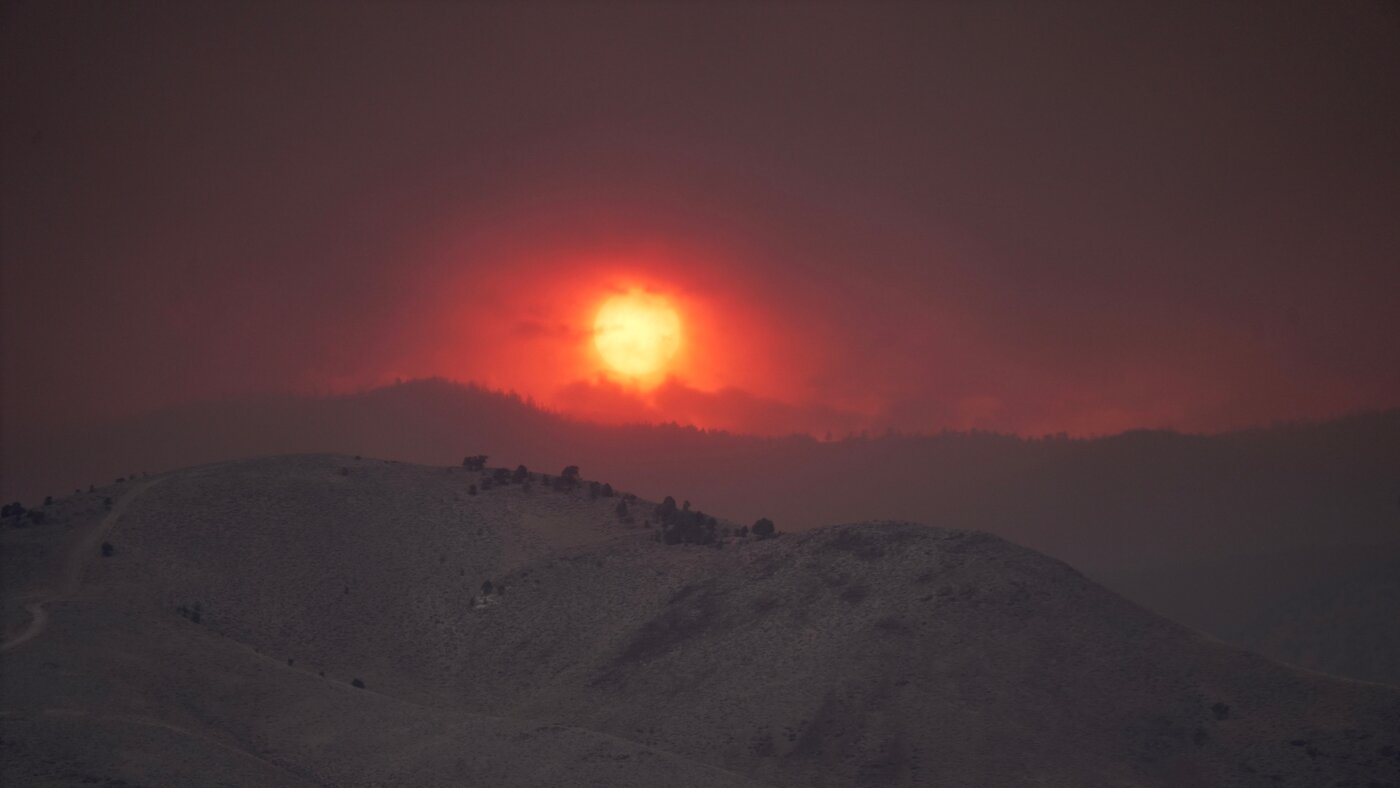
The sun sets over the Cottonwood Fire near Marysvale, Utah, on Friday, June 26, 2026. Ty ONeil/AP hide caption
Firefighters and residents in the Great Basin and Southwest are bracing for extreme wildfire conditions through the weekend.
The National Weather Service in Salt Lake City issued a rare "particularly dangerous situation" red flag warning in parts of Utah, Friday, for the first time in the office's history, due to a volatile combination of high winds, temperatures and low humidities.
Critical fire weather conditions are expected to persist into Sunday, complicating efforts to contain the largest wildfire currently burning in the U.S., the Cottonwood Fire, which is burning in a sparsely populated part of southern Utah.
"Our biggest challenge right now is that we have single digit humidities and the wind gusts are around 45 miles per hour," said Alyssa Mason, a spokesperson assigned to the fire. "That's on top of fuel moistures between 2 and 8 percent."
Much of Utah, Nevada, Colorado and other states in the Intermountain West are experiencing widespread drought conditions after an abnormally dry winter. Surveyors documented their lowest snow levels on record in parts of the Rocky Mountains this winter. Utah's snowpack, which provides the state with much of its water as it melts, peaked three weeks earlier than normal and was also the lowest on record, according to the state's division of water resources.
On Friday afternoon, the combustible conditions combined with high winds forced the incident managers on the Cottonwood Fire to temporarily "pull guys off the line," Mason said. Helicopters and other firefighting aircraft were also grounded due to high winds.
The fire, which has burned an area larger than the size of Salt Lake City, remains completely uncontained.
Firefighters could receive a small reprieve next week when cooler temperatures and higher humidities hit the region, according to the National Weather Service
But the ongoing drought conditions and strain on resources due to multiple large fires compelled Utah Gov. Spencer Cox to issue an emergency order last week temporarily restricting firework displays through the Fourth of July holiday.
"When people who've dedicated their lives to protecting Utah tell us this year is different, we desperately need to listen," he said at a press conference announcing the restrictions.
The vast majority of wildfires in the U.S. are started by humans every year, according to the U.S. Forest Service. And the wildfires that do start are getting bigger and more destructive as a result of human activities that are warming the global climate.
A study, published earlier this week in the journal Proceedings of the National Academy of Sciences, found that forest fires now burn ten times more acreage annually than in 1985.
Wildfires, in and of themselves, are not necessarily a bad thing. Fire is a natural phenomenon and many forests and ecosystems in the U.S. depend on low to moderate severity wildfires to clear out undergrowth and help propagate new trees.
A century of aggressive wildfire suppression has caused many U.S. forests to become overgrown though. That legacy, combined with rising temperatures and shifting precipitation patterns — hallmarks of a warming world — have caused severe fires, resulting in widespread tree death, to now be more common than beneficial fires in California, the new study found.
"The loss of these forests isn't just, 'I can't take a pretty picture,'" said Mitchell Hung, an earth-systems researcher who led the study as a graduate student at UCLA, in a statement. "There are profound socioeconomic impacts. Real dollars are being lost each year due to high severity forest fire."