
5 deadlines missed since 2020: Why Delhi’s landfill crisis continues as fresh waste keeps piling up
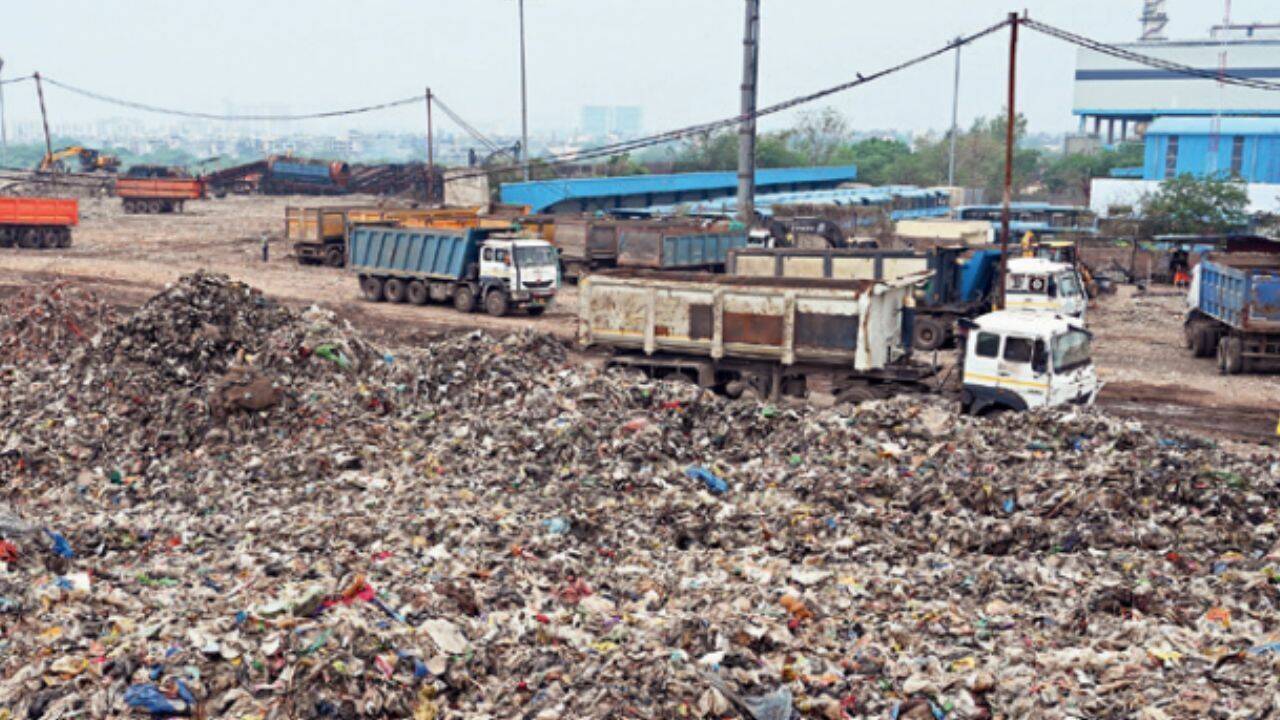
NEW DELHI: July has barely begun, and MCD, seemingly aware that it will again miss its own target, has replaced the July 31 deadline for flattening the Okhla landfill with a fresh one at Dec-end.The latest revision is the fifth since 2020.The civic body’s race to flatten Delhi’s three man-made garbage mountains has increasingly become a race against its own promises and the calendar.
Every few months, a new deadline replaces the old one, and the towering landfills stay that way.For now, MCD has said that the Bhalswa and Ghazipur landfills will be flattened by Dec 2026 and Dec 2027, respectively. But given the volume of waste lying at these sites and the pace of work, those dates, too, risk becoming dated.
MCD has already initiated the tendering process for Phase III of bio-mining.Ironically, the waste-processing numbers are more encouraging than the timelines.According to MCD’s latest progress report to the Centre, phase II of bio-mining, launched in early 2025, has exceeded its original waste-processing targets at two of the three landfill sites.
At Bhalswa, 52 lakh metric tonnes (MT) of legacy waste was processed by the end of June against a target of 45 lakh MT, well before the 18-month deadline. At Okhla, 37.6 lakh MT was bio-mined against a target of 30 lakh MT. Ghazipur, however, lagged behind, with only 24.2 lakh MT processed so far, against the 45 lakh MT target.Despite this progress, the landfills are far from disappearing.
Around 104.3 lakh MT of legacy waste was still lying across the three dumpsites — 69.1 lakh MT at Ghazipur, 20 lakh MT at Bhalswa and 15.2 lakh MT at Okhla till June-end. Before Phase II began, the three landfills together held around 160 lakh MT of legacy waste, while the figure stood at nearly 240 lakh MT before Phase I started in Nov 2022.
The Centre has spent hundreds of crores on remediation during both phases.The obvious question, then, is why the mountains remain.One major reason is that fresh waste continues to be dumped even as legacy waste is being excavated. Despite repeated assurances that fresh dumping would be curtailed, nearly 10,200 MT of municipal waste still reaches the three landfills every day — around 3,500 MT each at Okhla and Bhalswa, and 3,200 MT at Ghazipur.
During the monsoon, silt generated from desilting operations further adds to the burden.The figures also expose a glaring mismatch in Delhi’s waste management system.MCD’s own records show that the city generates around 12,847 MT of municipal waste daily, of which 7,642 MT is reportedly processed at the four waste-to-energy (WtE) plants at Okhla, Narela-Bawana, Tehkhand and Ghazipur.Why does such a large quantity of fresh waste continue to reach the landfills every day?
Either the city’s waste accounting does not add up, or the actual processing capacity and operational efficiency of the WtE plants fall well short of what is reported.MCD officials admit that existing WtE infrastructure needs significant augmentation. “We are working on the grey areas. The capacity of the Okhla WtE plant will be increased by 1,000 MT per day by March 2027.
Expansion of the Tehkhand plant is targeted for Dec 2027. New WtE plants with capacities of 3,000 MT per day at Bawana and 2,000 MT per day at Ghazipur are planned by Dec 2028,” an official said.Perhaps recognising that these facilities will take years to become operational, and the existing remediation timelines were unrealistic, MCD has started the tendering process for Phase III of bio-mining.The move comes despite an earlier decision by the corporation’s deliberative wing to entrust the remaining bio-mining and landfill reclamation work to agencies already engaged under Phase II.
The standing committee had also approved the proposal to avoid delays and administrative confusion.“MCD is already implementing projects worth Rs 596 crore to establish five plants — including facilities at the three landfill sites as well as Singhola and Narela — to process 5,900 tonnes of fresh waste every day.
Why is another tender necessary?” asked a resident.Officials, however, argue that the fresh waste processing plants are pilot projects using new technology and their performance cannot yet be fully relied upon.They also point to site-specific challenges, particularly at Ghazipur.“The agency handling Phase II at Ghazipur has informed us that it will process only 30 lakh MT because the current processing rates are financially unviable.
Disposal of inert material generated after bio-mining is another major challenge, especially at Ghazipur, where there are no nearby low-lying areas and interstate border restrictions complicate transportation. Although the ministry of housing and urban affairs has granted in-principle approval to dispose of 40 lakh MT of inert material at NTPC Eco Park, we have decided to engage a third agency to accelerate processing of waste dumped between April and Dec 2026,” an official said.The agency handling Phase II at Bhalswa and Okhla has assured MCD that it will complete processing of waste dumped till March 2026 within the stipulated timelines.A visit by TOI to the Okhla landfill found 16 trommel machines operating, while around 24 acres of the 62-acre site had been reclaimed.
Bamboo plantations have been raised on a portion of the reclaimed land, although their long-term survival appears uncertain in the prevailing conditions.For residents living around the landfills, however, progress reports and project phases offer little comfort.“We are only concerned that these garbage mountains are still standing despite crores of rupees being spent.
During the rainy season, the stench spreads for kilometres and living close to this site becomes unbearable,” said Reshma, a resident of Ghazipur village.Chitra Mukherjee, consultant, circular economy and environmental sustainability, said that unless Delhi reduces the amount of waste it generates every day, the problem will persist.“Setting up new waste-to-energy plants and expanding the capacity of existing ones is not a permanent solution, as some land will continue to be occupied for waste disposal.
The new Solid Waste Management Rules, 2026, also emphasise segregation of waste into four categories — wet, dry, sanitary and special-care waste. The real question is how effectively these rules will be implemented,” she said.“Between optimistic timelines, continuous fresh dumping, underestimated waste generation, financial constraints and bureaucratic hurdles, MCD is discovering that reclaiming landfill land is much easier on paper than on the ground,” said Ankita Gupta, a resident of Okhla.Until those structural issues are resolved, the next deadline may simply become another date waiting to be revised, she said.BackgroundBio-mining at Delhi’s landfills began in 2019 following directions from the National Green Tribunal.
But initial years wasted in experimenting different methods. In Nov 2022, MCD awarded Phase I contracts to expert agencies to process 90 lakh MT of legacy waste—30 lakh MT each at Bhalswa, Okhla and Ghazipur—with a provision to allot an additional 15 lakh MT to each concessionaire upon timely completion.Only the Bhalswa concessionaire achieved the target within the set period, completing the entire 45 lakh MT by the end of Aug and reclaiming a substantial tract of land.
At Okhla, the target was achieved four months behind schedule. Ghazipur managed to process only around 12–13 lakh MT by Sept-end.You Can Also Check: Gold Rate in Delhi | Silver Rate in Delhi | Bank Holidays in Delhi | Public Holidays in Delhi | Delhi AQI | Weather in Delhi | Petrol Price in Delhi | Diesel Price in Delhi | CNG Price in Delhi | LPG Price in DelhiStay updated with the latest Delhi news.
Download the TOI App.