
Sonia Sotomayor bashes Supreme Court move on firing of FTC’s slaughter
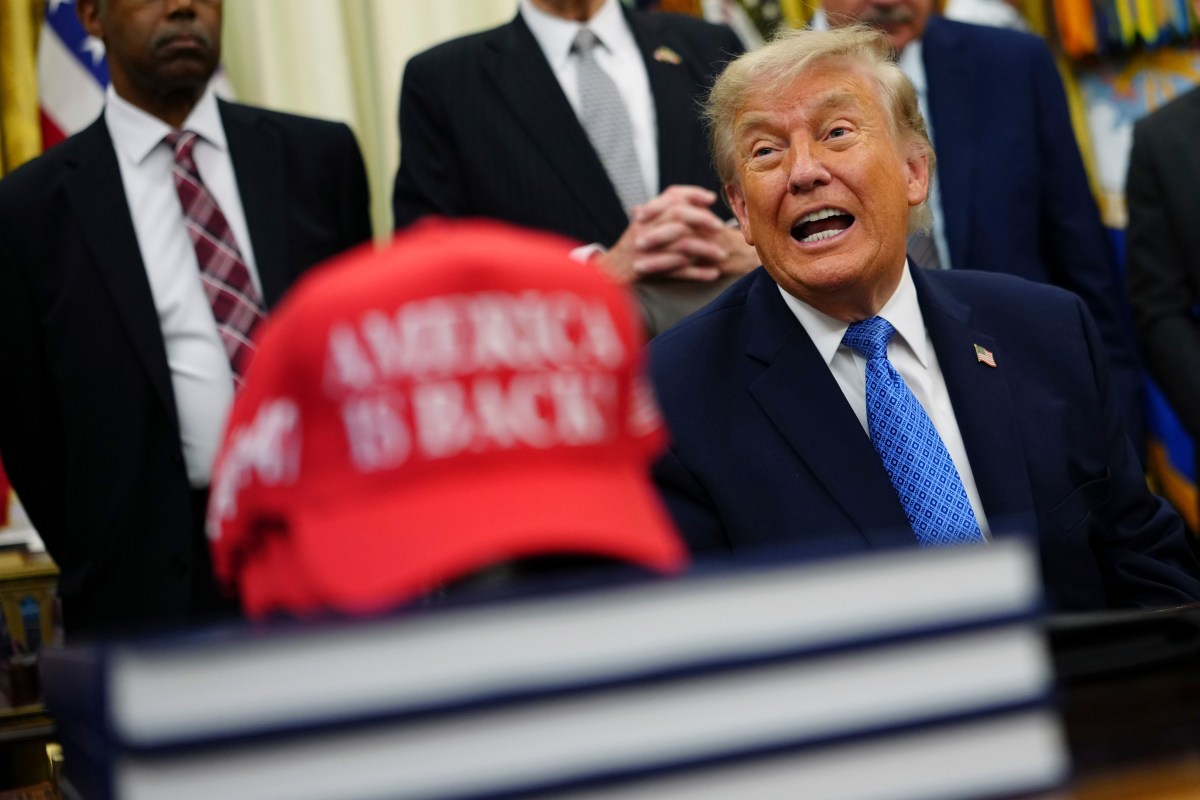
President Donald Trump welcomed the Supreme Court's decision Monday allowing him to remove Federal Trade Commission (FTC) Commissioner Rebecca Slaughter, claiming it increased his "Presidential Power" at a key moment.
The 6-3 ruling in Trump v. Slaughter overturned the Supreme Court's landmark 1935 decision in Humphrey's Executor v. United States, which had protected members of independent regulatory commissions, such as the FTC, from removal by a president except for specific causes, including inefficiency, neglect of duty or malfeasance in office.
The decision significantly expands presidential authority over independent federal agencies, potentially affecting dozens of commissions and boards that Congress designed to operate with some insulation from political influence. The ruling could have implications well beyond the FTC, including agencies such as the Federal Energy Regulatory Commission, Consumer Product Safety Commission, Nuclear Regulatory Commission and Merit Systems Protection Board.
"To show the importance of the Slaughter Case, 90 years of precedent has been COMPLETELY AND UNEQUIVOCALLY OVERRULED, greatly increasing Presidential Power at a time when it is most needed!" Trump wrote on Truth Social on Monday.
Supreme Court Justice Sonia Sotomayor has sharply criticized the court's decision, warning that the ruling dramatically reshapes the balance of power between Congress and the presidency. In a forceful dissent joined by Justices Elena Kagan and Ketanji Brown Jackson, Sotomayor accused the conservative majority of abandoning nearly a century of precedent and placing broad swaths of the federal government under direct presidential control.
Writing for the majority, Chief Justice John Roberts concluded that the FTC exercises executive power and therefore must remain accountable to the president.
"The FTC unquestionably exercises executive power and must therefore be controlled by the Chief Executive," Roberts wrote.
The majority held that the Constitution's separation of powers requires executive officers to remain removable by the president, rejecting the nearly century-old framework established in Humphrey's Executor. Roberts wrote that the earlier precedent had become "a result in search of a rationale" and said stare decisis—the principle of respecting precedent—did not justify retaining it.
The court emphasized that its ruling was limited to agencies exercising executive power and expressly declined to resolve questions involving other institutions, including the Federal Reserve.
Sotomayor delivered a sweeping dissent, arguing that the majority had disregarded constitutional history, congressional reliance and decades of settled law.
"Nothing in the text, history, or values of the Constitution shows that Humphrey's was wrong," she wrote.
She argued that even if the majority believed the 1935 decision had been mistaken, longstanding precedent should have prevented the court from overturning it.
"The reason, of course, is stare decisis, which the majority all but disregards," Sotomayor wrote, calling adherence to precedent a "foundation stone of the rule of law."
The justice said Congress had spent decades structuring the modern administrative state around the assumption that certain agencies could operate independently of direct presidential control.
"For the better part of the last century, Humphrey's has guided Congress in constructing the modern system of Government," she wrote, noting that lawmakers had created dozens of independent agencies in reliance on the precedent.
Sotomayor argued the ruling threatens bipartisan commissions by allowing presidents to remove members of the opposing political party at will. "Bipartisan-appointment requirements can easily be evaded simply by firing all Commissioners of the opposite party," she wrote. "Just look at the FTC today."
She warned that other structural safeguards—including fixed terms and multimember commissions—could similarly lose their force if presidents may remove commissioners whenever they choose.
Perhaps the strongest language in the dissent came as Sotomayor described the broader consequences of the ruling.
"Today the majority reshapes our Government," she wrote, adding that "dozens of independent commissions are now likely to become purely executive agencies," concentrating authority over sectors ranging from energy and consumer safety to nuclear regulation and the federal civil service in the White House.
"Seldom, if ever, has this Court worked such a profound bait and switch on a coequal branch," Sotomayor wrote, arguing that Congress had relied for more than 90 years on the Supreme Court's approval of independent agencies before the court abruptly reversed course.
She also argued that the decision affects more than Congress.
"Ordinary Americans and regulated firms alike have organized their affairs understanding that some Government decisions will depend not on political favoritism or partisan advantage...but on expertise, adherence to law, judgment, and the public good," she wrote.
Following the ruling, Trump celebrated the decision on Truth Social, writing that the Supreme Court had "greatly increased the Presidential Power."
The decision gives presidents significantly greater authority to remove leaders of independent executive agencies who were previously protected from dismissal without cause. While the ruling directly concerned the FTC, its reasoning could affect numerous other independent commissions whose members have historically enjoyed similar tenure protections.
Legal experts say the decision could allow presidents to replace commissioners at agencies that regulate energy markets, consumer product safety, nuclear power, labor disputes, and the federal civil service, enabling administrations to align those bodies more closely with White House policy priorities.
The ruling may also make it easier for future presidents to reshape regulatory agendas more quickly after taking office by replacing commissioners whose terms would otherwise extend across administrations.
However, the Supreme Court stressed that its opinion was limited to agencies exercising executive power and did not decide whether the same reasoning applies to entities such as the Federal Reserve, whose independence has long been viewed as particularly important to monetary policy.
Legal activist groups warned that Monday's decision dealt a "seismic blow to the independence of executive agencies."
"By overruling Humphrey's Executor, the Court has handed the President unchecked power to purge expert, nonpartisan commissions for purely political reasons, clearing the way to dismantle the independence of institutions Americans have relied on for decades to protect their health, finances, and safety," Gary DiBianco, co-founder of the Pro Bono Litigation Corps at Lawyers for Good Government, said in a statement to Newsweek.
"As Justice Sotomayor recognized in dissent, today's decision abandons nearly a century of settled constitutional understanding and replaces it with a loyalty test. Even Justice Gorsuch, who joined the majority, warned that today's ruling effectively transfers to the President the rulemaking and adjudicatory authority Congress entrusted to these independent agencies."
Slaughter was a Democratic commissioner at the FTC. She was first appointed in 2018 and was confirmed for a second term in 2024. During her tenure, Slaughter advocated for stronger antitrust enforcement, tougher scrutiny of major technology companies, and expanded consumer privacy protections.
Trump removed Slaughter from the FTC in March 2025 after beginning his second term, telling her that her continued service was "inconsistent with [his] Administration's priorities."
He said that he was exercising his authority under Article II of the Constitution, rather than citing any statutory grounds for removal. The administration did not accuse Slaughter of misconduct or incompetence. Instead, it argued that presidents must have the authority to remove officials who exercise executive power in order to faithfully execute the laws.
The Supreme Court accepted that argument, concluding that the FTC's removal restrictions unconstitutionally interfere with the president's executive authority.
Slaughter challenged her 2025 dismissal, arguing that the FTC Act permits commissioners to be removed only for "inefficiency, neglect of duty, or malfeasance in office" and that none of those grounds applied. Lower courts ruled in Slaughter's favor based on Humphrey's Executor, but the Supreme Court reversed those decisions, holding that the FTC's removal protections violate the Constitution's separation of powers.
The decision marks one of the court's most significant rulings on executive power in decades and fundamentally alters the constitutional framework governing independent federal agencies.
The majority held that the Constitution requires the president to retain the power to remove officials who exercise executive authority, rejecting the framework established in Humphrey's Executor.
Roberts wrote that the 1935 decision had become "a result in search of a rationale" and said adherence to precedent did not justify preserving it.
The court emphasized that its ruling applies to agencies exercising executive power and expressly declined to decide whether other entities—including the Federal Reserve—would be treated the same way.
Contact Newsweek editors on this story: Gabe Whisnant and Sam Wilson.