
Does Having a Daughter Change Men?
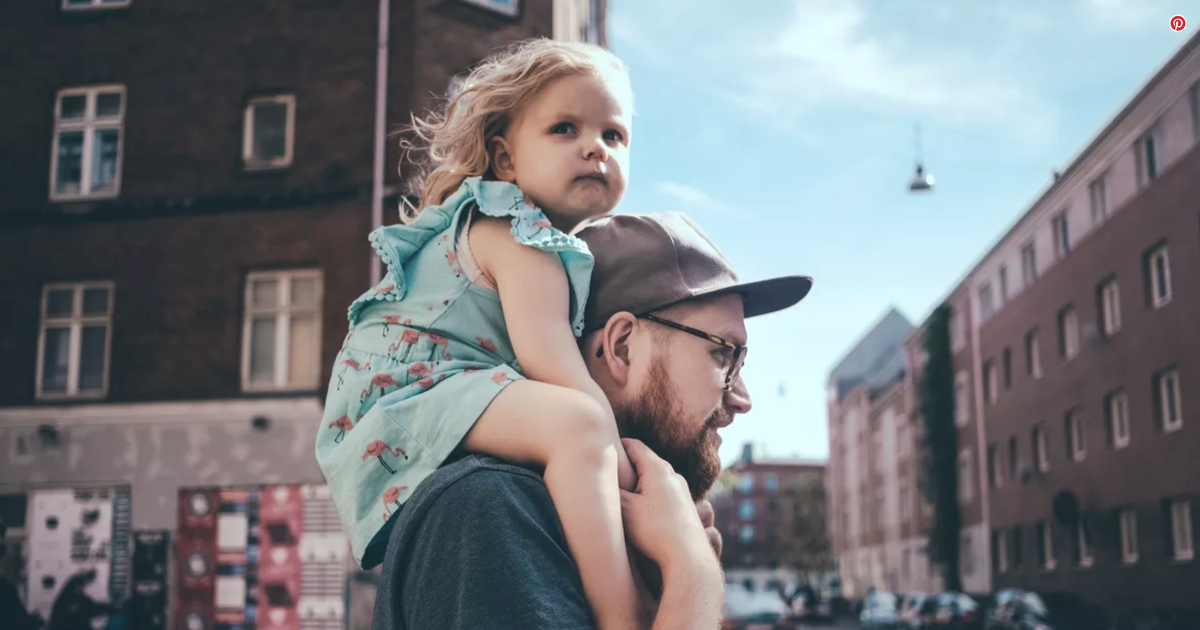
In 2018, researchers at the London School of Economics found that men who have daughters are more likely to understand women’s issues and women’s daily lives. They gave this phenomenon a name: the “mighty girl effect,” or simply the “daughter effect,” a term that has since been taken up on social media.
That said, it is worth noting that what happens on social media often bears little resemblance to real life. This is especially true when celebrities are involved. On the other hand, with Bob Sinclar—a 1990s DJ who has become popular again with Generation Z thanks to videos of mixing sessions posted with his daughter Paloma—the “daughter effect” becomes more tangible.
The same was true at the latest Chanel Cruise Show in Biarritz, where rapper A$AP Rocky, an ambassador for the brand, carried a quilted handbag adorned with a tiny pair of pink baby slippers, a nod to his youngest daughter. When a journalist asked him what having a daughter had changed for him, Rihanna’s partner replied: “At this stage, I’d say it makes you more vulnerable, more gentle, perhaps more considerate too.”
Actor Louis Garrel, speaking about his eldest daughter, who has experienced racism (Oumy is of Senegalese origin), also gave a concrete example of what she had taught him: “I can exercise authority to stop children from sticking their fingers into electrical sockets, but otherwise I favor dialogue. On current issues such as racism, environmental concerns, or sexual orientation, for example, my 13-year-old daughter (she is 18 today, editor’s note) has a great deal to teach me, and it leads to fascinating discussions.”
When psychiatrist Alain Braconnier wrote Les Filles et les Pères (Daughters and Fathers) in 2007, he started from an observation drawn from his practice: father-daughter relationships were rarely discussed in therapy except in painful or intolerable situations—abuse, absence, incest. Yet the relationship was far richer and more complex than it appeared.
“It was mostly women who brought children in for consultations. Relationships with fathers were surrounded by unspoken truths and mysteries. Fathers were either absent or exercised such authority that it blocked any real exchange. From my patients’ stories, I established a typology of fathers: the over-friendly ones, the angry ones, the self-centered ones…”
His aim was to shed light on the mystery from a therapist’s perspective and facilitate dialogue on both sides.
Nearly 20 years later, Braconnier notes two major developments.
“The first is that daughters feel more entitled to express themselves. Think back to family meals in the old days: the father, a figure of authority and distance, presided over the table, and children—mothers too, I would say—did not really have the right to speak. Children have since been given the freedom to express themselves, and daughters have seized it.”
To support his point, the psychologist cites the film The Beloved by Spanish director Rodrigo Sorogoyen, presented at the latest Cannes Film Festival, which centers on this very relationship. Javier Bardem plays Esteban, a filmmaker attempting to reconnect with his daughter by casting her in a role.
“‘We all have our own truth about what we experience,’ the director said in an interview. I would add that today this fact is acknowledged and expressed by both daughter and father, and that is new.
Braconnier continues: “The second change concerns the father’s place within the family. Before, he was present without really being there. Now he is there, fully present, before and during childbirth, and involved in everyday life. Taking care of children is part of his role, and he knows it.”
In literature, the subject long attracted less interest than the mother-son relationship. The story of Oedipus, widely adopted by Sigmund Freud, overshadowed Sophocles’ other work, Oedipus at Colonus, in which the now-blind father is guided by his daughter Antigone, a symbol of unwavering filial love.
Mocked by Molière in the 17th century and loving to the point of madness in Père Goriot, fathers have often been objects of ridicule.
Or of more direct criticism from contemporary female novelists. Many novels written by daughters portray fatherhood in the 1970s as marked by indifference and secrecy.
Not all fathers were silent and distant, however. One need only remember Serge Reggiani’s song Ma fille (My Daughter), released in 1971.
Today, Philippe, a 76-year-old retired teacher, is not what one would call a “new father.” Yet he speaks poetically about his relationship with Pauline, his 35-year-old daughter, recalling the attitudes of his generation:
“She taught me the pride of having a daughter at a time when older generations preferred sons—for the family name, to avoid having to provide a dowry, and to have a soldier to give to the nation. It flattered my pride because I was the only one among my siblings to have a daughter. There were three brothers; my brothers only had sons, while I, the eldest, had the good fortune to have a daughter.
“That good fortune was also a twist of fate because I myself was supposed to have been a girl. The women in our neighborhood in Arras had predicted it based on signs they believed were infallible: ‘Margot,’ they told my mother, ‘it will definitely be a girl!’ And then I arrived!
“My daughter therefore taught me what I might have been, and through all these years that has pleased me. She is a beautiful person in every sense of the word.”
What fathers may be more consciously aware of today is that parenthood is a learning process.
“I don’t feel I have a gendered relationship with my daughter Rita, who is 15,” says Laurent, a photographer. “I am strict with her when necessary, just as I would be if her name were Riton. She is teaching me how to be a father, and I am discovering a different kind of humanity. Every day I question what I thought I knew.”
From her, he has learned to listen with curiosity and interest.
“I’m passionate about music and I think I passed that on to her. I don’t necessarily share her tastes, but I pay attention when she introduces me to something new.”
He has also learned to see women’s daily reality differently.
“Several times, because of lingering looks directed at her or situations she has told me about, I realized that being a girl is not easy every day. Women are exposed, more than we are, to incivility.”
Christine Castelain-Meunier, a sociologist at the CNRS and the EHESS, was among the first in her field to study fatherhood, which until then had largely been the domain of psychologists and psychoanalysts.
She recalls that during interviews with men from all social backgrounds, fathers who spoke about fears they had for their daughters often ended up questioning their own views of women and masculinity.
“I’m thinking of a man in Brittany who came with his daughter. The little girl described how she had once been chased on her bicycle by a boy, or how she froze while standing at the blackboard because a group of boys mocked her. In response, the father spoke about vigilance toward his daughter and toward women in general, and I found that very interesting.”
Several fathers say they enjoyed the blank-slate aspect of discovering the female world. They did not have to confront their own issues directly or reproduce the relationship they had with their own fathers. It gave them greater freedom to explore.
Quentin, 53, also learned how to be a father through his first daughter.
“I had her when I was 30. She was my first child. What she taught me first was how to become a parent. I realize it as I say it.
“Our journey into parenthood was disrupted by illness because she had surgery as an infant for a kidney infection. Before being the father of a daughter, I experienced myself as the father of a fragile child. That came first. My obsession was to protect her.”
One theme runs through many of these testimonies: the communication skills fathers develop as adults.
“She is very sensitive,” Quentin continues. “She taught me how to manage emotions and deal with a sensitivity even stronger than my own. I constantly challenge myself in that area, endlessly seeking compromise and trying not to hurt her.”
He stresses the distinction between “presence” and “confiding.”
“I learned about issues linked to femininity when she was six or seven years old. Everything from choosing outfits in the morning to dealing with a runny nose. I was always present and still tell her that I am here whenever she needs me.
“With puberty, however, I admit I left more room for her mother to discuss intimate subjects. During adolescence, you have to find the right distance and choose the right words.”
Christine Castelain-Meunier speaks of “engaged relational fatherhood.”
“I have observed a shift from an institutional fatherhood based on role and status to what I call engaged relational fatherhood. With their daughters, fathers are no longer simply in an external and symbolic relationship. They learn to build a relationship and become involved.
“As their daughters grow up in a cultural environment that is more egalitarian than before, fathers listen more, engage more in dialogue, and nourish themselves through that interaction. One might say, metaphorically, that they tune themselves into their daughters’ state of mind.”
To learn and become involved, nothing beats practice.
When asked, “What has your daughter taught you?” one father replies humorously: “Ponytails!”
He may not realize how accurate that answer is.
As the French television program Les Maternelles XXL recently reported, workshops are developing in the United States and the United Kingdom to teach fathers how to master braids, ponytails, buns, and other hairstyles. They are among life’s small practical lessons.
In the journey that is fatherhood, some men struggle to find a manual and speak of a lack of role models.
Psychologist and therapist Kevin Hiridjee addressed the subject in his book Qu’est-ce qu’un père? (What is a father).
“I distinguish three major phases. First, the era of the ‘new fathers’ in the 1970s, linked to the history of feminism and the birth-control pill, because it was women who called for greater male involvement.
“The following decade placed the child—not the father—at the center of family life.
“Finally, during the 1990s and 2000s, broader social changes contributed to a diversification of parenting models, including single-parent families and surrogacy.”
In the manga series My Brother’s Husband, author Gengoroh Tagame entrusts a young girl, Kana, raised by a single father, with teaching him greater openness and acceptance.
While her father embodies a traditional Japan where same-sex marriage remains illegal, he agrees to host for a few days the husband of his recently deceased twin brother. It is the little girl who builds the connection and leads her father to accept the visitor as a full member of the family.
“Our weekends revolve around her,” says Mathias, father of two-and-a-half-year-old Renée, who is growing up in a same-sex-parent family. “I remember endless moments when I had to wait for my parents to finish watching French Open tennis matches before I could go outside.”
“Even before she was born, we told ourselves that we had to help her become a strong woman. That is also why her name is Renée rather than Rose. Renée has a bit more edge to it.
“If one day she wants to wear a crop top—between us, I hope that fashion has disappeared by then, but that’s beside the point—I hope she dares to wear it.
“Today, parenthood takes place within a broad circle. It is no longer limited to a child and two parents. It includes parents, grandparents, stepparents, uncles, and aunts. My daughter knows how to dress herself because her babysitter taught her.”
Like many young parents, Mathias and his partner are already reading up on what to say when the subject of menstruation eventually arises.
Today, fathers’ groups meet to discuss every imaginable topic. Fathers also learn from one another.