
7e078df5d54c5da247e1f26a946f9ae8ecba77e5
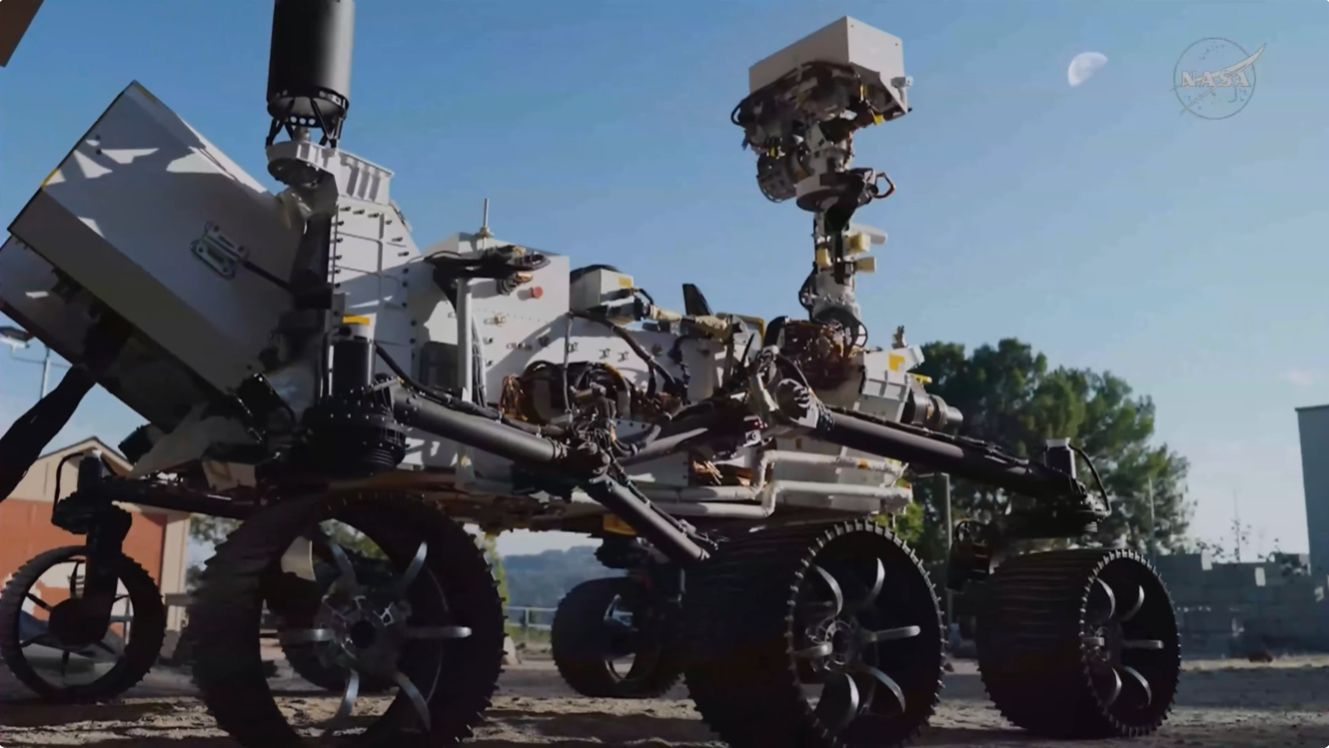
NASA provided an Artemis update today (June 30), announcing new lunar landing contracts for its Moon Base initiative and a surprise new possible rover mission that could be headed to the moon's south pole.
During the second monthly update that NASA has provided for its moon base plans, the agency named Astrobotic, Firefly Aerospace and Intuitive Machines as the providers of four robotic landers that will deliver scientific payloads to the surface of the moon, as NASA tests and expands the technologies needed for a permanent human outpost.
"This is this drawing on the playbook that worked very well for NASA during the 1960s," NASA Administrator Jared Isaacman said during the livestreamed update, explaining the experiential approach to a crewed lunar return. "We didn't just jump right to Apollo 11."
Isaacman also announced the potential repurposing of an engineering development model built to mirror the agency's Perseverance and Curiosity rovers on Mars. "There is another," Isaacman said, quoting Yoda's line from "Star Wars: The Empire Strikes Back."
That test rover is called PROMISE, short for "Polar Rover for Observation, Mapping, and In-Situ Exploration" (though it was formerly known as Optimism). PROMISE was developed at NASA's Jet Propulsion Laboratory (JPL) in Southern California, where it has been used as a test platform for fixes or commands that engineers want to try on the ground before permanently sending them to Perseverance and Curiosity. Now, NASA wants to send PROMISE on a mission of its own.
Though sending PROMISE to the moon would leave Perseverance and Curiosity — both of which remain active on Mars — without an Earth-based testbed, Isaacman thinks it would be worth it.
"We've had years now of experience operating the two rovers on the surface of Mars, and we've got this hardware that the taxpayers have invested a lot in," he said. "So the question was posed: 'What if we send it to the moon?'"
With a little refurbishment, PROMISE would help advance NASA's lunar plans, Isaacman added. Like Perseverance and Curiosity, the test rover is powered by a radioisotope thermoelectric generator (RTG), which converts heat from naturally decaying radioactive material into electricity. So it wouldn't require sunlight to operate — a real benefit on the moon, where most locations experience long stretches of darkness. (NASA plans to build its Artemis base near the moon's south pole, which is thought to harbor an abundance of water ice and also has a relatively complex lighting environment.)
The other robots currently in the works to launch on future missions to the moon, including the landers announced during today's update, are all solar powered. Through 2029, NASA hopes to launch up to 20 such missions as part of the CLPS (Commercial Lunar Payload Services) initiative to support the first phase of the agency's moon base plans, and the landers announced today will be some of the first in that lineup.
Already expected this year was Blue Origin's Blue Moon Mark 1 cargo lander. It's slated to launch on the company's New Glenn rocket, which exploded last month during an engine test. That anomaly has complicated the Blue Moon timeline, though Blue Origin CEO Dave Limp has voiced confidence that New Glenn will launch again this year.
Two lunar deliveries were awarded to Astrobotic's Griffin 1 lander, one of which will fly Astrolab's FLIP rover the surface of the moon in the second half of 2026. Contracts to Firefly and Intuitive Machines call for the use of their Blue Ghost and Nova C landers, respectively, on CLPS missions in the next few years.
Each CLPS lander mission will carry at least three NASA payloads. The Stereo Camera for Lunar Plume Surface Studies (SCALPSS) array will study lander engine exhaust plume effects on lunar dust, to better predict landing requirements and prevent erosion and dangerous ejecta; a Laser Retroreflector Array (LRA) will test landers' ability to determine positioning and navigate using lasers and reflectors; and a Linear Energy Transfer Spectrometer (LETS) will measure radiation in the space around the moon and different areas on its surface.
"We know a lot about the moon, some of the south pole, but nothing like what we need to learn before we send humans there and we actually build a moon base," Carlos Garcia-Golan, NASA's Moon Base program manager, said during today's event. "So putting different assets on the surface, prospecting, understanding the environment and the places where we want to go [is] super critical."
Garcia-Golan is on board with the PROMISE moon plan as well. While it might sound crazy to send a spare Mars rover to the moon, it's the kind of crazy that NASA should be doing, he said. After all, JPL's motto is "Dare mighty things."
"We are in the business of the near impossible, so why not?" Garcia-Golan said.
Please logout and then login again, you will then be prompted to enter your display name.
Josh Dinner is Space.com's Spaceflight Staff Writer. He is a writer and photographer with a passion for science and space exploration, and has been working the space beat since 2016. Josh has covered the evolution of NASA's commercial spaceflight partnerships and crewed missions from the Space Coast, NASA science missions and more. He also enjoys building 1:144-scale model rockets and spacecraft. Find some of Josh's launch photography on Instagram, and follow him on X, where he mostly posts in haiku.