
A 1971 prediction by Stephen Hawking just came true with a cosmic collision 1.3 billion light-years away: Now scientists are trying to understand how
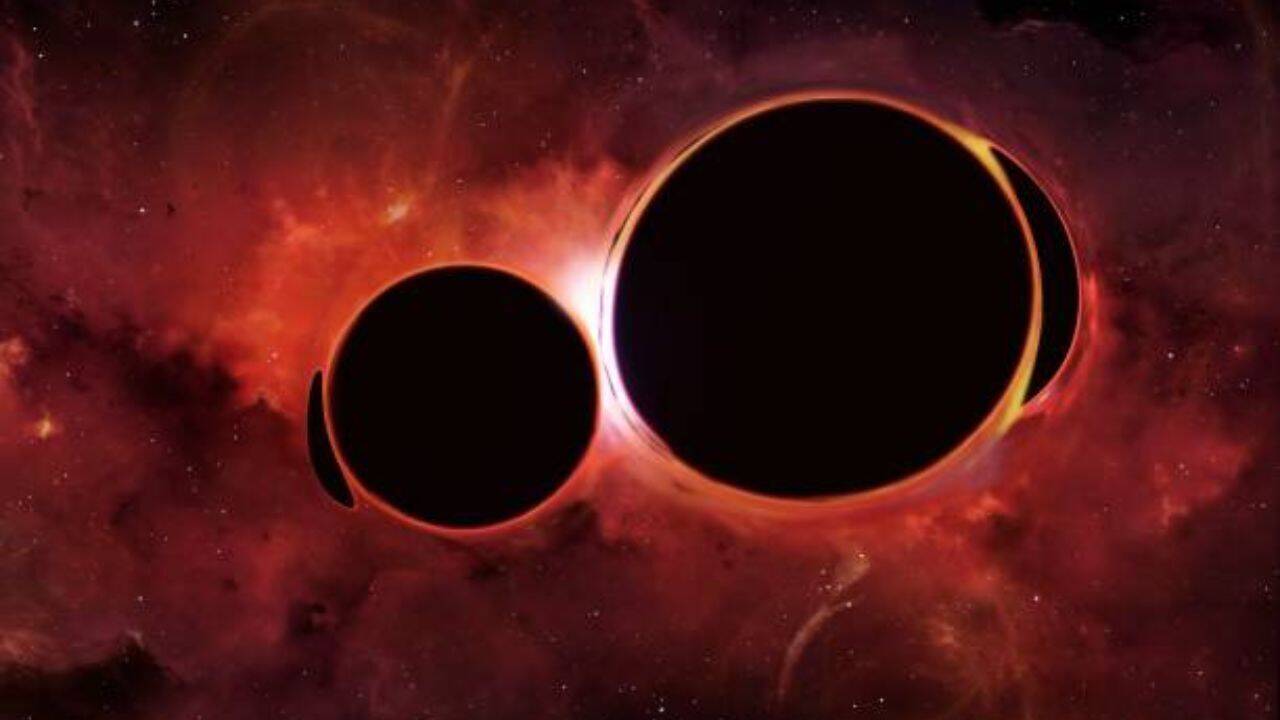
A prediction made by Stephen Hawking some 50 years ago has just come true and now, scientists are trying to understand how it reinforces fundamental principles of modern physics. A collision between two black holes about 1.3 billion light-years from Earth has provided the most precise observational evidence ever obtained for a prediction presented by the late physicist and cosmologist.A cosmic collision Named GW250114, the gravitational wave signal reached Earth on January 14, 2025 and was captured by the two LIGO detectors, located in the American states of Washington and Louisiana.
At the time, the Virgo equipment, installed in Italy and KAGRA in Japan were out of operation, although researchers from the three collaborations later participated in the study of the recorded data.Published on September 10, 2025, in the scientific journal Physical Review Letters, the results brought together scientists from the LIGO, Virgo, and KAGRA to collaborate on an analysis considered the most rigorous one ever conducted on Hawking's prediction.As the analysis showed, the area of the object formed after the merger exceeded the sum of the areas of the original bodies, established as the black hole area law.
Before the merger, the two black holes had a combined surface area estimated at approximately 240,000 square kilometres, a value calculated from the characteristics identified in the gravitational signal.After the collision, the new black hole reached about 400,000 square kilometres, a difference that confirmed the increase predicted by the theory and ruled out the possibility of a reduction in the total area.According to the law formulated by Hawking, the surface of the event horizons cannot decrease in classical processes, even when part of the involved energy is released into space in the form of gravitational waves.
Although mass plays a central role in this calculation, rotation also alters the size of the event horizon, as a more intense spin can reduce the area, while the combination of masses tends to increase it.In the case of GW250114, these two influences acted simultaneously but the final value still remained higher than the initial one, a result that supported the theory with a confidence level of 99.999%.
This index surpassed by a wide margin the 95% achieved in a previous test, released in 2021, when noisier signals limited the accuracy of the analysis conducted by the researchers.Stephen Hawking's 1971 prediction Decades before the direct observation of gravitational waves, Stephen Hawking presented in 1971, the black hole area law, based on the predicted behaviour for event horizons in classical physical processes.
Upon learning of that first detection, Hawking sought out physicist Kip Thorne to find out if the data obtained could be used in an observational test of his prediction.The British scientist died in 2018, at the age of 76, without witnessing the confirmation later achieved with GW250114 and with the evolution of the detectors’ capability.
“If Hawking were alive, he would have delighted in seeing the area of the merged black holes increase,” said one of the founders of LIGO and winner of the 2017 Nobel Prize in Physics about the former colleague. Besides the area law, Hawking's work is also connected to the research developed with Jacob Bekenstein on the entropy of black holes, a property related to the degree of disorder of a physical system.
From this relationship, researchers showed that entropy is proportional to the area of the event horizon, a connection that placed these objects at the centre of debates about the fundamental laws of the Universe.Developments in science The clarity of the GW250114 was much greater than observed in the early years of gravitational wave astronomy, allowing different stages of the phenomenon to be separated with precision.
Over a decade, improvements in equipment reduced instrumental noise and increased the sensitivity of LIGO, which began to record extremely small deformations caused by the passage of these waves through space-time.Currently, the detectors can identify changes smaller than one-tenth of a thousandth of the width of a proton, a sensitivity necessary to distinguish the signal emitted before the merger from that produced by the newly formed object.
“We can hear it loud and clear, and this allows us to test the fundamental laws of physics,” said Katerina Chatziioannou, a Physics professor at the California Institute of Technology and one of the study’s authors.During the final phase, known as ringdown, the resulting black hole oscillates and releases frequencies that gradually decrease, in behaviour often compared to the sound produced by a bell after being struck.In this part of the signal, the team identified two distinct modes of waves, information that allowed them to calculate with greater certainty the mass, rotation, and area of the object formed after the collision.Since the first detection of gravitational waves, LIGO has undergone massive upgrades.
In September 2025, the observatory reported that the international network detected about 300 black hole mergers, considering both confirmed events and occurrences still being analysed. During that period, a new merger was recorded approximately every three days, a pace much higher than observed at the beginning of the international system’s scientific operations.With the help of LIGO and with the occurrence of the cosmic collision, a prediction made by Stephen Hawking about five decades ago has come true and been proven right.