
A dropout living in a trailer, he got $1 million from Peter Thiel at 19—now he's a billionaire who says the American Dream isn't dead | Fortune
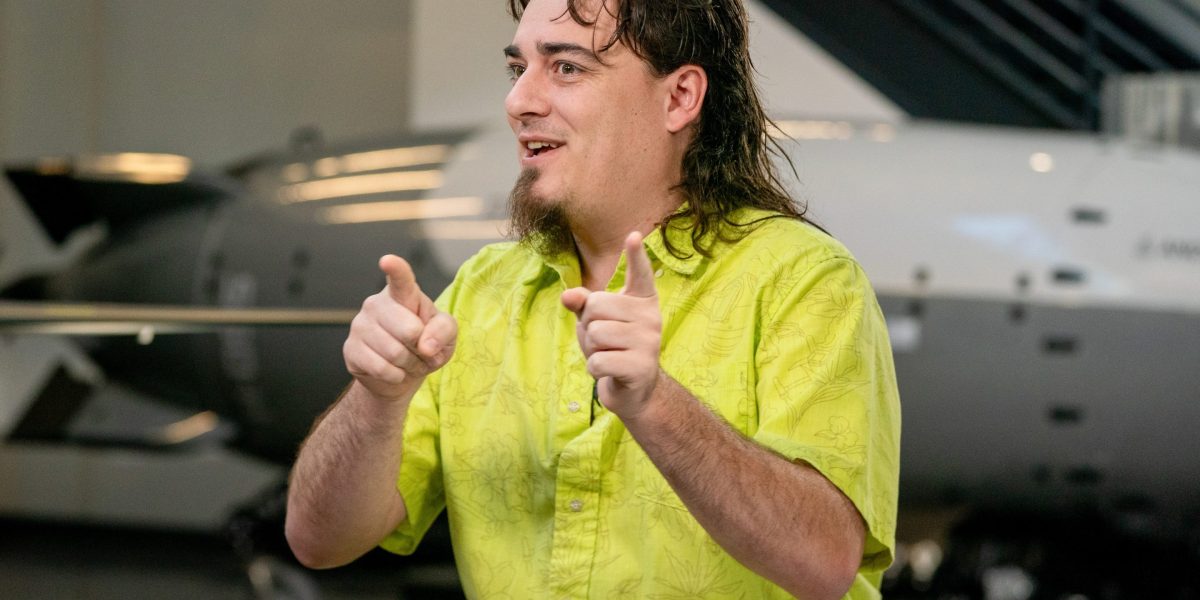
The billionaire Oculus and Anduril founder Palmer Luckey says he’s living proof the American Dream is alive and well. He went from a teen college dropout who was living in a trailer to selling his first company to Facebook (now Meta) for $2 billion by just 21 years old—and he says that rags-to-riches rise could happen only in America.
“I was a 19-year-old kid working a minimum wage job with no college degree, living in a 19-foot camper trailer, and Peter Thiel gave me a million dollars when nobody else would to start Oculus,” Luckey told the Hoover Institution. “That’s not happening in China, I’ll tell you that.”
The now 33-year-old said “there’s a million complaints” about opportunity drying up in the U.S. “Oh, you can’t get a break in America. Blah, blah, blah, blah.”
Indeed, AI is cutting 16,000 U.S. jobs a month, and many Gen Zers can’t even land a summer job at an ice cream shop right now. But Luckey says his own story—and those of countless other founders just like him—proves that America is still the golden land of opportunity.
While homeschooled, 17-year-old Luckey started building a virtual reality headset in his family’s garage: the Oculus Rift VR headset.
After raising $2.4 million on the crowdfunding site Kickstarter two years later, he dropped out of California State University, hired a handful of employees, and rented an office space to launch his virtual reality startup.
Although Luckey missed the application window for the famous Thiel Fellowship, his prototype still caught the attention of PayPal cofounder Peter Thiel, who invested in Oculus through his venture firm, Founders Fund.
Thiel’s investment paid off almost immediately. Just one year later, in 2014, Facebook acquired Oculus for $2 billion. But the partnership didn’t end there.
In 2017, Thiel and Founders Fund backed Luckey again, this time in a very different kind of startup: Anduril, a defense tech company building autonomous weapons systems and surveillance technology for the U.S. military. Founders Fund led Anduril’s first funding rounds, and the company has since grown into one of the most valuable defense startups in the world, now worth $61 billion.
A tech-focused bank he cofounded with Joe Lonsdale (cofounder of Palantir Technologies), it plans to offer crypto-collateralized loans and other services tailored to startups in AI, crypto, defense, and advanced manufacturing. It has once again received major financial backing from Thiel’s Founders Fund and has already hit a $9.5 billion valuation.
Meanwhile, Luckey’s own net worth is already over $5 billion.
Americans are fleeing the U.S. in record numbers. The U.S. recorded a net negative migration of between 10,000 and 295,000 people in 2025—the first time in at least 50 years that more people moved out than moved in, according to the Brookings Institution.
Up to 405,000 left voluntarily, pushed by a volatile political climate and a cost of living that is squeezing even high-earners on six-figure salaries.
But Luckey isn’t the only self-made founder pushing back on the idea that opportunity in America has dried up.
Arvind Jain, the ex-Google engineer who cofounded two billion-dollar companies, including his most recent AI startup, Glean, left a small town in northern India in 1986 with nothing but an engineering degree. And he insists those leaving the U.S. are making a huge mistake.
“There are certain things in the U.S. today that are challenging,” Jain previously told Fortune. “But I think it remains the land of opportunity. It remains the place where entrepreneurship is celebrated.”
He’s far from alone. Several of America’s biggest companies today are run by people who moved to the U.S. and built major fortunes here.
Jensen Huang was born in Taiwan and briefly raised in Thailand before immigrating to the U.S. at age 9. His first job was washing dishes at Denny’s, and he went on to found Nvidia—now the world’s most valuable company. His cousin, AMD chair and CEO Lisa Su, at age 3 also emigrated from Taiwan and turned the struggling chipmaker into an $876 billion AI powerhouse.
Dan Rogers, CEO of work management platform Asana, left the U.K. for a better career in the U.S. He planned his stateside move from age 14, working his way through Dell, Microsoft, Amazon Web Services, Salesforce, and ServiceNow before landing the top job in San Francisco.
And his explanation for why he flew thousands of miles and uprooted his entire life to be in the Bay Area is basic math, he told Fortune: “I looked at the Fortune 50 AI list; 30 of the 50 are in the Bay Area. There is this inordinate concentration—and because of that concentration, it is self-reinforcing.”
Ambitious people know where the hottest companies are, so they flock there. Investors follow. And the cycle feeds itself, keeping the region the No. 1 destination for anyone hoping to turn an idea into an empire.
“Silicon Valley was, and is once again, with the AI companies, a real magnet for something special, for people that want to have an outsize impact,” Rogers added. “The hive of activity, the obsessiveness, the quality of talent, the access to funding and new ideas is second to none.”
Orianna Rosa Royle is the Success associate editor at Fortune, overseeing careers, leadership, and company culture coverage. She was previously the senior reporter at Management Today, Britain's longest-running publication for CEOs.