
A Ukrainian company just unveiled a tiny drone antenna
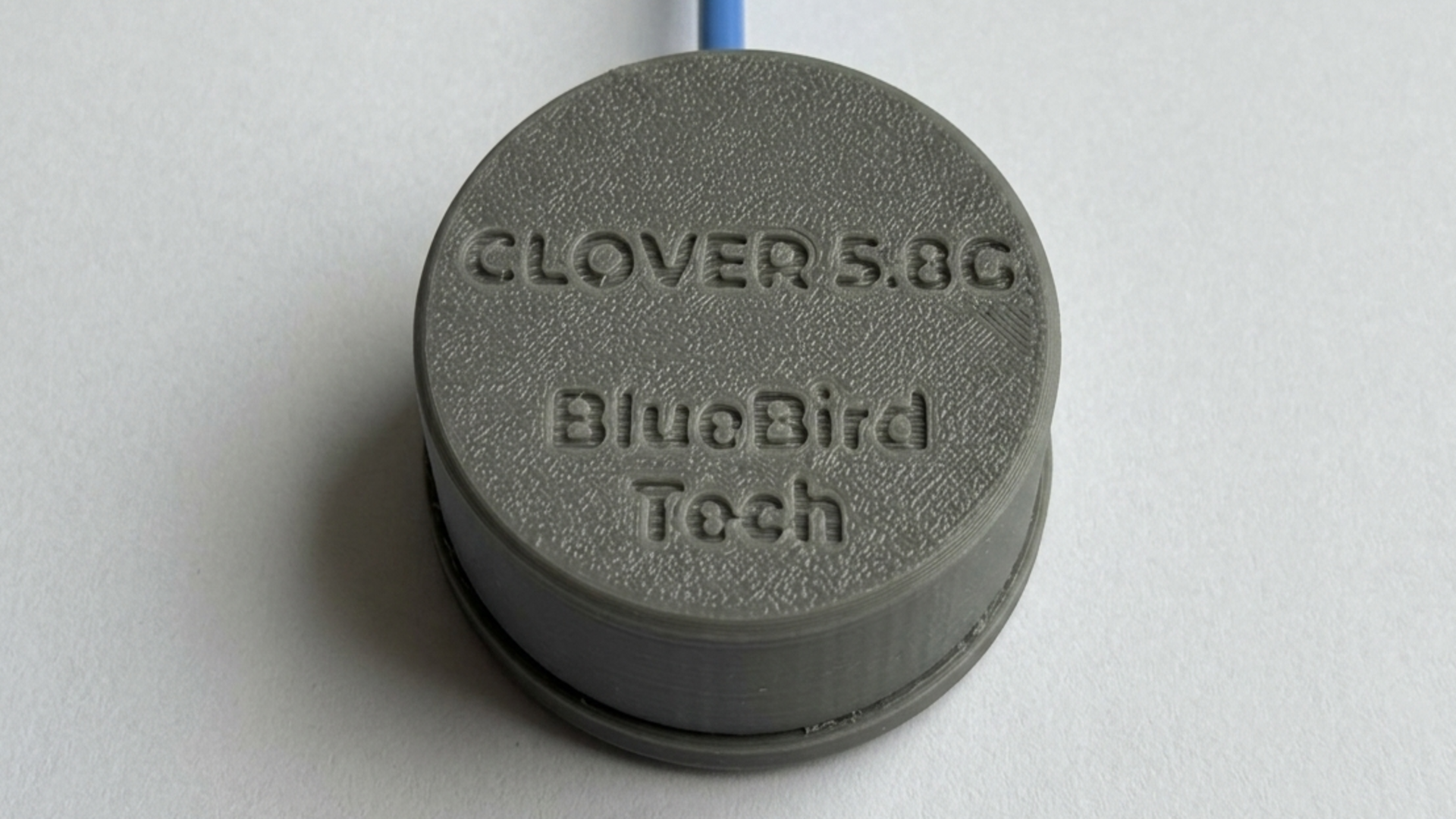
Ukrainian defense technology firm BlueBird Tech has introduced a compact antenna for boosted battlefield communications systems.
The CLOVER 5.8 GHz weighs only 25 grams, yet operates across a broad frequency range spanning 4.9 to 6.1 GHz for reliable connectivity.
Its clover-shaped design gives the antenna circular polarization and an omnidirectional radiation pattern suited to fast-changing combat environments across contested zones.
The antenna is fitted with an SMA male connector and an RG402 cable, features that simplify its integration into existing platforms currently in use.
BlueBird Tech representatives told RBC-Ukraine that the CLOVER 5.8 GHz can be installed on FPV drones, UAV detection equipment, and radio-monitoring systems.
The company also noted that measurement devices and ground-based robotic systems can carry the antenna, not only aerial FPV platforms.
Its operating range overlaps closely with the 5.8 GHz band that most FPV drone operators already rely on for video links.
Its lightweight construction minimizes the additional burden on FPV drones, helping preserve flight characteristics during normal operational use.
Compatibility with major systems already on the market means operators may avoid redesigning their equipment before adopting the new component.
Whether such compatibility claims hold up under sustained, real-world combat conditions is something only continued field use can eventually confirm.
The antenna arrives alongside other Ukrainian developments involving unmanned systems designed for military applications.
Ukrainian defense technology company WINFLY has introduced the WINFLY Spider, a reusable interceptor drone designed to capture aerial targets with a net before returning toward its launch location.
The Spider is based on the WINFLY 10 Hunter platform and reportedly reaches speeds of up to 160 km/h during operation.
Its stated operating ceiling reaches 5,000 meters, giving the system capabilities that differ substantially from the communications role associated with the CLOVER antenna.
The two systems therefore represent separate parts of Ukraine's growing unmanned technology sector, rather than components of one disclosed weapon system.
CLOVER is described as communications hardware, while Spider is designed specifically for intercepting aerial targets.
BlueBird Tech has not disclosed that the antenna itself contains electronic warfare, interception, encryption, or autonomous flight capabilities.
Its documented function remains transmitting and receiving radio signals across the specified frequency range, with integration depending on the host platform and communications equipment.
The antenna could therefore become useful within systems requiring lightweight radio hardware, although its actual battlefield effectiveness would depend heavily on the equipment and conditions surrounding its deployment.
Follow TechRadar on Google News and add us as a preferred source to get our expert news, reviews, and opinion in your feeds.
Efosa has been writing about technology for over 7 years, initially driven by curiosity but now fueled by a strong passion for the field. He holds both a Master's and a PhD in sciences, which provided him with a solid foundation in analytical thinking.
Please logout and then login again, you will then be prompted to enter your display name.