
Fortune Tech: Meta’s Google problem, Australia ups the ante, memory price predictions | Fortune
Good morning. A great read awaits from new Fortune colleague Sebastian Herrera about the Microsoft exec tapped to fix Copilot.
His name is Jacob Andreou, he’s 33, and he’s got his work cut out for him: “Having fallen behind after leading early in the AI race, Microsoft is counting on Copilot, and Andreou, the product’s executive vice president, to pull it ahead,” Herrera writes.
Andreou’s duty, Herrera adds, is to get the tech titan “to move fast without breaking the trusted business relationships it has.” Something a fellow named Clay Christensen undoubtedly has opinions about.
Today’s tech news follows. Have a productive day, though if you’re watching the Brazil-Japan or Netherlands-Morocco matches for the World Cup, I won’t snitch. —Andrew Nusca
Want to send thoughts or suggestions to Fortune Tech? Drop a line here.
One of the strategies driving OpenAI’s growth has been the belief that AI compute will be limited amid so much global demand—therefore the firm that secures it first will win the AI arms race.
As Ferris Bueller once said: “Life moves pretty fast.”
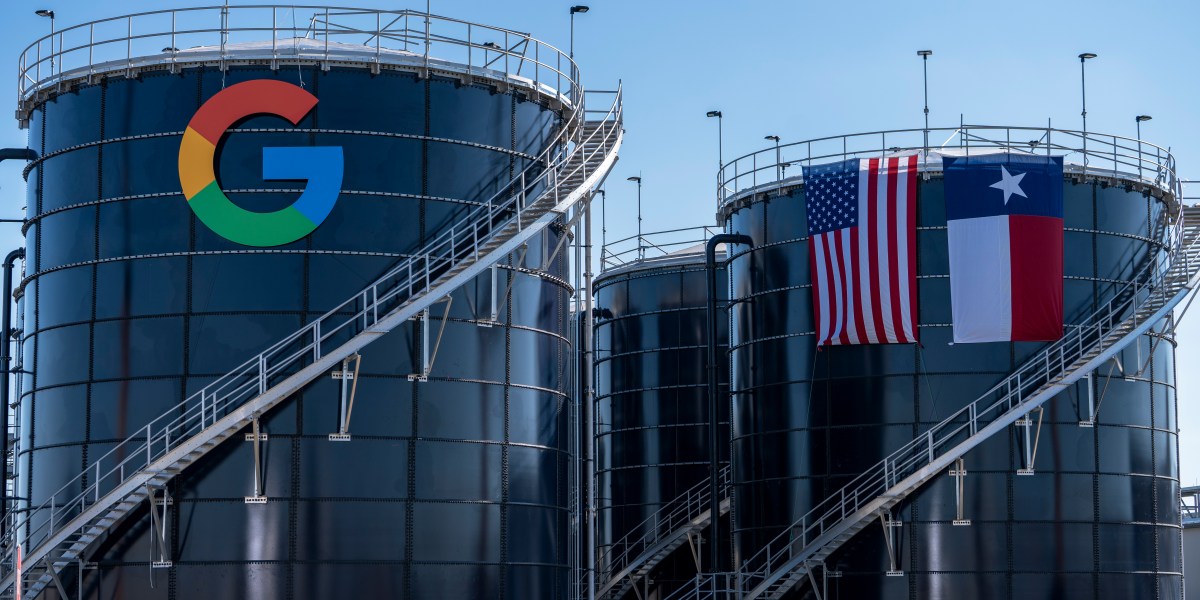
A new Financial Times report says Google informed Meta in March that it wasn’t able to offer all the Gemini capacity that Facebook’s parent company wanted—which in turn has delayed some of Meta’s own AI projects.
“Owing to the restrictions, which remain in place, as well as a broader push to streamline AI costs, Meta has encouraged staff to be more efficient with AI tokens—the units that measure AI usage,” the report reads.
This wasn’t exactly unforeseen. On a call with investors in April, Google CEO Sundar Pichai acknowledged the supply-demand mismatch in its fast-growing Google Cloud unit: “We are compute-constrained in the near term,” he said. “And as an example, our cloud revenue would have been higher if we were able to meet that demand. So we are working through that moment, and we are investing.”
Still, it’s cold comfort for Meta, which is moving aggressively to infuse every part of its business with AI. This year alone, Meta has laid off thousands of workers and transferred thousands more in a bid to realign its workforce with AI initiatives. The company recently debuted a new AI model (Muse Spark), AI agents for businesses, a new generation of AI-driven smart glasses, and paid subscription tiers for its own Meta AI.
So far, investors aren’t entirely convinced the juice is worth the squeeze. Meta shares are down more than 15% for the year to date. —AN
Australia’s World Cup side may be preparing to battle Egypt on Friday, but legislators back home in Straya are gearing up for even stiffer competition against the world’s biggest social media companies.
Two years ago, legislators made Australia the world’s first nation to outright ban social media for minors under 16, calling particular attention to Meta’s Facebook, Instagram, and Threads; Google’s YouTube; TikTok; Snapchat; Reddit; Amazon’s Twitch; Kick; and X.
On Sunday, Australia’s government announced that it was upping the ante by doubling the maximum financial penalty for breaking that law, from 49.5 million AUD to 99 million AUD (or from about $34 million USD to $68 million USD).
“Based on the regular updates I receive from the eSafety Commissioner, it is clear to me that social media platforms are adopting tricks straight out of the big tech playbook and doing the bare minimum to get by,” said Anika Wells, Australia’s Minister for Communications, in a statement. “In response, I am making sure the regulator has stronger tools to get the job done and doubling the fines for non-compliance.”
The Australian government said more than five million under-16 accounts have been removed, deactivated, or restricted since the ban took effect on December 10. It added that it’s “actively investigating” potential noncompliance with five of the above platforms: Facebook, Instagram, Snapchat, TikTok, and YouTube. —AN
Good news for investors in select semiconductor companies, bad news for virtually everyone else: the global memory shortage is far from over.
Days after Apple gave in and raised prices on its larger products, sending its shares down 6% in a day, a new Jefferies research report predicts that memory prices will rise 40% to 50% in the third quarter of this year, compared to the current quarter.
What’s more, memory prices will further rise 30% to 40% in the fourth quarter of 2026—and the full year 2027 holds yet another 40% to 45% hike. Ouch.
Relief isn’t expected to arrive until 2028 when additional supply finally comes online. The big question is what demand for AI compute might look like by then—and just how hard of a squeeze it might put on the consumer electronics business as memory-makers serve the long-term contracts they’re making with hyperscalers.
Either way, it’s not looking good for anyone looking to replace a laptop, tablet, smartphone, or game console in the next couple of years.
In the meantime, Big Tech gadget makers are looking under every rock for relief. Despite the high-profile trade tensions at play, Apple is reportedly lobbying the U.S. government to relax its own policies to allow it to buy Chinese memory—something that’s almost certain not to lower MacBook prices next year but might before the Times Square ball drops on the decade. —AN
—The White House is reportedly close to allowing Anthropic to restore access to Fable 5.
—SoftBank’s Masa Son: The math isn’t mathing for Elon Musk’s orbital data centers.
—Kunlunxin, Baidu's chip unit, is reportedly shooting for a $50 billion Hong Kong IPO.
—Mercedes-Benz joins a billion-dollar fundraising round for humanoid robot maker Apptronik.
—Austria to EU: Welcome Anthropic with open arms, given U.S. friction? Eh, kloar!
—Employment for entry-level workers in highly AI-exposed jobs: shrinking by 3.8% per year.