
Alito rips SCOTUS phone privacy ruling as an "irresponsible escapade"
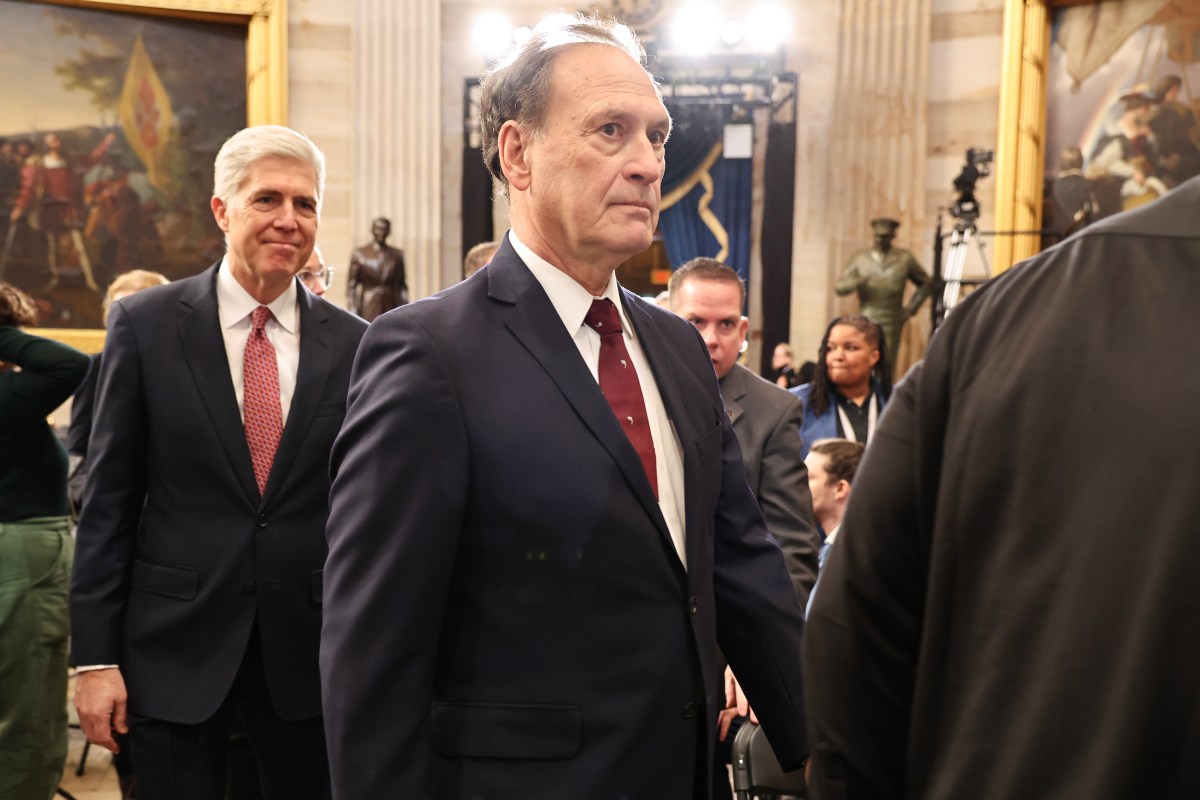
Justice Samuel Alito issued a sharp rebuke of his colleagues on Monday, penning a dissenting opinion that labeled the Supreme Court’s decision to restrict digital police dragnets an “irresponsible escapade” that threatens to leave law enforcement without critical investigative tools.
Alito’s dissent came in response to a 6-3 ruling in Chatrie v. United States, where a cross-ideological majority threw out a lower court decision involving a Virginia man's challenge to a "geofence" warrant. These warrants compel technology companies, such as Alphabet's Google, to turn over anonymized cellphone location history for any devices near a crime scene during a specific time frame.
By ruling that a constitutional search had indeed occurred, the high court sent the case back to a lower court for further analysis, a move that places significant new hurdles on a rapidly expanding law enforcement technique.
The decision directly addresses the growing tension between the 18th-century Fourth Amendment, which safeguards citizens against unreasonable searches and seizures, and modern digital technology. Federal prosecutors, backed by the Trump administration, had argued that smartphone users forfeit their expectation of privacy when they voluntarily opt into features like Google's "location history." The majority rejected that logic, establishing that digital tracking can still constitute an invasive search requiring strict constitutional scrutiny.
Justice Elena Kagan delivered the 6-3 majority opinion on Monday. Of President Donald Trump's three appointees, Justice Amy Coney Barrett broke toward Alito’s traditional law-and-order stance, while Justices Neil Gorsuch and Brett Kavanaugh abandoned the conservative wing. Conservative Chief Justice John Roberts also joined the majority.
“An individual has a reasonable expectation of privacy in records about his cell phone's location, and police intrude on that constitutionally protected interest when they demand the information – even though for only a limited time, and from a third-party tech company," Kagan wrote.
She rejected the government's argument that corporate terms of service wipe out a user's right to privacy, noting that:
“...a cell-phone user is not to be viewed as sharing private information with third parties – which then can be freely passed on to the government – just by doing the ordinary things cell-phone users do.”
The landmark legal battle originated from a 2019 armed robbery at a credit union in Midlothian, Virginia, where a gunman made off with $195,000. Having exhausted all traditional leads, investigators noticed surveillance footage of the robber utilizing a cellphone. They subsequently obtained a court-approved geofence warrant spanning a 492-foot radius around the building during a one-hour window.
The digital sweep captured data from 19 smartphone users who happened to be in the area, which included nearby residences, a hotel, and a church. Through a multi-step filtering process, investigators narrowed the list down and ultimately identified Okello Chatrie. A subsequent search of residences linked to Chatrie uncovered a pistol, nearly $100,000 in cash wrapped in bands signed by the credit union teller, and what prosecutors described as "robbery-style demand notes."
Chatrie conditionally pleaded guilty in 2022 and was sentenced to nearly 12 years in prison, but he pressed his appeal on the grounds that the warrant was an overly broad, unconstitutional search that lacked the specificity required by law.
Mark Chenoweth, president of the New Civil Liberty Alliance, which filed an amicus brief in the case, said in a statement shared with Newsweek via email, “The Court correctly recognized that government’s sweeping warrantless, suspicion-less, and probable cause-less collection of individuals’ location history constitutes a Fourth Amendment search—regardless of what that search actually turns up."
While U.S. District Judge Mary Lauck and the Richmond-based Fourth U.S. Circuit Court of Appeals had previously allowed Chatrie's conviction to stand, the Supreme Court's intervention on Monday upended the case's trajectory. Chatrie’s defense attorney, Adam Unikowsky, successfully argued that geofencing amounts to a dragnet that exposes vast amounts of private information to the government.
In his dissent, Alito strongly defended the investigative method, scolding the majority. From Alito's perspective, stripping law enforcement of a highly effective tool that solved a major armed robbery after all other leads failed represents a judicial overreach that compromises public safety.
“Today's decision all but guarantees that we will be cleaning up debris for the foreseeable future. The Court’s decision to intervene in this matter represents an irresponsible escapade that upends Fourth Amendment law without providing any clear certainty to law enforcement or the public," Alito wrote.
Alito's sharp language highlights a clear philosophical division within the court's conservative supermajority regarding how constitutional privacy protections apply to twenty-first-century data. The ruling marks a major checkpoint for digital privacy, signaling that the data users generate on their mobile devices is protected from government surveillance.
This is a breaking news article. Updates to follow.
Contact Newsweek editors on this story: Sam Wilson.