
Andy Burnham urged to raise capital tax by ex-Labour leader: 'It would bring fair change!'
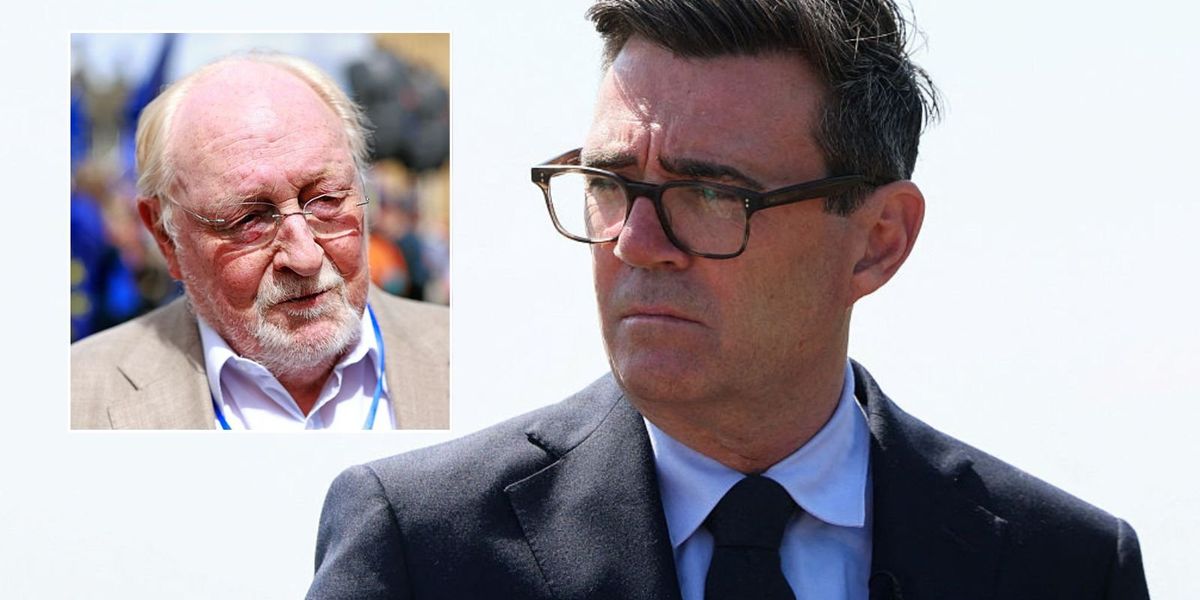
Prime Minister Andy Burnham is facing calls from a former Labour leader to raise capital gains tax (CGT) in an effort to generate more money for the Treasury.
Backing the proposal, Lord Kinnock said: "I'm sure that the Government understands the utility and the encouragement which the further £12billion revenues that such a fair change in CGT would bring."
Currently, CGT stands at 18 per cent for basic-rate taxpayers and 24 per cent for those on higher and additional rates, compared with income tax bands of 20 per cent, 40 per cent and 45 per cent.
The proposal already enjoys backing from prominent figures within Government. First Secretary of State Louise Haigh and Defence Secretary Wes Streeting have both publicly endorsed aligning the two taxes.
However, research conducted by investment platform IG, drawing on HM Revenue and Customs' (HMRC) own published assumptions, suggests the policy would actually leave the Treasury £7.8billion a year worse off rather than better.
Former Chancellor Jeremy Hunt cautioned that hiking the rate beyond its current upper threshold would be counterproductive.
He said: "Treasury officials told me that 24 per cent was the 'revenue maximising' level for capital gains tax."
Mr Hunt explained the reasoning behind that assessment: "That's because when tax rates change, people change their behaviour and delay selling assets. Go too far in raising tax and revenues start to fall."
The stark gap between Lord Kinnock's £12billion projection and the IG analysis pointing to billions in lost revenue underscores the fierce debate surrounding the proposal ahead of Chancellor John Healey's autumn fiscal statement.
Joshua Raymond, UK managing director at investment platform XTB, said: "Capital gains tax has historically been lower than income tax because investing involves the possibility of losing money.
"The lower CGT rate provides an incentive against that risk. If the two were aligned, that recognition would be lost."
Those who hold investments have already seen their tax burden grow considerably in recent years.
The annual CGT allowance has been cut in stages from £12,300 in the 2022-23 tax year to a mere £3,000 today, meaning far more gains now fall within the scope of the levy.
A Treasury spokesman said: "The Chancellor is fully focused on his priorities, which will boost business, help with the cost of living and support people in every postcode."
Tax decisions, the spokesman added, were matters for the Chancellor to address at fiscal events rather than in response to individual suggestions.
The Prime Minister has signalled his intention to lead the most radically left-wing administration in four decades, arguing that Britain took a "series of wrong-turns in the 1980s" when "political power was centralised and economic power was privatised".