
Angie Nixon's chances of defeating Ashley Moody in Florida Senate race
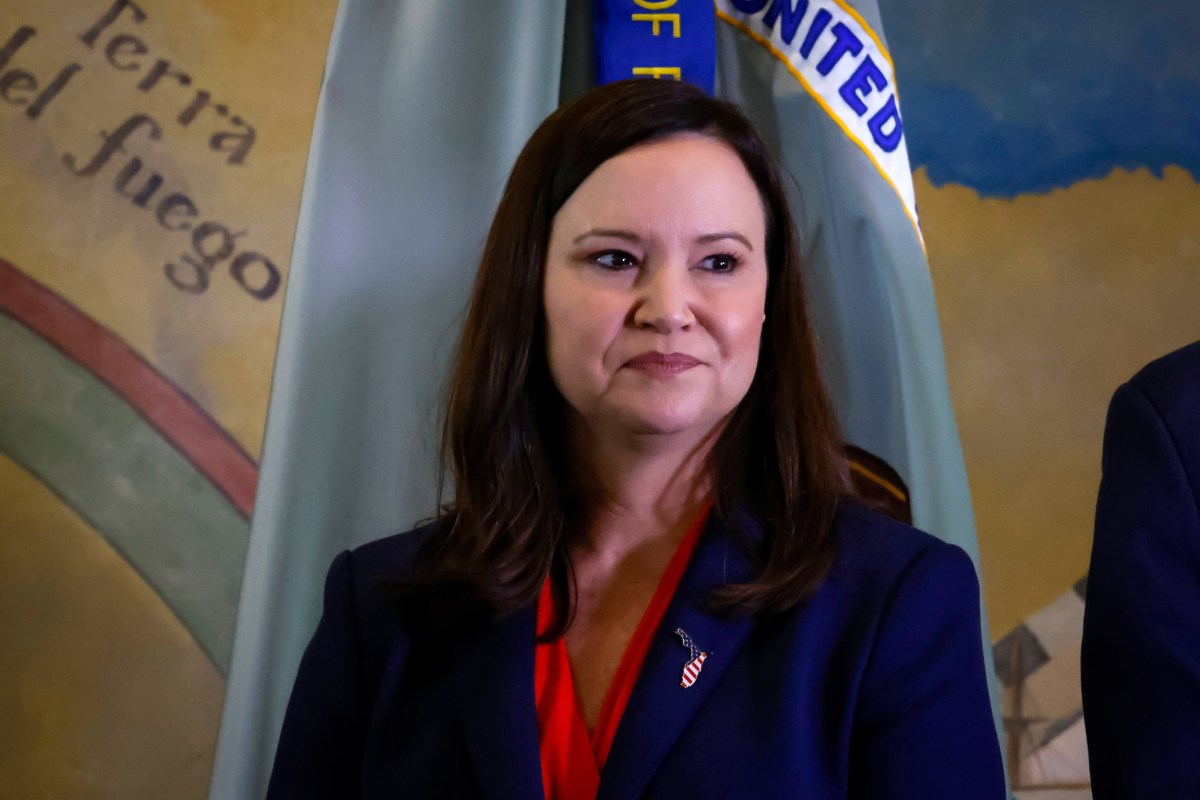
Florida's Senate race will be a test of progressive power, pitting a progressive Democrat against a Trump-backed Republican in President Donald Trump's home state.
Senator Ashley Moody took office after she was appointed by Governor Ron DeSantis to fill the seat left vacant when Marco Rubio became Secretary of State. She faces her first statewide election as an incumbent, giving her an advantage, but Democrats are eying it as an opportunity to flip the seat held by Rubio for over a decade.
On Tuesday, Angie Nixon won the Democratic primary election with 55.2 percent of the vote at the time the race was called, defeating Alexander Vindman. Eighty-three percent of the vote had been counted at the time.
“Angie Nixon has dedicated her career to fighting for Florida. A lifelong native of Jacksonville and a former union organizer, Angie’s dedication to put working families first runs deep – and now, she’s running to take that fight to the Senate. Ashley Moody’s votes have cost Florida, from her siding with private insurance companies over Floridians to ripping away health care. In November, Florida will have a clear choice at the ballot," Senate Democratic Leader Chuck Schumer and Democratic Senatorial Campaign Committee Chair Senator Kirsten Gillibrand said in a released statement to Newsweek on Tuesday night.
For Democrats, though, the challenge is daunting. Florida has steadily shifted toward Republicans over the last decade, with the GOP building a voter registration advantage and winning most major statewide contests. Polling suggests Moody is favored, but the margins are narrower than those seen in some recent statewide contests.
Nixon enters the race as one of Florida's most prominent progressive Democrats. The Jacksonville lawmaker has built a reputation as a grassroots organizer and outspoken critic of DeSantis and the Republican-controlled Legislature. Her campaign emphasizes lowering costs, increasing wages, expanding access to health care and mobilizing working-class voters who often sit out elections.
One of Nixon's strengths is her connection to organized labor and progressive groups. She has secured support from a number of left-leaning organizations and elected officials, positioning herself as the candidate of the Democratic Party's activist wing. That support could help generate enthusiasm among younger voters and progressives who have argued that Democrats should offer a sharper contrast to Republicans rather than running toward the political center.
A July survey from the University of North Florida's Public Opinion Research Lab found Moody leading Nixon 50 percent to 42 percent in a hypothetical general election matchup. At this point in the 2022 election, Rubio was trailing his Democratic challenger, Val Demings by 4 points, according to a poll from the University of North Florida. Rubio went on to win the election with 57 percent of the vote.
Polymarket gives Republicans 91 percent odds of winning the election and Kalshi gives Republicans 90 percent odds of winning, indicating that traders believe that Republicans have very good chances of winning.
Democrats are hoping that unapologetically progressive messaging could energize Democratic voters and attract working-class Floridians frustrated by rising costs of living. Nixon has repeatedly argued that affordability issues offer Democrats their strongest opening in a state where housing prices and insurance costs have become major concerns.
However, Nixon also faces serious obstacles. Republicans have already attempted to define her as a far-left candidate, and Florida's electorate has often shown resistance to progressive branding. South Florida's large Cuban American and Venezuelan American populations have historically been skeptical of candidates perceived as too far left, creating potential vulnerabilities for Nixon in a statewide race.
Fundraising is another challenge. Nixon has raised substantially less money than both Moody and Vindman. A sustained statewide campaign across Florida's expensive media markets requires significant financial resources, and Democrats have often struggled to remain competitive without major national investment.
As a result, Nixon's path to victory would likely depend on generating unusually high turnout among Democratic voters while convincing enough independent voters that economic concerns outweigh ideological differences. While that path exists, it remains difficult in a state that has trended increasingly Republican.
The last Democrat to win a U.S. Senate election in Florida was Bill Nelson in 2012. Nelson, the incumbent, defeated Republican challenger Connie Mack IV and secured a third term in the Senate.
Nelson was defeated by Republican Rick Scott in 2018, ending Democrats' hold on the seat. Since that election, Republicans have strengthened their position throughout Florida, winning gubernatorial races, Senate contests and many down-ballot elections. The GOP has also established a voter-registration advantage that poses a challenge for Democrats in statewide races.
That history underscores the challenge facing Democrats in November. To win, Nixon would not only need to overcome Moody's incumbency advantage and statewide profile, but also reverse a political trend that has favored Republicans for more than a decade.
For now, Moody remains the favorite heading into the general election. Polling, fundraising and recent electoral history all point in her favor. But with affordability concerns dominating voter conversations and national political winds still uncertain, Democrats believe the race remains worth contesting.