
Another eclipse over Spain on 28 August: where and how to see it
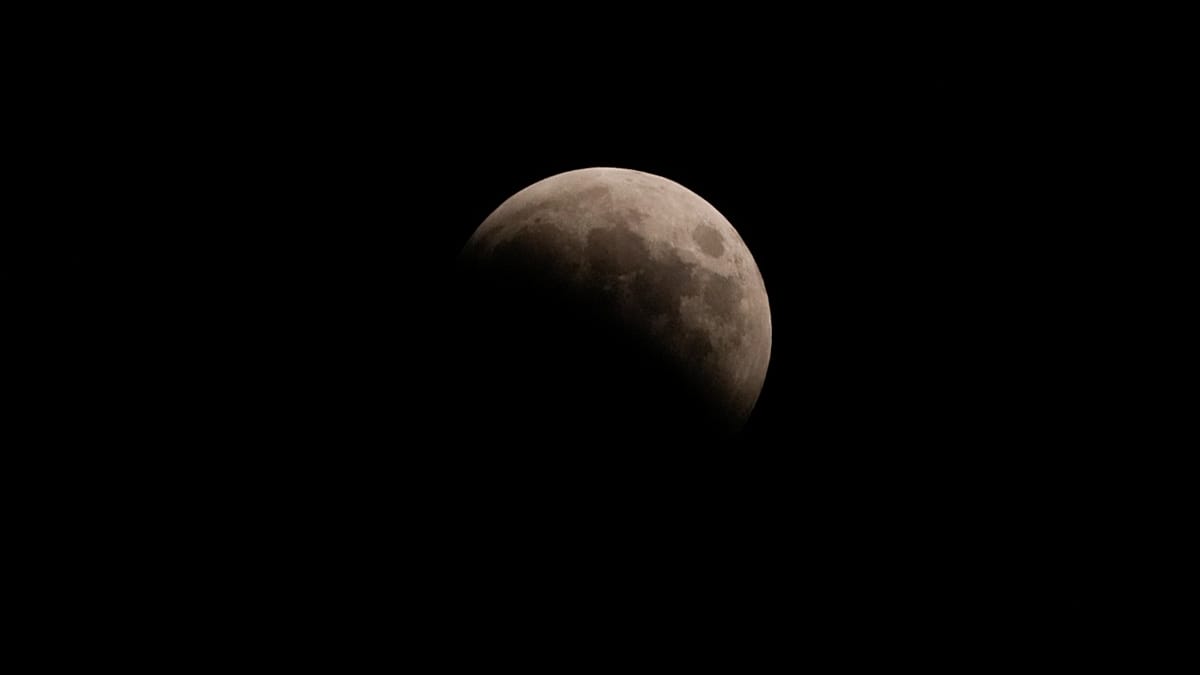
Just 16 days after the historic total solar eclipse of 12 August, the first visible from the Iberian Peninsula in more than a century, Spain will once again be looking to the skies to witness another major astronomical event.
On 28 August there will be a partial lunar eclipse with a magnitude of 0.93, which will be visible across the country. Unlike the solar eclipse, there will be no need for special glasses or any other form of protection to enjoy this event. The National Geographic Institute (IGN) says it can be observed with the naked eye without any risk and that no special instruments will be required.
The eclipse will be particularly deep. According to the IGN, it will reach a magnitude of 0.93, which means that at its peak the Earth’s darkest shadow, known as the umbra, will cover roughly 93% of the Moon’s diameter. This figure should not be confused with the percentage of the Moon’s surface that will be darkened.
A lunar eclipse occurs when the Earth moves between the Sun and the Moon and our satellite passes through the shadow cast by the planet. When only part of the Moon enters the Earth’s umbra, as will happen on 28 August, the eclipse is classified as partial.
The event will be visible in some of its phases from Europe, Africa, the Americas and western Asia, according to IGN data. In Spain, the partial phase will be visible from the whole country before moonset, although there will be significant differences depending on where it is observed from.
In the centre and east of the peninsula, the Balearic Islands and Melilla, the Moon will set before the partial phase ends. In the rest of the peninsula, the Canary Islands and Ceuta, moonset will occur after this phase has finished.
This makes it particularly important to look for a place with good visibility towards the horizon where the Moon will set, as well as favourable weather conditions.