
Badly burned British couple rescued from ravine during Spain wildfires
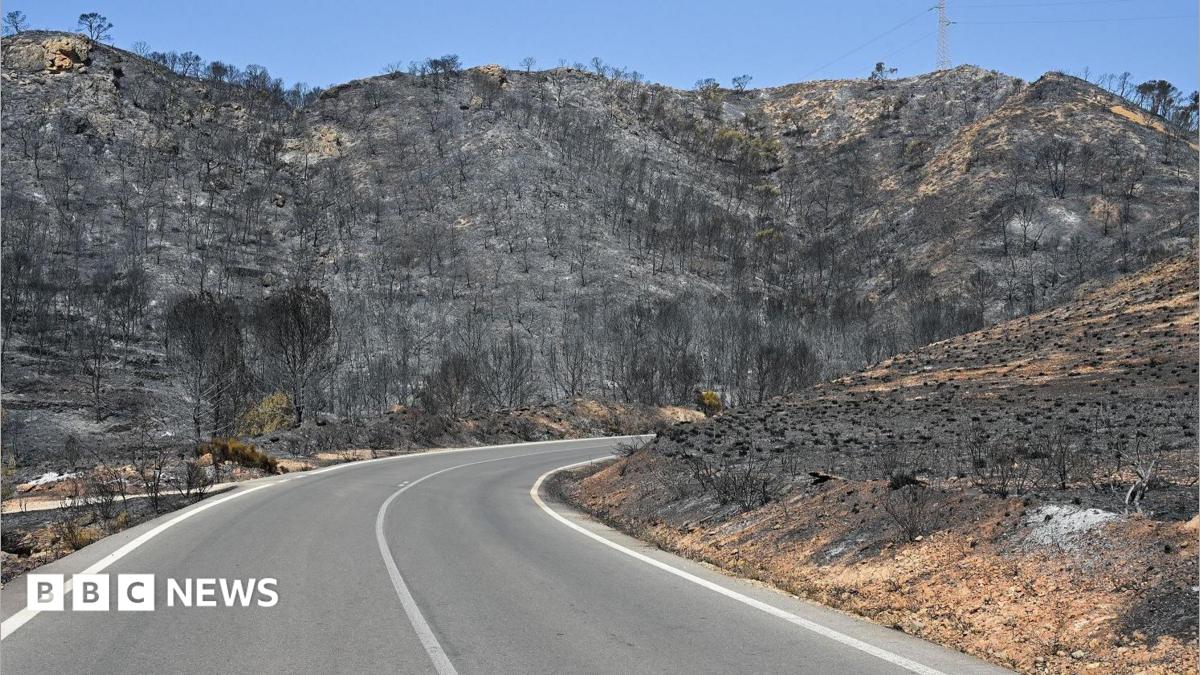
Eyewitnesses described the devastation of the fires as "like a bomb has fallen"
A British couple have been found down a ravine, badly burned and semi-conscious, after being caught up in the deadly wildfires that tore through Spain's Almeria province, according to local media.
The pair are thought to have been out hiking when they were caught up in the blaze, which spread rapidly through the province on Thursday. They were evacuated and taken to hospital where they are in intensive care.
Hundreds of firefighters have been battling the fires, which have claimed the lives of 12 people, including four believed to be Britons, and burned through 6,600 hectares (16,300 acres), local authorities said.
The identities of those killed have not yet been officially confirmed.
The couple were discovered by Civil Guard officers searching for survivors near the worst-hit village of Bedar in the early hours of Friday morning.
One of the rescuers, Sergeant Pedro Barre, said they heard distant cries for help.
"As you gain more experience, something inside you tells you, 'Look again, try one more time,'" he told Spain's TVE state broadcaster.
The rescue team followed the sound and climbed down a hillside. They found the couple in critical condition, semi-conscious and with severe burns covering 40% of their bodies.
"Being able to call out in the condition they were in was a titanic effort," said Rafael Zea, another of the officers involved in the operation.
"We'll never forget that look of surprise and emotion on their faces," Barre added.
On Sunday, Andalusia's regional government head, Juan Manuel Moreno Bonilla, said that "the fire has been contained and its perimeter secured," adding in a social media post that the overall alert had been downgraded.
Firefighters had made significant progress in getting the fires under control on Saturday, when calmer winds and higher air humidity prevailed.
About 600 of the nearly 1,500 people evacuated from the fire zone in Almería province were told they could return, regional emergency chief Antonio Sanz said.
On Sunday, dozens of people gathered at a roundabout beneath the village of Bédar, hoping to be allowed back to their homes.
Many said they had no idea if their properties had survived the fire.
Their path was being blocked by blue police tape and traffic officers from the Civil Guard.
Among those waiting anxiously were Mike and Belinda Lithgoe from Cornwall, who have a holiday property nearby.
Since the fires, they have slept in their camper van alongside their dog, Rocket.
The couple said they would be allowed to check on their home during a one hour window later on Sunday, following a meeting attended by the village mayor and the emergency services.
"We're waiting to see if our house is still there" said Belinda.
She said she was "hopeful" because the smoke was on the other side of the mountain as they were fleeing.
"It's impossible to know," said Mike. "You hope it will have gone down the ravine and round rather than up through the village."
Also waiting nearby were Emma Mitchell and her husband.
Emma challenged an earlier statement by local authorities that some of those killed had not taken a designated evacuation route.
"We've lived here for three years full time and there has never been information that you should take this road if there is a fire, never."
And the son of a Belgian man who perished in Spanish wildfires also disputed authorities' claims that his father and other victims ignored official advice to shelter in place, telling the Reuters news agency that emergency services gave them no guidance.
Emma also condemned the decision not to send a text message to all phones in the area.
"I think they should have done the mobile alert, as they do for earthquakes. I know they said that it was too technical and complex… but the reality is, out here in Bédar, there are very few officials."
Local officials have said previously said they did not issue an alert on Thursday night because it may have reached people beyond the affected area and could have complicated evacuations.
Emma said her local policeman as well as local firefighters had been magnificent in their individual efforts, visiting dozens of people as the fire took hold.
A sustained heatwave with temperatures of around 40C (104F) has caused wildfires across Southern Europe this summer, particularly in France, Portugal and Spain.
On Friday, Los Gallardos mayor Francisco Miguel Reyes told Spanish radio station Cadena SER said "it feels like a bomb has fallen" on the area.
"This is the first time we've faced a fire as devastating as this."
Hundreds of firefighters, military and law enforcement personnel, and 30 aircraft, continued responding to the blaze.
Forensic scientists in Madrid are using samples from the bodies of the victims and DNA samples from the families of those reported missing to try to identify the dead.
The identification process has been slowed because collecting DNA samples from relatives has proved difficult, with family members traveling from other countries.
With at least 12 people dead, this is already among the deadliest wildfires in Spanish history.
In 1984, 20 people died in a fire on the Canary Island of La Gomera, while in 1979, 21 people, including nine children, died in a forest fire near Lloret de Mar in north-eastern Spain.
Climate change is driving up temperatures around the world, and Europe is the fastest warming continent, heating up twice as fast as the global average, according to the Copernicus climate service.
This is causing increased summer heatwaves, greater pressure on Europe's water supply, and more intense wildfires.
Wildfires have also plagued France over the summer months.
On Monday over 10,000 people were evacuated from their homes in the foothills of the French Pyrenees.
However, French authorities said on Saturday 32 people had been arrested on suspicion of starting the fires.