
Bank of England
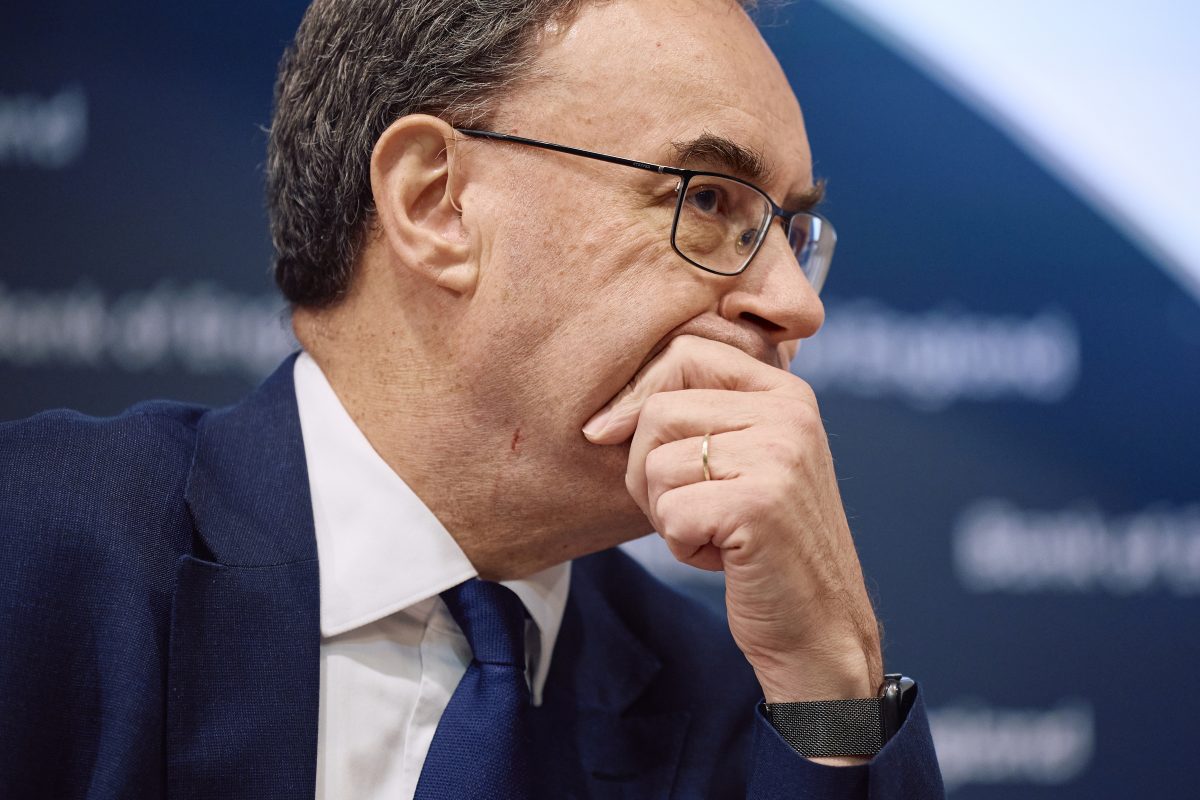
Andrew Bailey has launched a robust defence of the Bank of England’s controversial bond sale programme, arguing it will provide the firepower for another round of quantitative easing in a market downturn.
Writing in The Times, Bailey argued the central bank’s move to hoover up UK government bonds, known as gilts, in the wake of the financial crisis and coronavirus pandemic staved off mass unemployment and propped up the UK’s ailing economy.
He added that its unusual approach to unwinding the buying spree was necessary and neutral for the Exchequer, despite a barrage of criticism from analysts and politicians on the programme’s cost to the Exchequer.
“Quantitative easing did its job,” he wrote. “It protected jobs, boosted spending and supported the economy at the times of crisis. Indeed, many of those who now criticise QE [quantitative easing] were not saying as much at the time.
“Now, we are reducing our gilt holdings to give us the capacity to intervene again in future if needed.”
Since 2022, major central banks have been offloading their vast holdings of government bonds acquired between 2010 and 2021 in a process known as quantitative tightening.
The likes of the European Central Bank and Federal Reserve have adopted a ‘passive’ approach to the programme, letting bonds roll off their balance sheet without replacing them. But the Bank of England has made itself an international outlier by actively selling much of its £875bn gilt portfolio at auctions above and beyond the passive QT being pursued by its counterparts.
In October last year, the Federal Reserve paused even its passive tightening, though new chair Kevin Warsh has previously called on the US central bank to shrink its balance sheet more quickly.
Critics of the approach, who include Nigel Farage’s Reform UK and a coterie of leading City analysts, have argued that active QT has led to a glut of supply of gilts and put upward pressure on government borrowing costs at a time when they are already at multi-decade highs.
They have also railed against terms agreed by then-Chancellor George Osborne and the central bank in 2010 that leave the taxpayer on the hook for covering £125bn of losses from the programme, piling further pressure on the public finances.
But Bailey said overall its rounds of QE – and now QT – will be cost neutral for the Treasury, which benefited from the revenue and borrowing cost uplift during the Bank’s initial bond buying spree.
“It is sometimes said that the cashflow impact from selling gilts could be avoided if the Bank held bonds to maturity,” he said. “This is incorrect. Sales can alter the timing of the cashflow but they do not add to it.”
The central bank governor was not on the rate-setting Monetary Policy Committee during its first QE programme but oversaw the record bond purchases it made during the pandemic and its decision to adopt active QT in 2022.
The move to auction gilts actively was necessary because unlike other countries, the Treasury’s Debt Management Office issued bonds with much longer time horizons, Bailey wrote in The Times. This means they will not roll off the Bank’s balance sheet as quickly.
“Other countries have issued debt at shorter terms,” he said. “The UK has benefited by issuing longer-term gilts, locking in much lower interest costs for longer. Selling and holding are neutral in terms of their costs, and both have to be set against the benefit of the UK having issued longer-term debt in greater quantities. “