
biden appointee recuses herself from antisemitism case against george washington university after teaching there for three months
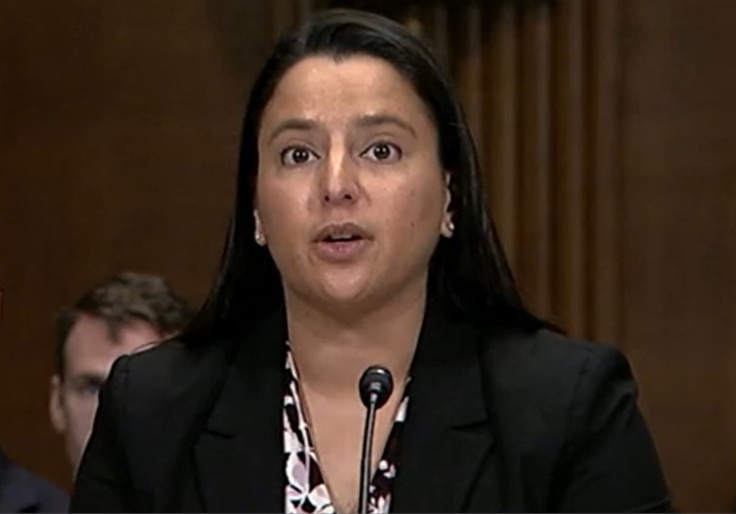
A federal judge who teaches a course at George Washington University's law school has recused herself from an antisemitism case against the university, but only after teaching there for three months and initially arguing that her connection to the defendant did not create a conflict of interest. Judge Loren AliKhan, a Biden appointee, said her employment at the university did not create any conflicts and was prepared to stay on the case until one party formally objected.
However, legal experts have criticized AliKhan's handling of the situation, saying she displayed a 'shocking ignorance' of basic ethical concepts by failing to voluntarily withdraw immediately. Keith Fisher, an associate professor at St. Thomas University College of Law, said that AliKhan should have recused as soon as she was hired by the university, citing the appearance of impropriety and the potential for bias.
AliKhan had taught a course on 'judicial lawyering' at the university's law school since early January, covering topics such as protocol, professionalism, and judicial decision-making. However, she did not acknowledge a potential conflict of interest until roughly two months later, when she issued a 10-day stay to assess whether she had a conflict that warranted her disqualification.
The lawsuit alleges that George Washington University violated Title VI of the Civil Rights Act by allowing a 'hostile educational environment' to flourish unchecked, detailing incidents of physical assaults, vandalism, and verbal harassment against Jewish students. The university allegedly turned a blind eye to these incidents, prompting the lawsuit.
Sabrina Soffer, one of the plaintiffs, said that AliKhan's recusal would 'ensure the integrity of the proceedings and remove any appearance of bias or conflict, allowing the case to move forward transparently and on its merits.' Her attorney, Jason Torchinsky, added that he was thankful the case could promptly continue with a new judge assigned to the case.
The federal court system's lead ethics attorney had advised AliKhan that recusal was unlikely to be warranted, citing the fact that George Washington University is a 'large university' and the lawsuit did not explicitly target the law school. However, Fisher argued that AliKhan's failure to immediately recuse or disclose her employment at the university establishes a 'violation of judicial ethics' and creates an 'appearance of impropriety.'
Seth Oranburg, a law professor at the University of New Hampshire's Franklin Pierce School of Law, criticized AliKhan's attempts to stay on the case leading up to her recusal, saying that she invoked a 'remittal' procedure that depends on anonymity, which was not applicable in this case since the plaintiff had already publicly requested her recusal.
The code of conduct cited by the ethics attorney states that judges should withdraw if their 'impartiality might reasonably be questioned.' Fisher pointed out that AliKhan's situation falls within the literal language of this guideline, highlighting the need for her recusal. The case will now proceed with a new judge, U.S. District Judge Trevor McFadden, who was randomly assigned to take over the case.
AliKhan's recusal has sparked a debate about judicial ethics and the potential for conflicts of interest in the federal judiciary. The incident raises questions about the procedures in place for judges to disclose potential conflicts and the need for greater transparency in the judicial system. As the case moves forward, it will be important to monitor how the new judge handles the proceedings and whether the parties involved are able to receive a fair hearing.
In the United States, federal judges are expected to adhere to a strict code of conduct that requires them to avoid any appearance of impropriety or bias. The Judicial Conference of the United States, the principal policy-making body for the federal judiciary, has established guidelines for judges to follow in cases where their impartiality might be questioned. These guidelines emphasize the importance of judges recusing themselves from cases where they have a personal or financial interest, or where their impartiality might be reasonably questioned.
The process of recusal in federal court cases typically begins with a motion from one of the parties involved, requesting that the judge recuse themselves due to a potential conflict of interest. The judge is then required to consider the motion and determine whether their impartiality might be reasonably questioned. If the judge determines that recusal is warranted, they must withdraw from the case and a new judge is assigned to take over.
In this case, AliKhan's failure to immediately recuse herself has raised concerns about the effectiveness of the recusal process and the need for greater transparency in the judicial system. The incident has also highlighted the importance of judges being aware of their own biases and potential conflicts of interest, and taking steps to avoid any appearance of impropriety.
For American and Canadian readers, the incident serves as a reminder of the importance of an independent and impartial judiciary. The ability of judges to make decisions without fear of reprisal or influence is a cornerstone of democratic societies, and any appearance of bias or conflict of interest can undermine trust in the judicial system. As the case against George Washington University moves forward, it will be important to monitor the proceedings and ensure that the parties involved receive a fair hearing.
The incident also raises questions about the role of the federal court system's lead ethics attorney, who advised AliKhan that recusal was unlikely to be warranted. The ethics attorney's guidance has been criticized by some legal experts, who argue that it failed to take into account the appearance of impropriety and the potential for bias. The incident highlights the need for clear and consistent guidance on recusal and conflict of interest issues, and the importance of judges being aware of their own biases and potential conflicts of interest.