
Bike lanes and speed cameras disappear from the DOT's list of proven safety measures
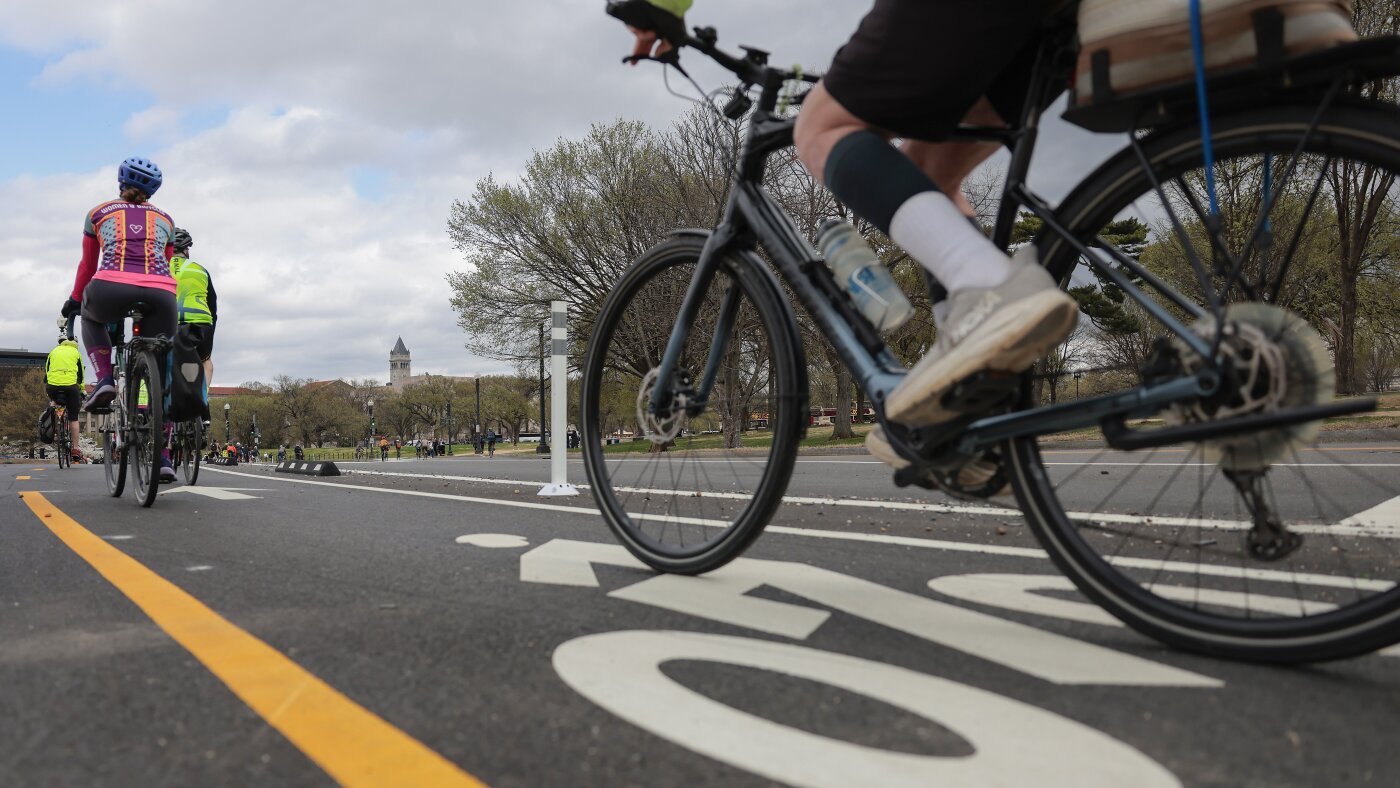
Cyclists ride in protest along 15th Street after plans to remove bike lanes sparked opposition on March 23, 2026 in Washington, D.C. Heather Diehl/Getty Images hide caption
WASHINGTON — The Department of Transportation is doubling down on its campaign against "DEI bike lanes," as Transportation Secretary Sean Duffy called them in a social media post earlier this month.
The Federal Highway Administration has quietly stripped bike lanes, speed cameras and several other best practices from a list of "Proven Safety Countermeasures," as they're known, that have been shown to reduce crashes and save lives.
The FHWA says the changes to its website, which have not been previously reported, are part of a broader review of safety countermeasures to ensure they align with current DOT policies and the administration's priorities. But critics say the Trump administration is undermining safety strategies that have already been proven to work.
"We should be making decisions about safety based on evidence," Stephanie Pollack, the former acting administrator of the FHWA under President Biden, told NPR. "It's hard for me to understand how you could say you're putting safety first, and then make arbitrary decisions about what does and doesn't improve safety."
Pollack oversaw the most recent expansion of the Proven Safety Countermeasures program in 2021, when the list grew to a total of 28 recommended strategies for state and local planners to consider. In recent weeks, she said, the FHWA has removed five of those strategies, including bike lanes, speed safety cameras, variable speed limits, and two other recommendations.
The FHWA has not publicly announced or explained the decision to cut the list of safety strategies from 28 items to the current total of 23.
In a statement to NPR, an FHWA spokesperson said the DOT is "taking action to reverse the last administration's policies that decreased lane capacity and increased congestion."
"Drivers paying taxes and vehicle fees expect their dollars to be reinvested into our roads, not social initiatives that burden their commutes," the statement said. "Under Secretary Duffy, the Department is getting back to basics and putting safety first."
Bike lanes are not a new target for the DOT. The Trump administration previously tried to remove a stretch of bike lanes around the National Mall in Washington, D.C., and pulled back funding for projects across the country that it deemed "hostile" to cars.
It's not clear exactly when the FHWA dropped these safety strategies from its website. Safety advocates say they first noticed the change late last week, after the DOT announced more than $1.7 billion in discretionary grants that included no funding for bike lanes or pedestrian projects. The Biden administration, by contrast, had used the same program to fund hundreds of millions of dollars in bike lanes and trails nationwide.
Remember when Biden and Boot-edge-edge used YOUR MONEY for DEI bike lanes and climate change?
THAT’S OVER
I just redirected $1.73 billion in USDOT grants away from Biden-era DEI pet projects
Now this funding is officially locked in to fix America’s actual backbone: ROADS,… pic.twitter.com/J9PuCgTqAv
On Tuesday, July 7, the same day DOT announced the grants, Transportation Secretary Sean Duffy said in a post on X that the Biden administration "used YOUR MONEY for DEI bike lanes and climate change." In response, some of the administration's critics noted that the federal government itself had previously acknowledged that bicycle lanes make roads safer.
By last weekend, bike lanes and the four other strategies had been stripped from the FHWA's website.
The list of Proven Safety Countermeasures does not directly affect how the government funds projects. FHWA distributes tens of billions of dollars each year to the states, which decide how to spend them. But safety advocates say the list can have a big influence on decisions at the state and local level.
"It's not just changing the web page, but it's really going to put lifesaving projects at risk," said Josh Naramore, a policy expert at NACTO, the National Association of City Transportation Officials.
"That list of approved safety countermeasures and all the research really helped change the game for local agencies and even for states to have conversations with the federal government, with state departments of transportation, and even with regional planning agencies," Naramore told NPR. "So you're essentially taking tools out of the toolkit that would be available for them."
For example, safety advocates worry it will now be harder for state and local authorities to make the case for speed cameras, which have faced significant pushback from drivers despite evidence that they make roads safer.
Speed cameras can reduce crashes on urban arterial roads by as much as half, according to a booklet published by the FHWA in 2021 when it announced the expanded list of Proven Safety Countermeasures. In the same document, the FHWA said that adding a bike lane could cut crashes on a two-lane road by as much as 30%. For a four-lane road, that number jumped to 49%.
Former FHWA staff say the agency based its conclusions on rigorous analysis.
"We had a team evaluate the research literature and identify countermeasures that are effective," said Michael Griffith, who worked for more than a decade in the safety office at FHWA before retiring from the agency in 2022. "'Proven' is basically backed by sound research, research that we have confidence in."
More than 36,000 people were killed on U.S. roads last year, though that number has declined since 2021. The number of pedestrians killed in the U.S. has also been falling since 2022, when it reached a four-decade high, though it's still higher than before the COVID pandemic.
Overall, safety advocates say U.S. roads are far less safe than those in other developed countries that are equally attached to driving, including Canada.
"We're still struggling in the United States with a completely unacceptable number of roadway deaths," Pollack said. "These measures are one of the most important tools that the federal government has to help state and local transportation officials make smart decisions about how to make their roads safer. And they need to be credible."