
Boil lemon peels with bay leaves at home: What it’s for and its benefits
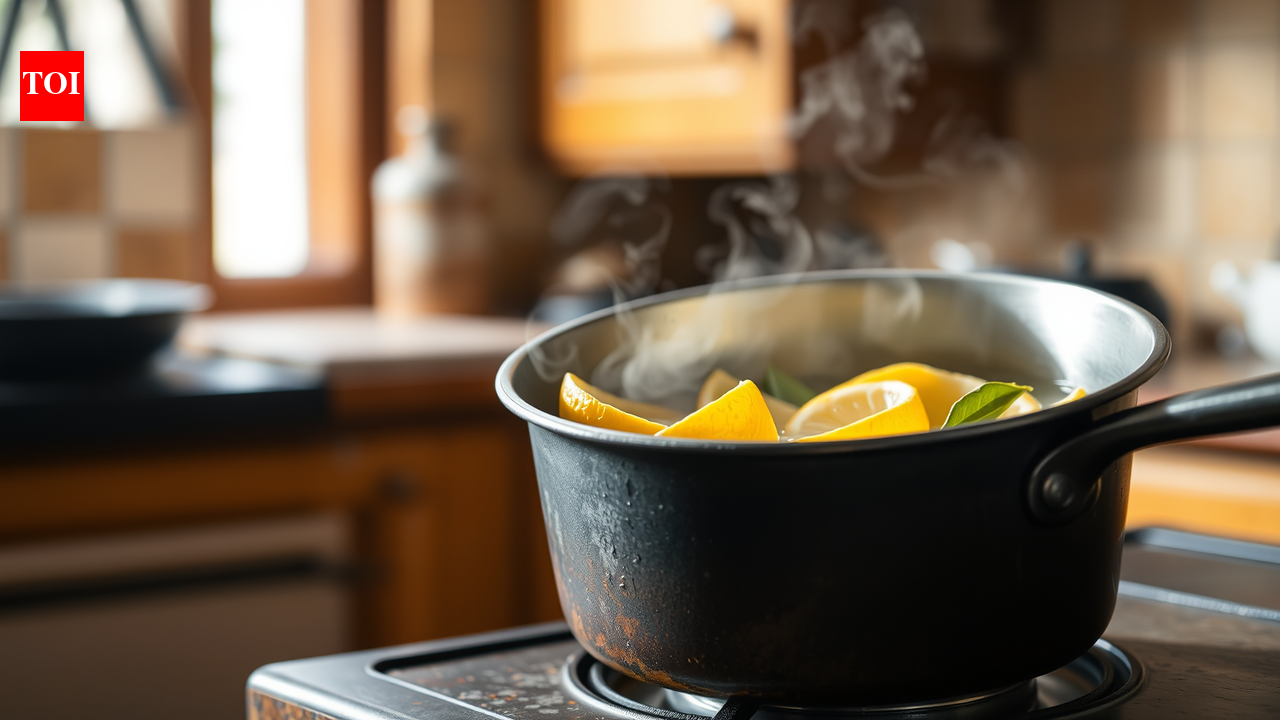
From refreshing living spaces to masking any bad odour that may arise in them, this kitchen hack is proving to be quite popular on social media platforms. This is the assessment from studies and experts on its potential benefits and limitations. Social media often turns ordinary household items into viral hacks, and one current trend uses only lemon peels, bay leaves, and water boiled in a pan.
All you have to do is put some lemon peelings together with a couple of bay leaves in water, heat it until it boils, and let the fragrance spread through the house. Supporters of this trick say that it naturally refreshes the air in your home, helps hide cooking odours, and repels insects. Although it undoubtedly makes a nice scent, there are several facts about this trend whose scientific basis requires some clarification.Why do lemon peels and bay leaves smell so good?The smell comes from naturally occurring compounds in both ingredients.
As the lemon peel and bay leaf are heated, some of these volatiles mix into the vapour and produce an aromatic, herbal smell.Lemon peel is naturally rich in d-limonene, the compound responsible for much of its characteristic citrus aroma. A comprehensive review published in Frontiers in Plant Science, available through PubMed, notes that limonene is the dominant volatile compound in citrus peel essential oils and typically accounts for 48 to 70 per cent of the essential oil in lemon (Citrus limon) peels, although the exact amount varies depending on the variety and growing conditions.The review also notes that limonene is not just abundant but chemically versatile: in citrus peels it appears mainly as the d-enantiomer, and peel oils can contain dozens of other volatile terpenes, including β-pinene, myrcene and linalool.
It adds that composition shifts with species, cultivar, ripeness and extraction method, which is why reported limonene levels can vary so widely from one lemon oil to another.Bay leaves' aromatic smell is due to volatile compounds such as 1,8-cineole (or eucalyptol), linalool, and eugenol. In a study analysing the composition of Laurus nobilis essential oil, these compounds were detected to be some of its primary constituents.
When the water is boiling, these volatile substances will boil along with the steam and create a fragrant smell that is used as a natural method of refreshing the air inside buildings. The fragrance itself is scientifically explainable, but it is not necessarily beneficial for indoor air quality. Is it really capable of getting rid of any foul smell inside the house?Well, to some degree, yes.
Instead of addressing the source of the foul smell, the boiling mixture only masks the smell of food preparation, humid or stale indoor air, or other odours through the release of aromatic volatile compounds into the air. Simmer pots containing citrus fruits, herbs, and spices are sometimes recommended by experts as a natural alternative to candles and artificial air fresheners.According to the US Environmental Protection Agency, controlling pollution at its source and improving ventilation are among the most effective ways to maintain healthy indoor air, rather than relying on fragrances to mask odours.Does it help ward off the bugs?That is where the internet seems to run ahead of scientific knowledge.
According to an MDPI-indexed study, citrus peel essential oils showed mosquito-repellent activity against Aedes aegypti, with researchers suggesting they have potential for use in natural mosquito repellent formulations. In the study, fresh peels from eight citrus cultivars grown in Pakistan were steam-distilled and analysed by GC–MS.
Limonene dominated every oil sample, and the strongest mosquito repellency came from C. aurantium and C. sinensis var. Malta CV. Shakri Malta, which protected female Ae. Aegypti for 45 minutes at 166 µg/cm².Likewise, bay leaf extracts have been shown to act as insect repellents in laboratories, but there is no proof that cooking a bunch of bay leaves will result in an effective repellent of mosquitoes in one’s house.
In short, even if the smell does manage to repel certain insects nearby, it is no replacement for a tested method of mosquito control.How to try this hack at homeIf you would like to give it a whirl, the process couldn’t be simpler. Start by adding the rind of one or two lemons and three or four bay leaves to a saucepan that is half full of water.
Let this simmer gently for about 10-15 minutes. As the water evaporates, add more water as needed to keep the saucepan from drying out while it heats. It is not uncommon for others to throw in either a cinnamon stick or a few cloves as well to add an extra aroma.You must always watch the saucepan while it is on the stove.
Boiling bay leaves and lemon peels can create a natural room fragrance at low cost using materials that would usually be thrown away. The good smell emanating from this recipe comes from the release of natural aromatic chemicals caused by heating, which is found to have a refreshing effect.However, there is little to no scientific research proving that this recipe has air purification capabilities or can function effectively as a mosquito repellent.
While this may prove effective in making your room smell fresh, it is more practical as a method for recycling materials in the kitchen rather than air filtration or mosquito removal.This recipe may appeal to anyone who wants to try a simple recycling-based way to create a fresh smell from natural materials.
Other than smell, compounds found in lemons and bay leaves have become objects of study because of their antimicrobial and antioxidant properties. The studies on the extracts of citrus peels have looked into their role in the preservation of food and other purposes, whereas studies on bay leaf compounds have looked into their effect on some microbes.
Nevertheless, these findings have mostly been done using extracts or essential oils made in laboratories, which are different from just simmering done at home. That is why the kitchen trick cannot be a replacement for the products scientifically tested to clean.Get the latest lifestyle news and trends.
Download the TOI App.