
Boston migrants say the choice is to integrate or 'be outside'
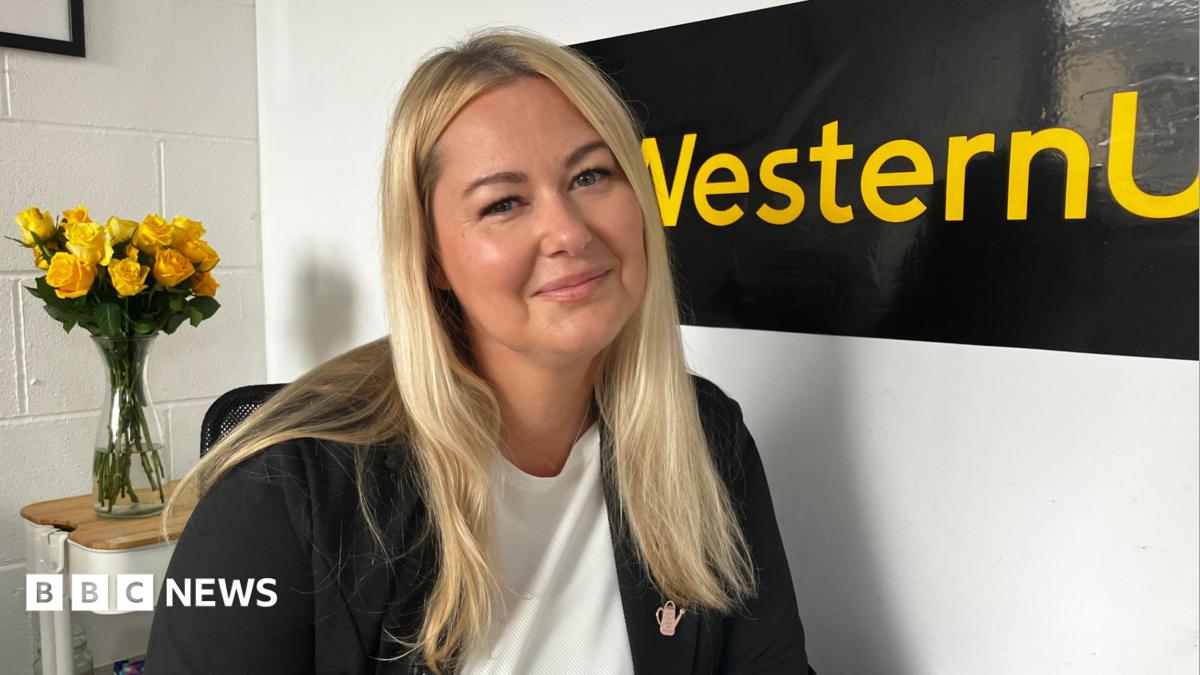
Iga Bontoft came to Britain from her native Poland 15 years ago, determined to make a new life with her young son. Today, she runs an advice centre for foreign nationals in the centre of Boston, Lincolnshire.
She believes integration is the key to bringing people from different backgrounds together.
"You can't be a part of a community if you don't integrate," Bontoft says. "If I move somewhere and want to make it my place, I need to get to know the people, get to know the mentality."
Boston has been labelled Britain's "Brexit capital" after recording the highest leave vote in the country in 2016.
In the years leading up to the referendum, large numbers of EU citizens came to live and work in the area, many attracted by jobs in food production.
Ten years on from the referendum, many migrant workers say they have worked hard to integrate and contribute to the economy.
Bontoft says she found herself having to adapt soon after arriving in Boston.
Simply opening a bank account without a fluent English speaker to help was daunting.
"I remember the lady I met when I walked into [the] bank. She was so open and approachable and good and kind and she made me believe everything was fine.
"I think if my first interaction hadn't gone so well, I would have felt more nervous about my next ones."
At her advice centre, a poster behind her desk tells visitors translation is not just about understanding words, but about understanding a whole culture.
"If I didn't integrate I would start to drink, or get into depression because I'd feel isolated," she says.
"And this is the problem many people have in Boston. They feel isolated and they come to the conclusion this is Boston's fault that you feel like that.
"If you don't integrate you are outside. And you don't want to be outside."
More than three quarters (75.6%) of voters in Boston chose to cut ties with Brussels in the Brexit vote on 23 June 2016.
The proportion of EU citizens born outside the UK and living in the borough grew from 474 (0.7%) in 2001, to 14,099 (20%) in 2021, according to census data from Nomis.
The influx led to concern from some about increased pressure on public services and in 2017, the town was given £1.4m to deal with issues including antisocial behaviour, rogue landlords and the provision of English lessons.
Bontoft acknowledges that not everyone finds it easy to integrate.
"The language barrier is a massive thing because, obviously, if you want to understand someone, if you want to communicate, you will, but very often people are just not wanting to get to know you."
She adds: "It is difficult to integrate if you are surrounding yourself with foreign nationals.
"Then you have a community within a community."
Bartosz Fedkowicz believes integration should work both ways.
He is a mechanic who takes photographs in his spare time to show the diversity and multiculturalism of his new home town.
"We can live side by side. We can live together. I simply want to break stereotypes and show Bostonians in a positive light," he says.
Fedkowicz arrived from Poland in 2013 and was joined by his wife and two children.
After the referendum, he says people felt afraid.
"Some people thought that the next day we would all pack up and go home.
"My kids had changed their whole lives, so changing again would have been hard for them."
Fedkowicz believes lessons can be learnt from younger people who don't "know or care" where people are from.
"Some people just expect integration from me, but I expect it on both sides," he adds. "And respect on both sides too."
Ten years after the referendum, Boston is still dealing with the changes immigration has brought.
Mark "Billy" Billingham, a town centre hairdresser and barber, has been in Boston for nearly 12 years after training in Bury St Edmunds, Suffolk.
He says he does not see enough willingness from some groups of people to fit in.
"It's great to have lots of different nationalities here, but some people aren't willing to integrate. They're not willing to learn basic English," he says.
Billingham, who is self-employed, also believes there is a perception locally that migrants have more opportunities than British people in the midst of a cost of living crisis.
"We can't keep giving money out. When people are struggling, they find it hard [to see that happening].
"As hairdressers we're noticing people are going longer between hair appointments because they can't afford them as regularly.
"I don't know if this is true, but it always looks as if people arrive here and then are given a home and given an allowance. I think that's why people voted for Brexit."
Data released in May 2026 showed 8.3 million people received universal credit (UC) in February that year, 84.52% of whom were British and Irish nationals.
More than a million claimants were born overseas, including nearly 750,000 EU citizens who arrived in the UK before Brexit and have the right to live and work in the UK.
Before Brexit, EU citizens were able to claim housing and council tax benefit if they were in work in the UK, or self-employed, and had passed a "habitual residence test".
Those who chose to remain after Brexit can still access social housing and homelessness assistance, external as long as they retain their right to reside, external through the EU Settlement Scheme.
However, these arriving from the EU after Brexit will not usually be eligible, external until they are granted indefinite leave to remain (typically after five years of continuous residence).
Gediminas Vasiliauskas, who came to Boston from Lithuania in 2008, and Nathan Baldwin, who was "born and bred" in the town, have become friends.
At the Church Keys Wine Bar and Restaurant, they offer their views on the decade since Brexit.
Baldwin, 38, says the referendum came "too late" and nothing has changed.
"Just walk around Boston. It's nothing like the town it used to be.
"There is no town centre," he adds. "It's sad."
Vasiliauskas also thinks the area has got worse in the years he has known it.
He believes many Europeans are now coming over for benefits and not looking for work like he and others he knows.
"Eighteen years I've been here and no benefits. I've never looked for benefits. I like to work.
"I think Brexit was a good thing but now there are even more foreigners."
The Department for Work and Pensions has said most foreign nationals can claim UC only at the point of settlement, usually after five years' residency, but there are exceptions, such as for victims of modern slavery.
Government figures show the proportion of UC claimants who were born overseas remained broadly level, at 17% in April 2022 and 15.5% in February 2026.
According to the most recent figures for January 2026, more than 57% of EU citizens claiming UC were in employment.
Fedkowicz also believes Brexit has made things worse. He blames this on short-term seasonal work visas, external, which allow people to come for up to six months.
He believes it means people are less likely to integrate as they are in the country for such a short time and are not coming to make a new life.
For her part, Bontoft says she now thinks in English, listens to audiobooks and watches TV in English, and even has a sense of humour that is more English than Polish.
"Brexit gave people a voice. But I think people were really voting for a change. They voted pro-change, not pro-Brexit. I get the need for change, I really do," she says.
"I definitely believe there is a problem with immigration. It should be controlled. There should be a vetting process, but we're not necessarily going the right way about it. I think we should check who we are letting in.
"We have work available here and we have people who want to work. Let them in and get rid of the ones who don't want to work."
She adds: "I just hope we can find a way to communicate better and integrate better and just be happy together."
Listen to highlights from Lincolnshire on BBC Sounds, watch the latest episode of Look North.