
Bryan Kohberger's guilty plea move is "no coincidence"—Netflix doc producer
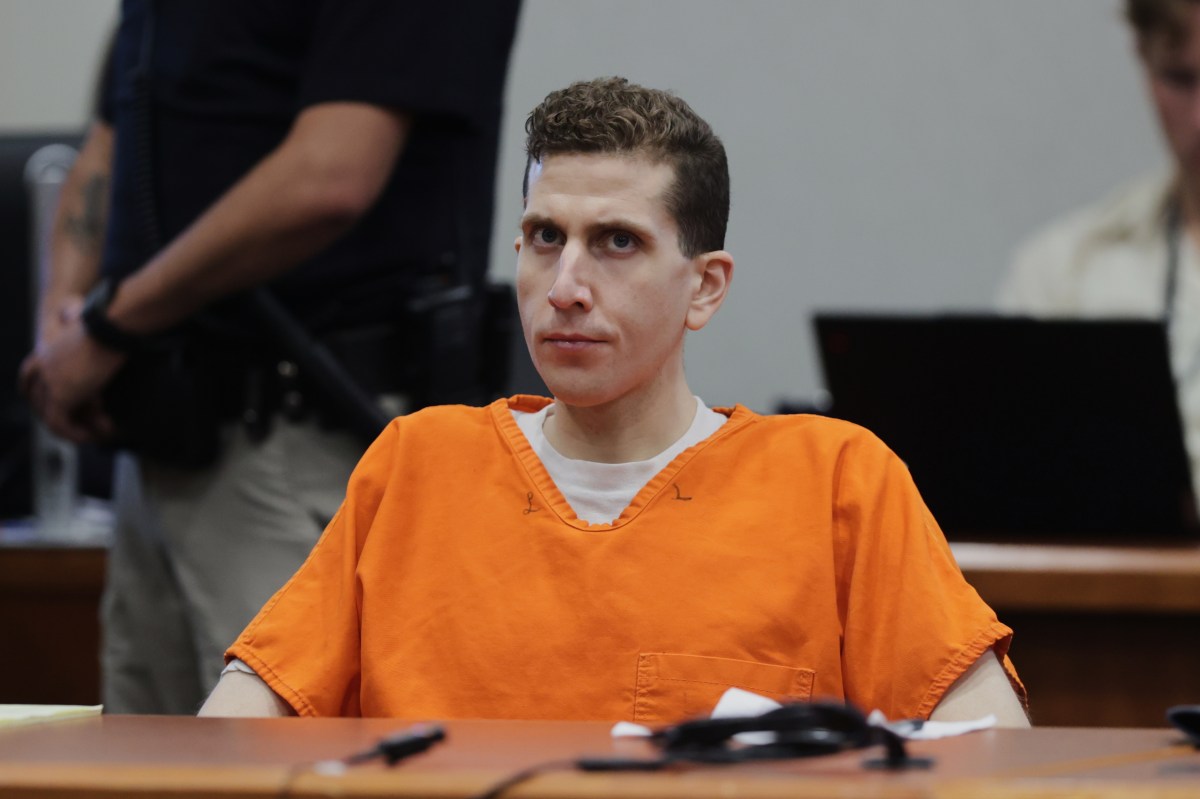
The timing of Bryan Kohberger’s bid to withdraw his guilty plea and go to trial for the murder of four University of Idaho students is “no coincidence,” the producer of a recently released Netflix docuseries about the case told Newsweek.
Joe Berlinger, the executive producer of The Idaho Murders: College Nightmare, said he believes Kohberger was prompted to file the application after the first trailer for the docuseries was released in mid-July, even though his deadline to file a petition for post-conviction relief is not until September.
“There’s a certain amount of time you have to make that challenge and that clock was starting to run out but I think the timing is no coincidence,” he said. “Netflix trailers get wide pickup...[A]ll of a sudden, he's protesting his plea deal.”
Two days before the docuseries was released on Netflix on July 29, Kohberger, 31, filed a handwritten petition from the Idaho Maximum Security Penitentiary where he is serving four consecutive life sentences for the 2022 murders of Kaylee Goncalves, 21, Ethan Chapin, 20, Xana Kernodle, 20, and Madison Mogen, 21.
Prosecutors have yet to respond to the filing.
He had pleaded guilty in July 2025 to the fatal stabbings at a rental home in Moscow, Idaho. But in his petition for post-conviction relief, he said his attorneys didn’t adequately represent him and that his guilty plea wasn’t knowingly or voluntarily entered because it “was induced by unkept promises” and threats.
Idaho Attorney General Raúl R. Labrador responded to Kohberger's petition, saying his office was ready to do "whatever is necessary" to ensure justice was carried out.
Berlinger suggested Kohberger timed the move in a bid for significance and attention.
“The classic killer like this, they do it because they feel so insignificant in life. This is a way of gaining significance and being talked about,” he said.
Newsweek has contacted Kohberger's attorney for comment via an email sent outside regular business hours on Tuesday.
Berlinger said he made a decision very early on that the docuseries would be focused on the victims rather than Kohberger.
“Right from the get-go, we wanted to focus on the victims and we did not reach out to the family,” he said. “We did not want to hear from Kohberger's family.”
That influenced his decision to hire Skye Borgman to direct, he said.
“She is known for very victim-focused filmmaking,” he said. “So the decision to have Skye direct was a very conscious decision and she did an amazing job.”
Best known for Netflix documentaries including Abducted in Plain Sight, Girl in the Picture and Sins of Our Mother, Borgman has often focused on victims and survivors and the human impact of crime.
Berlinger added: "The goal here was to really celebrate the lives of these people and instead of focusing on the killer, we want viewers to recognize just how tragic the robbing of these lives were, and to celebrate who they were in life, not just in death."
Berlinger sent a crew to Moscow shortly after the murders took place in November 2022.
That decision was unusual, he noted, since his production company doesn’t typically follow breaking news.
But he said the tragedy had struck a “deep chord” with him since he has two daughters, who had both recently graduated college at the time.
“The parental interaction with your children during college is such an incredible, growing, wonderful time for the whole family,” he said.
“I’ve covered a lot of crime over the years and this one just hit me in the gut… a very normal town, very normal kids. College is supposed to be a place of safety, particularly in that part of the world. And this just brutal, vicious, senseless crime. I just felt compelled to like see where it would go.”
He also stressed his commitment to provide a “complete and accurate” overview of the case rather than rush to release it before other documentaries.
“My decision was, if this takes 10 years, we're gonna take 10 years. If it takes five years, if it takes whatever it takes, we wanna tell the complete and accurate story,” he said.
Part of the series focuses on the frustration from some of the families of the victims over the last-minute plea deal that was reached just weeks before Kohberger was set to go on trial. The agreement allowed Kohberger to avoid the death penalty and plead guilty to the murders without explaining his motive.
“I'm highly critical along with the [victims'] families for the decision to not involve the parents in the decision for the plea and allowing the plea to not include an explanation,” he said.
"While there's never closure when you've when someone has been robbed from you in such a horrible way… one way to move on with your life is to know what happened and why and I think that being robbed from the families was a tragic mistake.”
But Berlinger said he gives the Moscow Police Department “all the credit in the world” for solving the case.
The police department had come under fire as it publicly provided few details about the investigation while working diligently to track down the suspect as the community remained on edge with the perpetrator at large for weeks.
Investigators pieced together DNA evidence, cell phone data and surveillance video to link Kohberger—who had a graduate student studying criminology at Washington State University in Pullman—to the crime, and he was arrested at his parents' home in Pennsylvania six weeks after the slayings.
Berlinger describes Kohberger as a “classic psychopath,” saying he believes he was motivated by wanting to commit the "perfect crime.”
“I do believe he was obsessed, he was looking to commit the perfect crime. He was obsessed with criminology. It was the one time he came alive was in those criminology classes,” he said.
“Had he not done the blunder of leaving behind the [knife] sheath… he might've gone on to do other crimes. So he's a classic psychopath, thinks he's the smartest guy in the room, alienated and lonely, obviously hates women.”
The knife sheath was crucial to prosecutors' case against Kohberger. DNA on the knife sheath found at the crime scene was matched to that of Kohberger's father's. The latter's DNA had been recovered from trash outside the family's home in Pennsylvania, prosecutors said.
Washington State University, where Kohberger was a student, had received several complaints from faculty members, staff as well as students over his "rude and belittling behavior toward women and his unprofessional rude dealings," according to Idaho State Police files.
Berlinger said his hope for the docuseries would be to reinforce to viewers, particularly young people, the importance of taking precautionary measures for their safety.
“One of the reasons I always do these kinds of shows is as a cautionary tale for young people that you have to be very careful, like they didn't lock their doors at night. It wasn't hard for Kohberger to break in," he said.
“First and foremost, I want people to just you know take the extra caution in their life to not put themselves in those kinds of situations.”