
Burnham calls for grooming gang ringleader to be deported
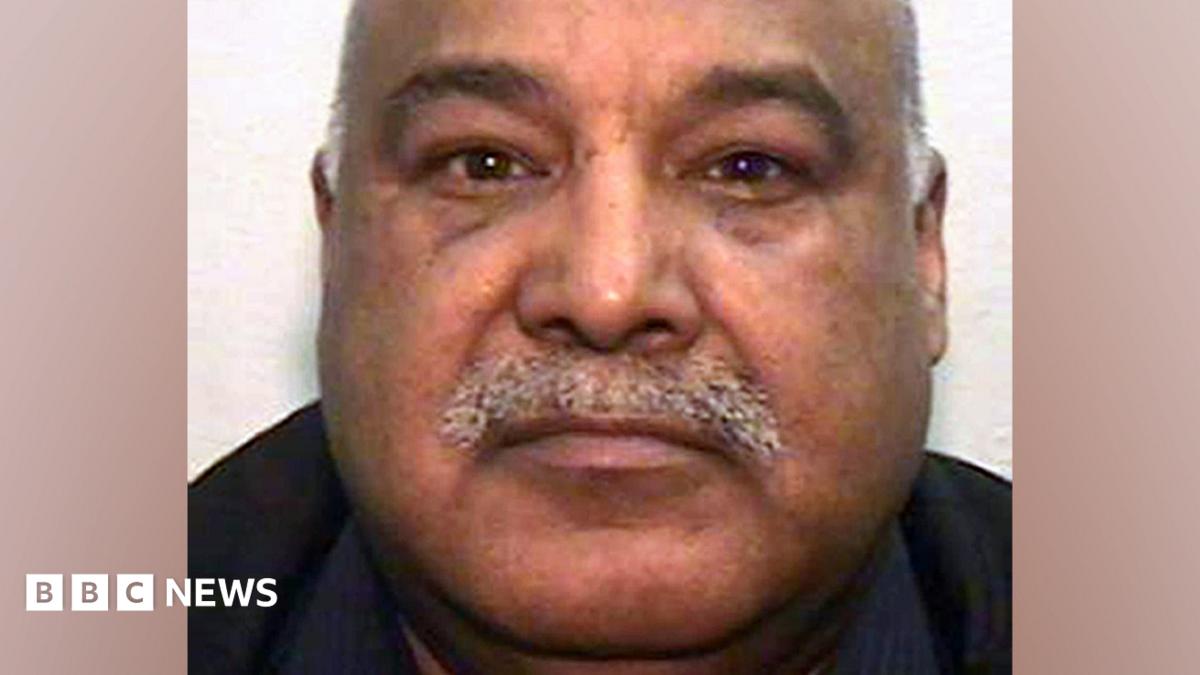
Andy Burnham has said he will ask the home and foreign secretaries to "review all possible options" to deport the ringleader of a notorious Rochdale grooming gang.
Shabir Ahmed is due to be released from jail this week, after being convicted for multiple counts of rape and sexual offences against girls in 2012.
Ahmed had dual British-Pakistani citizenship and was stripped of his British citizenship following his conviction.
The Home Office said it was working with other government departments to explore options in the case.
Burnham, who is widely expected to succeed Sir Keir Starmer as prime minister later this month, said he wanted to see Ahmed removed from the country.
But documents shared online, reportedly from the Probation Service, say Ahmed cannot be deported back to Pakistan because of a law that bars his removal.
Ahmed's victims have said they fear for their safety ahead of his expected release from jail.
In a post on X, external, Burnham wrote: "Like everyone, I want this vile criminal out of the country. Victims must come first.
"I will ask the home and foreign secretaries to review all possible options - and they should consider nothing is off the table."
In response, a spokesperson for the Home Office said: "We are committed to doing everything possible to deport FNOs [foreign national offenders] and are clear they should have no place in this country."
"As previous governments have found, this necessarily involves the agreement of the receiving country, which has not always been possible.
"But we are currently working with colleagues across government to explore all possible options in this case."
In 2022, when Burnham was mayor of Greater Manchester, he called on the Conservative government "to do everything" within its power to deport grooming gang members.
Earlier on Wednesday, Justice Minister Jake Richards told the BBC's Politics Live there were long-standing issues with "our ability to deport foreign national offenders to Pakistan".
"We need to try and work on that and see whether it's possible, but in this case, it seems unlikely," Richards said.
When asked if the law should be changed to allow the deportation of the Ahmed, Richards said: "I think it's very difficult to change the law to look retrospectively."
But he added he was "absolutely looking at this individual and if he is to be released from prison, looking at what we are doing to ensure, firstly, to look after his victims and keeping the community safe".
One victim, identified only as "Ruby", is being supported by The Maggie Oliver Foundation, set up by Maggie Oliver, an ex-police detective turned whistleblower over grooming gangs.
In a statement, Ruby said: "I'm scared for my safety and my kids' safety.
"The main ringleader is getting out of prison, who is well known in Rochdale, Oldham and Middleton, so even if he's not in that area, he still knows people and has a chance to talk to people from that area and that makes me unsafe."
Oliver told BBC Newsnight Ruby is "quite rightly scared, but feels that she is once again an afterthought".
The Home Office has previously said Ahmed's crimes were "appalling" and that he would be subject to stringent licence conditions upon his release from prison.
Ahmed must initially live in supervised accommodation 24/7 and will be subject to an "exclusion zone" centred on Rochdale.
The papers published online said Ahmed cannot be deported back to Pakistan because of provisions under the Immigration Act 1971.
The act says because Ahmed arrived in the UK before 1973 and lived in the country for at least five years before his deportation was considered, his removal is barred.
Ahmed was jailed for 19 years in 2012 at Liverpool Crown Court, one of nine men in the Rochdale grooming gang trial convicted of offences against five girls.
Police said as many as 50 girls could have been victims of the gang, and that many of them had come from "chaotic", "council estate" backgrounds.
Judge Gerald Clifton said victims were treated "as though they were worthless and beyond any respect" because they were not part of the gang's community or religion.
Greater Manchester Police said at the time there was no "racial or cultural" element to the crimes.
A report later found that police had not acted despite multiple concerns being raised. It said there had been "serious multiple failures" by police and local authorities.