
Index  ›  business  ›  City PM
business · City PM ↗

Starmer agrees investment deal with Japan as EU deal questioned
City PM Published Jun 13, 2026 Reviewed Jun 30, 2026 ✓ Reviewed by citations.press editors
Citation-ready fact
The UK government agreed an £18 billion investment deal with Japan.
18 bn pounds · investment deal
UK government, government
View source ↗
Citation-ready fact
Lord Lilley said that over the UK's 28‑year EU membership, British goods exports to the EU grew less than 1 % per year, while exports to non‑deal countries grew by 87 % and 92 % of British firms do not export to the EU.
28 years · EU membership durationless than 1 · annual export growth to EU87 · export growth to non‑deal countries92 · British firms not exporting to EU
Lord Lilley, trade secretary
View source ↗
Citation-ready fact
Japanese investors outlined a five‑year investment pipeline worth more than £9 billion.
more than 9 bn pounds · investment pipeline
Keir Starmer, UK Prime Minister
View source ↗
Citation-ready fact
The UK government claims the food‑standards deal will add £9 billion to the UK economy each year.
9 bn pounds · annual economic benefit
UK government, government
View source ↗
Citation-ready fact
Policy Exchange researchers say the UK should aim for 42.5 % renewable energy consumption by 2030.
42.5 · renewables share target
Policy Exchange, researchers
View source ↗
Citation-ready fact
Current UK renewable energy share is as low as 16.4 %.
16.4 · current renewable share
Policy Exchange, researchers
View source ↗
Citation-ready fact
The UK government has agreed an £18bn investment deal with Japan.
18 £bn · investment deal
UK government
View source ↗
Citation-ready fact
Sir Keir Starmer stated that Japan is the fourth largest economy in the world.
4 rank · economy size
Sir Keir Starmer
View source ↗
Citation-ready fact
Japanese life sciences firm Eisai is set to invest £48m to work on AI and quantum tech.
48 £m · investment
Eisai, Japanese life sciences firm
View source ↗
Citation-ready fact
Sir Keir Starmer stated that Japanese investors are setting out a five-year investment pipeline worth more than £9bn.
5 year · investment pipeline durationmore than 9 £bn · investment pipeline value
Sir Keir Starmer
View source ↗
Citation-ready fact
A text shared on the investment deal with Japan stated that an international contract would be signed by the end of the month.
1 month · international contract signing
A text shared on the investment deal with Japan, document
View source ↗
Citation-ready fact
Policy Exchange researchers suggested that 10 years have passed since the Brexit vote.
10 year · time since Brexit vote
Policy Exchange researchers
View source ↗
Citation-ready fact
Lord Lilley stated that over the UK's 28-year EU membership, British goods exports to the EU grew less than one per cent a year, while exports to countries without a trade deal grew four times as much, by 87 per cent.
28 year · EU membership durationless than 1 % per year · British goods exports growth4 times · export growth comparison87 % · exports growth
Lord Lilley, trade secretary
View source ↗
Citation-ready fact
Lord Lilley stated that 92 per cent of British firms do not export to the EU.
92 % · British firms not exporting to EU
Lord Lilley, trade secretary
View source ↗
Citation-ready fact
The joint programme with Italy and Japan is valued at £6 billion.
6 bn pounds · joint programme
View source ↗

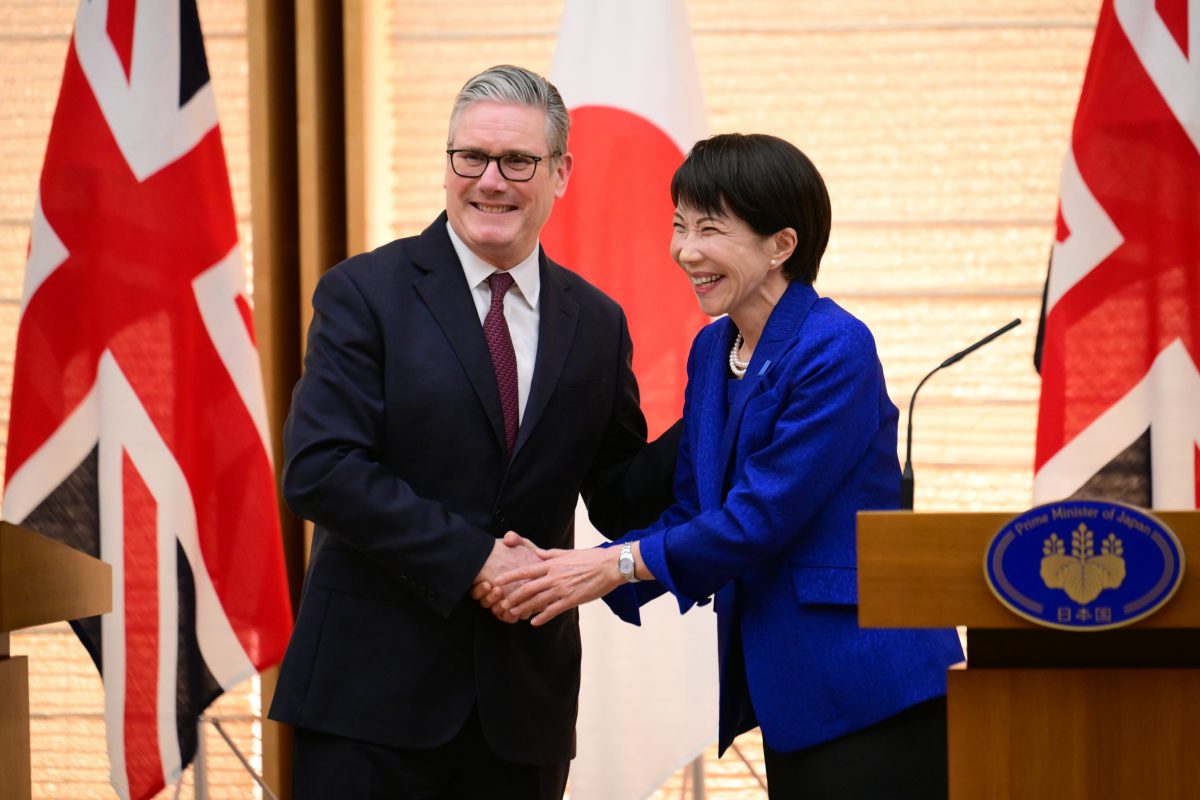
The UK government has agreed an £18bn investment deal with Japan in a bid to boost post-Brexit international ties but questions are now looming over Sir Keir Starmer’s “reset” deal with the EU. 

Starmer said “landmark agreements” with Japan on technology and life sciences would lift the UK economy and improve trade with the fourth largest economy in the world. 

Japanese prime minister Sanae Takaichi visited Downing Street to develop security ties with the UK, just months after Starmer visited Tokyo. 

Deals include a new export agreement involving Rolls-Royce, which will work on nuclear research with Japan’s Atomic Energy Agency. 

Japanese life sciences firm Eisai is also set to invest £48m to work on AI and quantum tech. 

Starmer said: “The visit delivers a major vote of confidence in the UK economy, with Japanese investors setting out a five-year investment pipeline worth more than £9bn, expected to build new towns and provide high-quality office space and innovation hubs.”

Downing Street did not provide any details on the Global Combat Air Programme in security, with the Defence Investment Plan (DIP) having been set back by another delay following the resignation of John Healey

The £6bn joint programme with Italy and Japan is seen as a crucial part of the DIP given the significance and cost of stealth fighter jets in warfare.

A text shared on the investment deal with Japan said parties expected to confirm their “shared commitment” to GCAP while an international contract would be signed “by the end of the month”.

Improved relations with Japan come as the UK has pushed to boost international ties in the years since Brexit.

Starmer has also made a Brexit “reset” central to his bid on improving growth in the UK, with last year’s agreement on food standards and energy markets set to be scrutinised in parliament before coming into effect. 

But 10 years since the Brexit vote, Policy Exchange researchers have suggested that the UK’s new deal will cost Brits more than the benefits estimated by government analysts. 

The report argued that the government’s claim the food standards deal would add £9bn to the UK economy each year would end up costing UK producers more due to new regulations. 

It also raised alarm over a need to adopt a target of 42.5 per cent renewables in total energy consumption by 2030 when the current UK share went as low as 16.4 per cent.

Lord Lilley, the trade secretary who oversaw the UK’s entry into the EU single market, said he was “wrong” to claim the free trade framework would boost exports. 

Over our 28-year membership British goods exports to the EU grew less than one per cent a year, while our exports to countries we had no trade deal with grew four times as much—by 87 per cent,” he said. 

“This unilateral submission won’t help our exporters (who already conform to EU rules) but will burden the 92 per cent of British firms that don’t export to the EU with the overregulation which has crippled EU growth.”

This article was originally published by City PM ↗. citations.press indexes the source-backed facts above and links to the original. Something wrong? Corrections policy · Report an error