
Can a biopsy really make cancer spread? Oncologist explains why this decades-old myth is still putting lives at risk
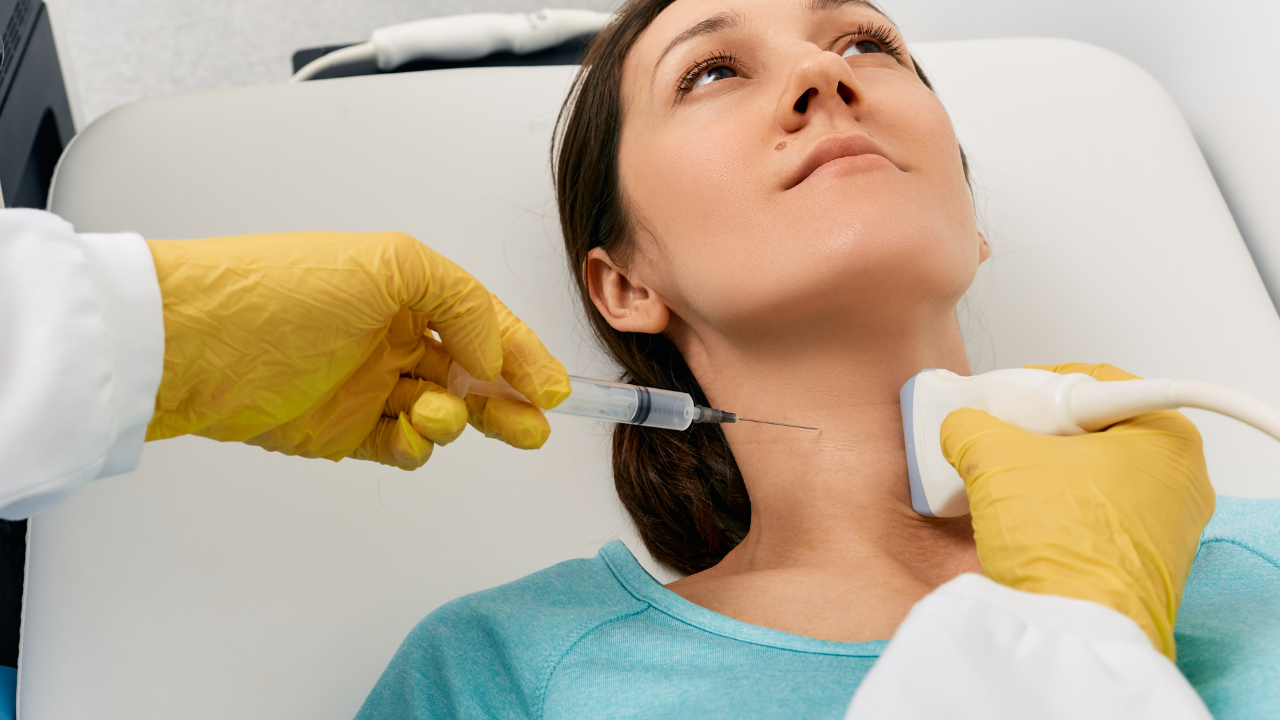
A lump appears. A doctor recommends a biopsy. Instead of relief that an answer is finally within reach, many families are overcome by fear. One sentence often changes everything: "Don't get it touched. A biopsy will make the cancer spread."This belief has existed for decades and continues to influence cancer care across India.
As a result, many people postpone the very test that could confirm the disease and help doctors begin the right treatment. By the time they return, the cancer has often progressed, not because of the biopsy, but because precious time was lost.Cancer specialists say this is one of the most persistent myths they encounter.
While the fear stems from a rare scientific phenomenon that is frequently misunderstood, decades of research show that a biopsy is a safe and essential step in diagnosing cancer. The real threat is not the procedure itself. It is the delay caused by avoiding it.The myth that refuses to disappearAccording to Dr Mandeep Singh Malhotra, Surgical and Molecular Oncologist and Founder & Chief Mentor of Art of Healing Cancer, one of the most common fears patients bring into his clinic has little to do with pain and everything to do with the belief that a biopsy can make cancer spread."Almost every week, someone tells me, 'Doctor, if you cut it, it will spread.' Families repeat it, neighbours reinforce it, and patients postpone the test."He explained that this belief is linked to a real scientific term called needle-tract seeding, but it is often misunderstood."Actually, this concern is linked to a genuine scientific phenomenon known as needle-tract seeding.
These phenomena said that a few tumour cells may be displaced along the path of the biopsy needle. However, this event is extremely uncommon and should not be confused with cancer spreading. Seeding is not the same as spreading. A few displaced cells sitting in a needle track are not a metastasis."In simple words, a few cells may rarely move along the path of the biopsy needle, but that is very different from cancer travelling through the body and forming new tumours.
Doctors call that metastasis, and there is no evidence that a routine diagnostic biopsy causes it.The American Cancer Society also states that biopsies are the standard way to diagnose cancer accurately and that concerns about biopsies spreading cancer are not supported by clinical evidence.Why a biopsy is still the most important stepA biopsy is much more than removing a small piece of tissue.
It gives doctors answers that scans alone cannot.It reveals whether a lump is cancerous or harmless. It identifies the exact type of cancer. It can also show how aggressive the disease is and whether certain medicines are likely to work.Modern cancer treatment depends on these details. Precision medicine, targeted therapy and immunotherapy all begin with an accurate diagnosis.Dr Malhotra said that even in the rare situation where a few tumour cells are displaced, the body has multiple ways of dealing with them."If tumour cells are displaced during a biopsy, they are usually removed when the tumour is surgically excised.
In many cases, radiotherapy, systemic treatment and the body's own immune system also eliminate these cells."Without a biopsy, doctors would often have to make treatment decisions without knowing exactly what they are treating."The diagnosis is not the danger. The delay is. Biopsy helps precision oncology.
It helps deciding the treatment approach. Without this we would be treating in the dark."Why the myth feels believableOne reason the misconception survives is because of timing.In many parts of India, patients do not receive biopsy reports immediately. There can be a gap of two or even three weeks before the final report reaches the treating doctor.During those weeks, the tumour continues to grow naturally.Patients often connect the two events.The biopsy happened.The lump became bigger.Therefore, the biopsy must have caused it.But that conclusion ignores what the cancer was already doing.Dr Malhotra explained, "In many tier-two and tier-three cities, it takes two to three weeks to reach final report to the treating doctor.
During that period, the untreated cancer continues to grow naturally. The patient does not see natural history. He sees cause and effect. The biopsy happened; the lesion grew. The conclusion writes itself — and it is wrong. This delay unintentionally reinforces the misconception that the biopsy triggered the growth, when in reality the cancer was progressing on its own."This is a reminder that our minds naturally look for patterns, even when those patterns are misleading.Scientists have studied the concern, and the evidence is reassuringDoctors do not dismiss the fear simply because they want patients to agree.
Scientists have spent years studying it.Dr Malhotra acknowledged that every medical procedure, including a biopsy, triggers the body's natural wound-healing process. Inflammation develops, new blood vessels form and the immune system becomes active.Laboratory experiments and animal studies have suggested that this temporary environment could theoretically favour tumour cells.
But what happens in a laboratory does not always happen in real life."Every tissue injury, including a biopsy, activates the body's wound-healing response, leading to inflammation and new blood vessel formation. Laboratory and animal studies suggest that this temporary inflammatory environment may favour tumour cells.
However, these findings have not translated into poorer outcomes for patients. So, the fear is not irrational. It is simply misdirected, and it is mis proportioned."This distinction matters.Scientists often investigate worst-case possibilities in controlled settings. What guides medical practice, however, is evidence from thousands of patients over many years, and that evidence continues to show that diagnostic biopsies are safe and essential.The real risk is waiting too longCancer is most treatable in its earliest stages.
Every unnecessary delay reduces those chances. Take oral cancer as an example.According to survival data cited by Dr Malhotra, patients whose oral cancer is diagnosed while it is still localised have a five-year survival rate of nearly 79%. Once the disease spreads to distant organs, survival falls to around 19%.Unfortunately, nearly two-thirds of oral cancer patients in India are diagnosed only after the disease has reached an advanced stage.A biopsy does not create that delay.
Fear does.The irony is painful. A test designed to provide clarity is often avoided because of a myth, while the disease quietly progresses in the background.Medical experts consultedThis article includes expert inputs shared with TOI Health by:Dr Mandeep Singh Malhotra, Surgical and Molecular Oncologist and Founder & Chief Mentor of Art of Healing Cancer.Inputs were used to explain why delaying a biopsy can allow serious diseases to progress and why early testing can improve diagnosis and treatment outcomes.