
How Hong Kong built the most skyscrapers in the world—beating every US city
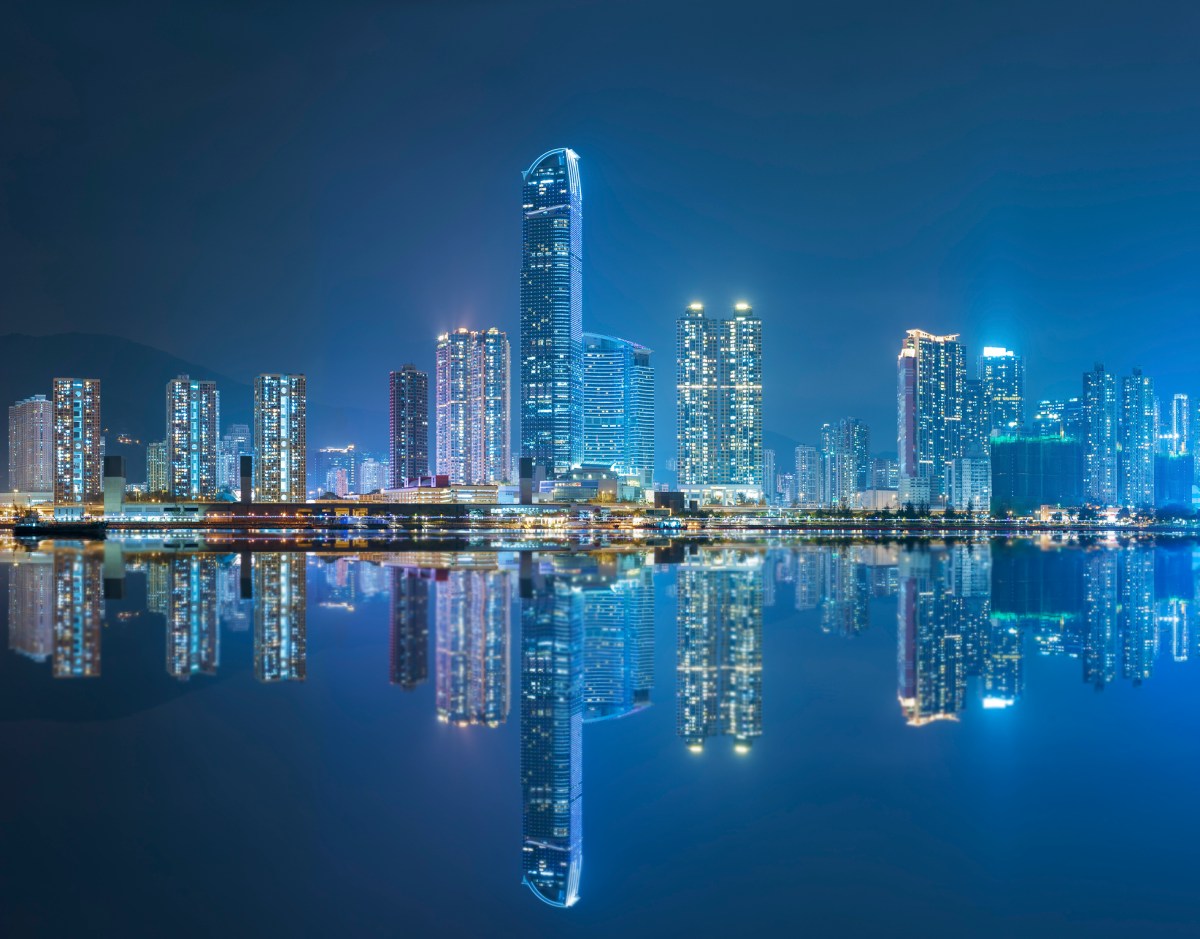
The city with more skyscrapers than any other place in the world is not New York, Chicago, or Dubai—but none other than Hong Kong.
With 569 buildings rising above 150 meters (around 492 feet), Hong Kong far surpasses New York City, which has just over 320 such towers, according to data from the Council on Vertical Urbanism.
The council defines a “tall building” as one typically exceeding 14 stories or 50 meters (around 164 feet) in height—a threshold that Hong Kong's skyscrapers have surpassed by a wide margin, reshaping the city into one of the most vertically dense urban environments in the world.
The scale of its cityscape is striking. Hong Kong’s skyline includes 102 buildings taller than 200 meters (around 656 feet) and six “supertall” towers exceeding 300 meters (around 984 feet). Its total number of buildings over 150 meters tall is nearly double the amount in New York City, and far ahead of Chicago, the home of the world’s first-ever skyscraper, which has 137.
As cities such as Hong Kong, New York, and Dubai push the limits of vertical design, the global race to build taller structures is intensifying. But this expansion comes with growing environmental challenges.
Buildings and construction collectively account for 39 percent of global energy-related carbon emissions, according to the World Green Building Council—28 percent from operational energy use and 11 percent from materials and construction.
A growing share of these emissions comes before a building is even occupied. Known as “upfront carbon,” these emissions occur during material extraction, manufacturing, and construction. The World Green Building Council warns that upfront carbon could account for half of the entire carbon footprint of new construction through 2050, particularly as global building stock is expected to double.
Earlier this month, Gordon Gill—the architect behind the world’s tallest building, the Jeddah Tower—highlighted the scale of the problem, noting that embodied carbon, emissions released during the life cycle of building products, is largely hidden within buildings’ structural systems.
“The majority of embodied carbon that we're seeing is primarily in the infrastructure and the structure of these buildings,” Gill told Newsweek, comparing it to an unseen “city…underneath the asphalt.”
This creates a critical tension for cities pursuing ever-taller towers. The push for density and height must now be balanced with efforts to reduce emissions and rethink how high-rise buildings are designed and constructed.
The reasons behind Hong Kong’s skyscraper boom are rooted in geography and economics.
Architect James von Klemperer, president and principal at global architectural firm KPF, explained that the prevalence of high-rise buildings emerged over the last half-century mostly as a result of two major conditions. These include “the limited availability of land resulting from island/mountain topographies and the growing demands for building area brought on by economic prosperity," von Klemperer told Newsweek.
Only around a quarter of Hong Kong’s land is developed, with the rest preserved as protected nature reserves. This commitment has forced the city to grow upwards rather than outwards—while ensuring that “residents are never far from nature,” von Klemperer said.
The territory’s global role as a gateway between China and the wider world also accelerated growth. Von Klemperer noted that Hong Kong’s position as an international market city drove rapid expansion in office, residential, and retail space, with the skyscraper boom beginning in the 1970s and gathering momentum through the 1980s, before flourishing into the 1990s and 2000s.
Engineer John Peronto, managing principal at Thornton Tomasetti and project manager for the Jeddah Tower, echoed this. Peronto told Newsweek that “there was a reason to build high…because they needed to.”
He compared Hong Kong to early Chicago, where land constraints similarly led to the birth of vertical construction. In Hong Kong, he added, dense conditions leave little choice. “There’s only one way to build now…you have to take full advantage of the land you got,” Peronto said.
Despite its global influence, Hong Kong’s model is not easily replicated.
“While knowledge accumulated from designing buildings in one city can inform our work in another, fully exporting and importing innovative architecture and urban design without adaptation is not wise,” von Klemperer said.
Factors such as climate, cultural habits, and vulnerability to natural forces all require tailored solutions. Ultimately, the success of any high-rise city depends on adapting design to local conditions—a lesson that has defined Hong Kong’s rise as the most vertical city in the world.
Do you have an architecture or design-related story to share? Let us know via [email protected], and your story could be featured by Newsweek.
Contact Newsweek editors on this story: Sirena Bergman and Emma Lee-Sang.