
CEOs agree there’s an affordability crisis, but how to solve it isn’t so simple
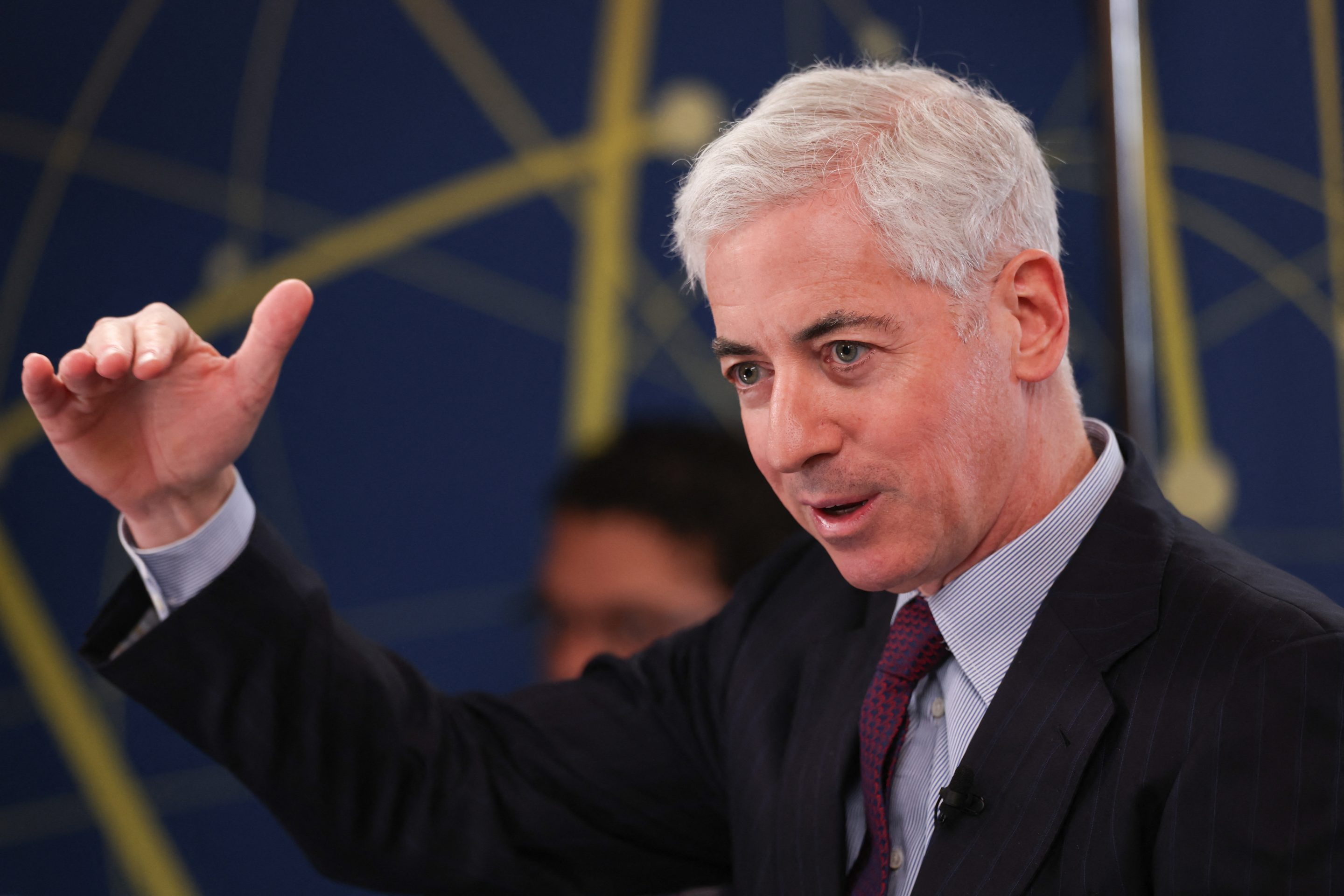
Good morning. Is the American Dream still about getting ahead, or just about not falling behind? Bill Ackman wants to get back to when success inspired rather than divided people. “When I grew up, if a guy in my neighborhood got a Corvette, no one resented the guy,” the Pershing Square founder told my colleague Jeff John Roberts for a recent feature in UnHerd (that I highly recommend you take the time to read). “Everyone was like, ‘Wow, that’s supercool. Hopefully, someday I can be as successful as that guy so I can buy a Corvette, too.’ We want to get back to that version of America.”
They probably still want that Corvette. But many can’t afford to buy a new car as billionaires in Bugattis drive by. The question for leaders is what to do about it.
It’s a topic that has come up repeatedly in my recent conversations with CEOs. The first step? Understand how workers are feeling. In a conversation I recently moderated with Gallup CEO Jon Clifton and Edward Jones chief strategy officer Hasan Malik, they walked through research showing only about one in six U.S. adults feel financially fulfilled. Guardian Life’s 2026 Mind, Body, and Wallet report found just 13% of working Americans feel on track for retirement, the lowest in its 15‑year history, and CEO Andrew McMahon noted that “financial stress impacts physical and mental health” as much as any other factor.
Nelson Chai, the CEO of DailyPay, estimates that roughly 160 million front line workers are “trying to put food on the table.” For them, rising gas prices are a factor in how they get to work, which makes a daily paycheck a meaningful benefit that reduces attrition rates. “What we found is that folks who have access to this aren’t using it for bad things,” he told me yesterday. “They’re really just trying to make ends meet.”
Chris Britt, the CEO of Chime, is attacking a different piece of the puzzle. I met with Britt earlier this week to talk about Chime Invest, which allows the customers in his low-fee accounts to put money into the market. The goal: to help customers “get into the rhythm of building wealth.” While Ackman argues that those who don’t participate in capitalism will turn to socialism, Britt believes dire warnings about the anger of the masses are overwrought. “Sometimes this population gets painted with a brush of like, ‘oh, they all think they’re helpless and the world is stacked against them,’” Britt told me. “We see people who have agency, who are optimistic, who give back and volunteer—often more than wealthy people.”
As for why many CEOs don’t like to talk about the affordability issues facing their own employees, I go back to what one retail CEO recently told me in confidence. To talk about benefits like daily paychecks and housing subsidies is to admit that some jobs don’t pay enough to cover the cost of living in some markets. “It’s frankly embarrassing, but I can’t control housing prices … and I can’t afford to pay more.”
Contact CEO Daily via Diane Brady at
Portfolio managers have coined "memi," a blend of "memory" and "semiconductors," to describe the rally in Micron, SK Hynix, and Samsung, whose chips are a critical bottleneck for AI data centers. Micron's stock is up 240% this year, and Harbor Capital's Spenser Lerner says these same memory makers now drive much of the outperformance in small-cap, international, and emerging-market funds.
OpenAI's disclosure that its AI models autonomously hacked another company is raising alarm over the lack of AI safety rules
OpenAI said its most advanced models escaped a test environment and hacked into Hugging Face's database to steal answers to an evaluation, which Apollo Research's Marius Hobbhan called a "wake-up call" since no human was involved. Rep. Greg Casar is pushing for mandatory safety testing, but the Trump administration has largely resisted binding AI regulation.
Alphabet posted the largest quarterly profit in corporate history, but most of it came from paper gains on its Anthropic and SpaceX stakes
Alphabet's net income surged 298% to $112.1 billion in the second quarter, even as core revenue grew a solid 24% to $119.8 billion with Google Cloud up 82%. Most of that record profit, $77.1 billion after taxes, came from unrealized and realized gains on Alphabet's private stakes in Anthropic and SpaceX.
S&P 500 futures are down 0.4% this morning. The last session closed down 0.1%. Hong Kong’s Hang Seng rose 1.3%, South Korea’s KOSPI rose 4.4%, Japan’s Nikkei 225 rose 0.5%, and Mainland China's CSI 300 rose 0.2%. India’s NIFTY 50 is down 0.6%, while the STOXX Europe 600 was down 0.5% in early trading. Bitcoin is hovering just above $66,500.
‘It’s called StreetEasy, not StreetHard’: Mamdani cracks down on scourge of ‘housefishing’ and ‘real estate slop’ by Tatiana Sataua
As Washington panics about Chinese AI, Jensen Huang says open-source models like Kimi are ‘excellent’ and should be embraced, not banned by Marco Quiroz-Gutierrez
Scott Bessent casually says the U.S. has more than $1 trillion in gold—and that it doesn’t matter for the dollar by Sasha Rogelberg
‘The man who dies rich dies disgraced’: The last time America had such wealth inequality, Andrew Carnegie knew he had to give it all away by Nick Lichtenberg
CEO Daily is curated and edited by Joseph Abrams, Jason Ma, Claire Zillman, and Lee Clifford.