
china pays missouri state university millions to train communist party elites
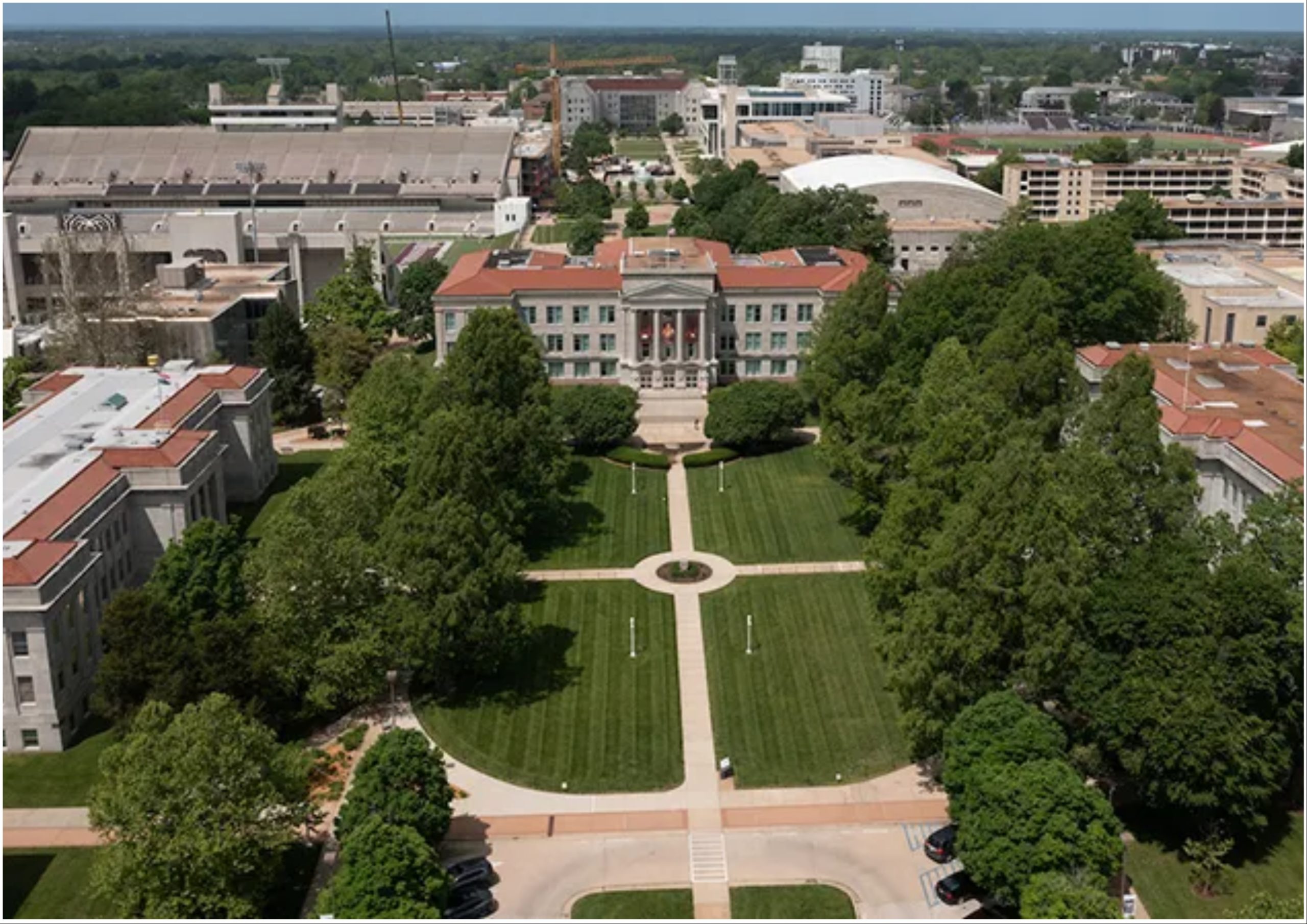
The Chinese government has been paying Missouri State University (MSU) several million dollars a year to offer an MBA program for Chinese Communist Party officials and other individuals tied to China's defense industry, according to a new investigation from Strategy Risks, an analytical firm founded by Isaac Stone Fish. The program, which has been in operation for 25 years, has trained over 1,500 current and future managers for Chinese state-owned enterprises and government bodies.
The report, "Heartland For Hire," provides the first public accounting of MSU's master's programs that have trained Chinese officials and executives. Graduates from these programs have gone on to take senior roles in China's defense industry, strategic supply chains, and surveillance-technology sector, including those sanctioned for aiding the People's Liberation Army (PLA) and providing technology to Russia for its war against Ukraine.
Strategy Risks writes that Chinese recruiting materials offer conflicting accounts of the program's finances, but state that, as of 2014, half of the $108,000 tuition cost was covered by the communist government. Students paid one-quarter of the cost, around $27,000, while the additional sum was covered by "the U.S. government" through "taxpayer-funded support." However, public information from Missouri State suggests that the Chinese may be paying double the cost of the program, with Missouri itself not spending a dime.
MSU says on its website that it costs an out-of-state student about $34,000 in tuition and fees to complete an MBA. If the Chinese government and students are indeed paying Missouri State more than $75,000 per degree, it would be a lucrative arrangement for the cash-strapped university, which is currently dealing with a budget shortfall. The findings are certain to garner interest on Capitol Hill, where Republicans have been investigating China's close ties to multiple American universities.
The report notes that the degrees for these programs are conferred by MSU, but it is "Chinese state institutions" that control who is accepted, the criteria, and the composition "of each cohort." Strategy Risks determined that the program was initially "conceived and commissioned by a Chinese government delegation in 1999." "Program applicants," the report adds, "have received preferential admissions treatment from MSU, including but not limited to waived English-proficiency requirements."
Recruitment documents reviewed by Strategy Risks made clear that "a range of Chinese state and party institutions" were responsible for administering the program, including the CCP's state-owned Assets Supervision and Administration Commission of the State Council (SASAC), which oversees the nation's defense manufacturers. Chinese consular documents and foreign ministry records reviewed for the report further show "high-level contact between Chinese diplomats and MSU's leadership."
MSU, meanwhile, acknowledged how lucrative the program is in a 2011 blog post by then-president Clifton Smart. "The China Programs are a major financial operation," Smart wrote. "In 2011-12, for example, the 569 students in the undergraduate and graduate programs will generate about $5.85 million in gross revenue. The EMBA program will generate about $1.3 million in revenues."
The funding channels between MSU and Chinese entities remain opaque, but Strategy Risks was able to unearth a general picture through recruiting notices and other channels. A 2014 recruiting presentation from China Agricultural University states that students paid approximately $27,000 as their share, which is described as one-quarter of the total costs, with the Chinese government covering half and a U.S. government subsidy covering the remaining quarter.
A separate 2014 document from China's state-controlled chief accountants' association states that the fees are set "in accordance with Ministry of Finance and State Administration of Foreign Experts Affairs standards for overseas personnel expenses and the U.S. government's annual standards for university graduate tuition." It makes clear that participants in the MSU programs "receive a special Missouri state government project subsidy." However, based on the publicly listed cost of an MSU MBA for out-of-state students, it's highly unlikely that American taxpayers are paying a dime.
Funding records maintained by MSU's Office of Research Administration disclose that from fiscal years 2007 to 2020, the university "submitted funding requests totaling more than $18 million" to an "obscure entity" referred to as IMEC. The report describes IMEC as a "private intermediary" that "sat between the Chinese state and MSU for various operational mechanics, from assembling participants to moving payments from Chinese state-linked sponsors to MSU."
Although MSU did not respond to Strategy Risks prior to publication, an MSU spokesman issued a statement. "We are aware of the report released by Strategy Risks regarding Missouri State University. No taxpayer dollars were directed toward the program, as the report alleges but readily admits it cannot substantiate." The statement also notes that the students studied a "conventional business curriculum" with no evidence of espionage, intellectual property theft, misconduct, false affiliations, or complaints of harassment.
The report's findings have sparked concerns about the implications of the program and the potential risks of American universities being used as a training ground for Communist Party elites. As the U.S. government continues to scrutinize China's activities, the program at MSU is likely to face increased scrutiny and potential consequences.