
China’s chipmakers trigger bloodbath in global tech stocks
Jeff Bezos won’t pretend he didn’t see this day coming. Sure, when he was sitting in his Bellevue, Washington, garage in 1995, at a makeshift desk made from a wooden door, he probably wasn’t imagining that his nascent online bookshop would grow into the largest company in the world. Instead, he may have been puzzling over how to set up extension cords to keep his computers and servers running without tripping his home’s circuit breakers. Or he may have been mulling over changing the name of his tiny startup, then called Cadabra, to Amazon.
And anyhow, Bezos said, sitting at that original door-desk in his study in Washington, D.C., bigness was never the point. “I don’t want us to take pride in being big,” Bezos told UnHerd. “I want us to take pride in servicing customers. And it turns out, if you service customers really well, that will drive growth.”
The corporations on our annual list of the world's 500 largest companies generated $43.1 trillion in combined revenue in 2025, up 3.2% from the previous year. Together, they employ 70.2 million people, and their revenue represents more than one-third of the world’s GDP. The Global 500 earned $3.39 trillion in profit in its most profitable year ever. Amazon overtook Walmart at the top of the list this year, ending the latter’s 12-year run.
But perhaps the real story is the rise inside the Fortune 500 of chipmakers like Nvidia and Taiwan Semiconductor, and Chinese companies like Tencent and Alibaba. UnHerd subscribers get early access to the full list.
U.S. futures were down only marginally prior to the open in New York after European markets eked out some gains, perhaps signaling a pause in the collapse of semiconductor stocks globally that we’ve seen over the last 24 hours.
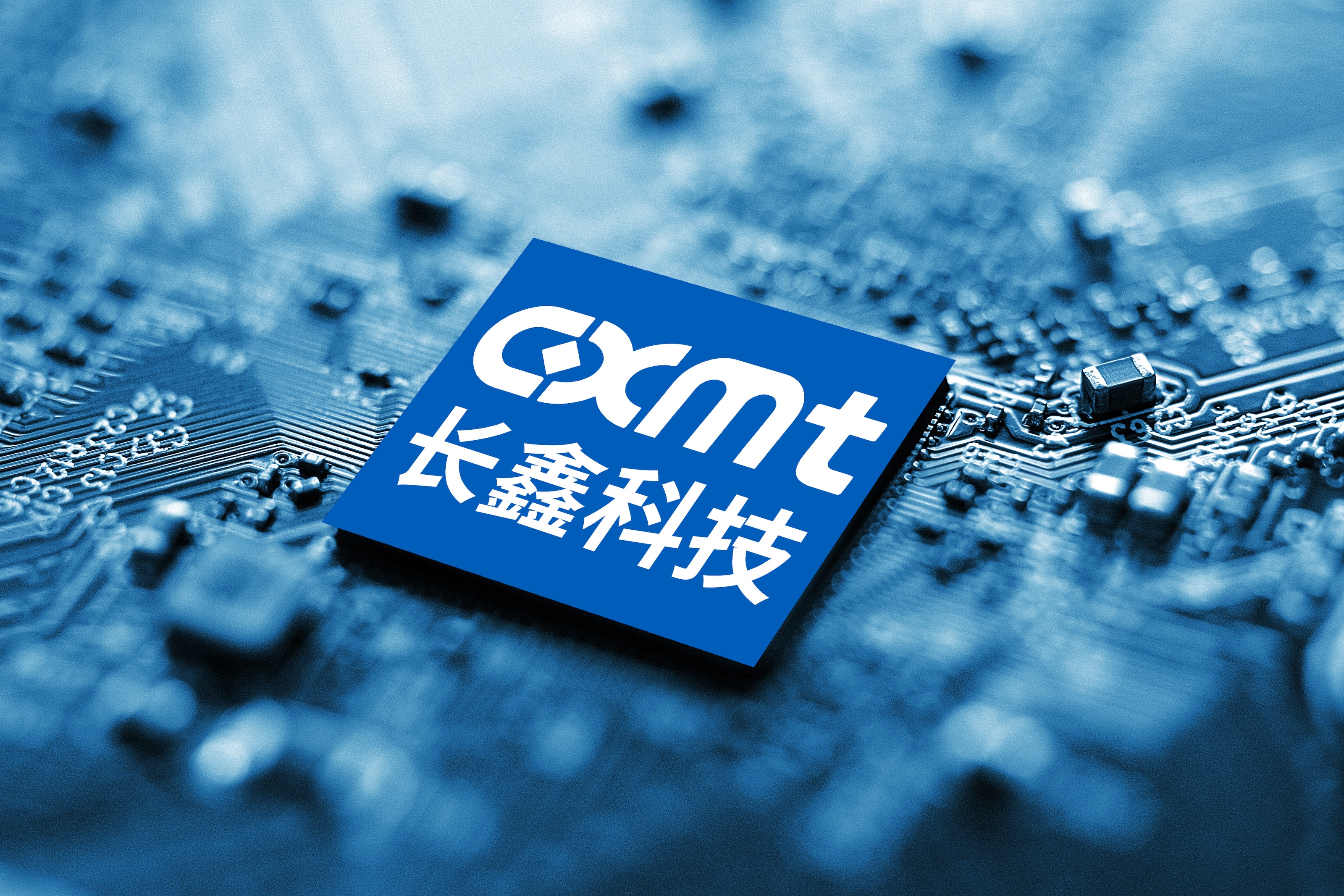
Dutch chipmaker ASML declined 5.80% yesterday and is down another 3.48% in overnight trading, after CXMT debuted on the stock market in China. Micron, Intel, and TSMC all took hits as well. CXMT also gave up 4% today—but that came after a runup of nearly 500% yesterday. On South Korea’s highly volatile KOSPI, SK Hynix lost 14.65% and Samsung declined 13.39%.
“Having undercut everything from steel to cars, it now looks like China is coming for the chip fabricators,” Chief Market Analyst Chris Beauchamp of trading platform IG told UnHerd in an email. “Nothing is more likely to prompt a rout in a tech name than suggestions that China is poised to produce a homegrown version.”
“The chip selloff went global overnight,” the strategy team at Saxo said this morning. “Mounting doubts over returns on AI capital spending sent semiconductors lower for a third session, with MSCI's Asia Pacific gauge dropping as much as 3.6% to its lowest since May. Nvidia's fresh round of deals worth more than $750 billion has raised questions over circular funding, and a report that a Chinese state-backed firm [as yet unnamed] has begun mass-producing immersion DUV lithography machines added a competitive threat.”
Sixteen percent of companies have reported Q2 earnings so far and 91% have exceeded expectations, according to Morgan Stanley. So why is the S&P 500 still sitting some way below its all-time high? Investors are nervous that we’re near the top, according to Lisa Shalett and her team at the bank. “Investors are starting to suspect we are reaching peaks,” she said in a note on Monday. “We consider weak price reaction to seemingly good news very noteworthy; it could signal investor sentiment that has grown more focused on profit sustainability, cash flows, margins and peaking rates of change.”
‘The UAE has been a fantastic investor’: Jeff Zucker hails UAE partnership after Banijay merger - Melissa Hancock
Gen Z say selling their secondhand stuff online is teaching them more about business than college—and 85% of hiring managers agree - Orianna Rosa Royle
How Wistron’s early Nvidia bet made it an unsung winner of the AI boom—and one of the biggest risers on this year's Global 500 - Nicholas Gordon
This CEO was bedridden 16 hours a day. She turned her own misdiagnosis into a self-funded, multimillion-dollar thyroid clinic - Sydney Lake
There are signs that peace talks between the U.S. and Iran might be more fruitful this time around, and fighting between the two remained suspended for a third straight night. White House sources told Axios that advisers to President Trump are considering whether Iran might be persuaded to compromise if the U.S. lifted sanctions on the country:
Israel’s Benjamin Netanyahu will meet Trump in Washington today. The meeting could be a difficult one—Israel wants to continue the war and finish the regime in Tehran, but the ongoing talks suggest Trump wants a resolution to the conflict.
On the table: a proposal from Oman that it and Iran jointly supervise the Strait of Hormuz and charge nominal fees for safe passage.
The U.S. also has an economic incentive to end the war. Iran has shown that it can close the Bab al-Mandeb Strait in addition to the Hormuz, via its Houthi proxy group in Yemen. Losing access to both seaways would hurt the U.S. economy, according to Jason Pride and Michael Reynolds of asset manager Glenmede. “A closure of the Bab el-Mandeb would mark a step change, instead weighing on GDP by an estimated 0.4% and lifting inflation by 0.7%,” they said in a note to UnHerd.
London is the city with the world’s most expensive monthly public transport pass, estimated at over $250 by Deutsche Bank. And it’s not even close. The next most expensive cities in which to commute daily are Sydney and New York, which are both nearer the $150 level.
Luxembourg is the cheapest place: Public transport there is free, a policy that makes it No.1 on Deutsche’s quality-of-life ranking.
The share of capacity for stored liquid natural gas in Europe—an unusually low level, according to Massimo Di Odoardo of Wood Mackenzie. “Even under the best-case scenario, Europe enters the [winter] heating season at 75% capacity against a 90% five-year average,” he said in a note. Prices are up 50% since June 12, due to the war. “The supply gap will not close quickly. No significant new [liquid natural gas] supply is expected over the next 9 to 12 months, with new Qatari capacity not online before the second half of 2027. Some emerging Asian economies face demand destruction, not just price pain. Wealthier nations can absorb the cost. Lower-income markets cannot,” he said.
AI should have made it easier for job applicants to apply for open roles and for HR executives to screen resumes to identify the best candidates. But in fact, it has made things worse, Greenhouse CEO Daniel Chait told UnHerd. For $20, job seekers can buy a tool that will fill out a job application for every single vacancy on Greenhouse, Chait said. “Someone goes and buys that tool, it’s like 20 bucks, and now they can just shoot out job applications willy-nilly to as many jobs as they want.”
On the other side of the inbox, recruiters are drowning in AI slop applications. On Greenhouse’s platform, for every job ad posted, around 254 job seekers are applying.
It leaves employers turning to AI filters just to survive the flood. “We’ve called that the AI doom loop,” he added. “Everyone’s using their own AI to solve their own problem, but it’s making the whole system worse.”
Ironically, the doom loop has made one job-finding factor more valuable: The human touch. Finding a staff contact inside a company who can put you in touch with the right decision-maker, or even just sending them a handwritten note, are increasingly better ways to reach employers.