
CJI Surya Kant urges young lawyers to shoulder responsibility of future, says ‘much remains to be done’
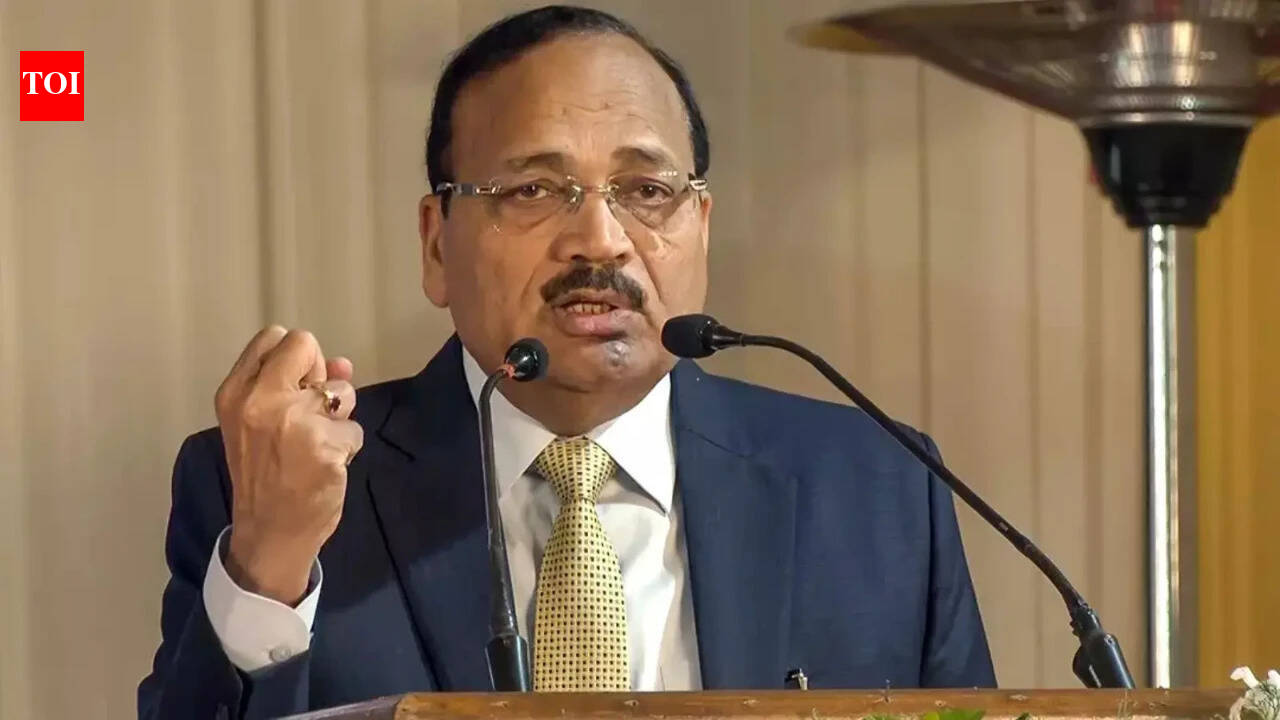
Chief Justice of India Surya Kant on Saturday said India had overcome several formidable challenges in the eight decades since Independence, but much remained to be done, urging young law graduates and lawyers to prepare themselves to shoulder the responsibilities of the future.Speaking at the national flag-hoisting ceremony organised by the Supreme Court Bar Association at the apex court premises on the occasion of India’s 80th Independence Day, Kant said the country’s achievements also brought with them a renewed sense of responsibility.“The journey of a nation does not end with what it has accomplished.
Every achievement also brings with it a renewed sense of responsibility and duty. There is much that remains to be done, and many more miles to travel in our journey ahead,” he said.Several senior judges, lawyers and court staff attended the ceremony.‘Responsibility of this Bar will soon rest on your shoulders’Addressing young lawyers, Kant said the responsibility carried by the legal profession since the freedom struggle would soon pass to the next generation.“The responsibility that this Bar has carried since the days of the freedom struggle will, before long, rest on your shoulders.
The institutions of justice that generations before you have built and strengthened are now yours to protect and to carry forward,” he said.He assured young lawyers that the Bar and Bench remained committed to supporting their professional growth through mentorship and opportunities.“The miles that remain are yours to walk, and we walk with you,” he added.Kant said the freedom struggle had a deep and enduring connection with law and that some of the finest legal minds of the period helped establish the idea that law should serve justice, protect liberty and uphold human dignity.He noted that Mahatma Gandhi and BR Ambedkar, whom he described as two of the greatest architects of modern India, along with Sardar Vallabhbhai Patel, Motilal Nehru, Bal Gangadhar Tilak and Lala Lajpat Rai, were lawyers.This, he said, demonstrated that the legal profession was not a bystander to India's freedom struggle but an integral part of it.CJI highlights changing challenges for young lawyersKant said India's legal and judicial institutions had grown and matured alongside the Republic and played an important role in shaping the country's conscience.Turning to young lawyers, he acknowledged the difficulties of starting a legal career, saying the profession had become more competitive, the learning curve steeper and the pressure of building a practice heavier.“I personally remember the anxieties of those early years at the Bar, and I say this not to discourage our young colleagues, but because I want them to know that we see them, and we understand their challenges,” he said.At the same time, he expressed confidence in the younger generation, citing their resilience, intellect and commitment to justice.Kant said young lawyers had also grown up with technology transforming communication and access to knowledge, bringing greater adaptability to courtrooms.
He also highlighted their sensitivity towards equality, inclusion and access to justice.‘Law must remain connected to lives of people’Reflecting on India's freedom movement, the CJI said it differed from many earlier struggles against colonial rule because it was not primarily an armed insurrection.“Ours was not primarily an armed insurrection; it was instead a sustained challenge to the legitimacy of colonial rule through political movements, petitions, public debates, and, most importantly, through the language of law,” he said.He said the freedom movement repeatedly challenged the contradiction between colonial claims of governance through law and the denial of liberty, equality and dignity to Indians.According to Kant, that principle remains relevant today as courts provide a forum for people from different backgrounds to assert their constitutional rights, challenge arbitrary action and seek equal treatment under the law.“Courts have continued to serve as a unifying space for the litigants and members of the Bar alike,” he said.Supreme Court Bar Association president Vikas Singh and other members of the bar body also addressed the gathering.Get the latest India News and Live updates.
Download the TOI app.