
Clinical trial in Jersey aims to help heart failure patients
Jersey has been chosen to run a clinical medical trial to test new technology it is hoped will lead to improved patient care.
Patients with Heart Failure with Preserved Ejection Fraction (HFpEF) have been selected to be part of the trial to test if iron injected into the vein improves heart failure symptoms and improves ability to exercise.
They will wear a smart ring and a patch on their thigh for 14 weeks which will be able to analyse if the treatment has been effective.
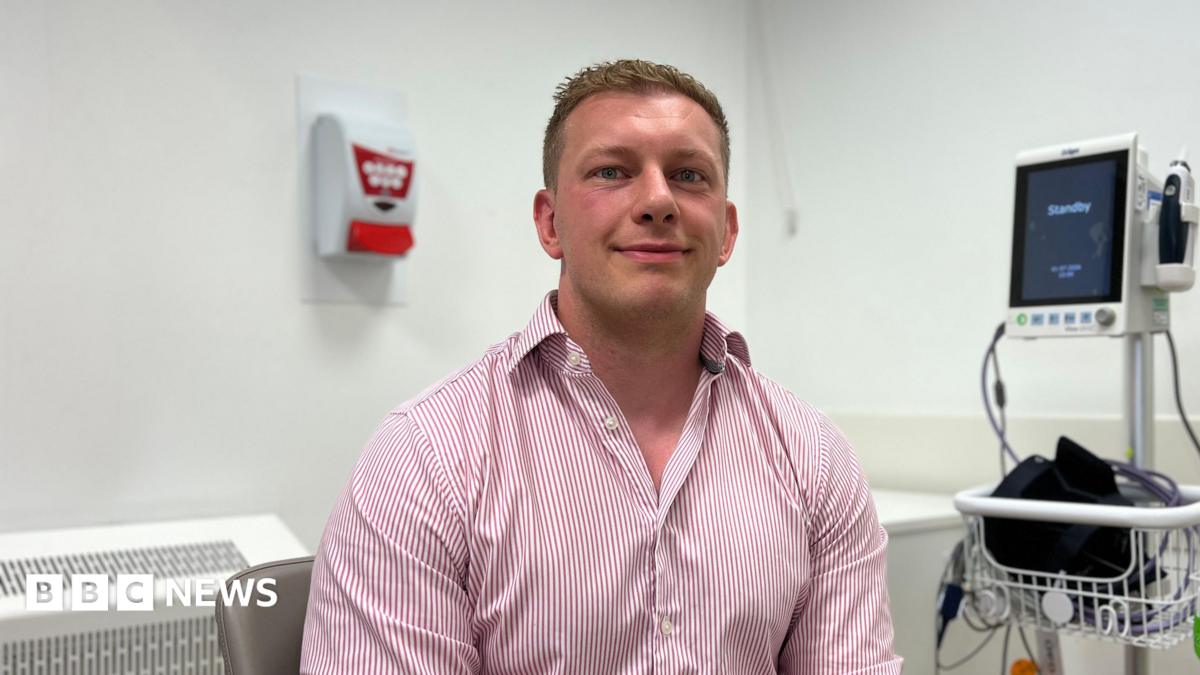
Dr Aaron Henry works in Jersey Hospital's cardiology department and said "it's really exciting... we've all got a duty to keep up to speed with the latest technology".
Henry is helping oversee the clinical trials and believes new data gathered from the devices could make a difference to patient treatment.
He said traditional cardiology tests to see if iron injections have been effective involve a six minute walk test, but "this is a single snapshot in time".
"What the rings and the patches allow us to do is monitor physical activity continuously for a long period of time, so in this case 14 weeks," he added.
"The data from the ring or from the patch will be synced to their phone and uploaded to the cloud for us to then analyse to see if the treatment has made a benefit".
The patch measures step count, physical activity, time from sitting to standing and the ring measures physiological variables like heart rate.
Henry added the trial is available to all patients of all ages.
He said: "The patients enrolled in our trial tend to be quite elderly so in their 70s, 80s and even in their 90s.
"Bringing technology to them and making sure they're not excluded with the technological revolution we're undergoing is really important."
Digital Jersey has spent £200,000 on the trial through its Impact Jersey Fund.
CEO Tony Moretta said: "There's no greater challenge than health, and particularly preventative health... Jersey is a great sandbox for testing new ideas."
He added: "If Jersey can be at the forefront for the development of new digital health techniques and technologies, then actually the island will benefit.
"Technology is being used to improve health outcomes around the world more and more so it's about time Jersey followed that trend."
Follow BBC Jersey on X, external and Facebook, external. Send your story ideas to [email protected], external.