
Coastguard officers worried pay cut will hit rescues
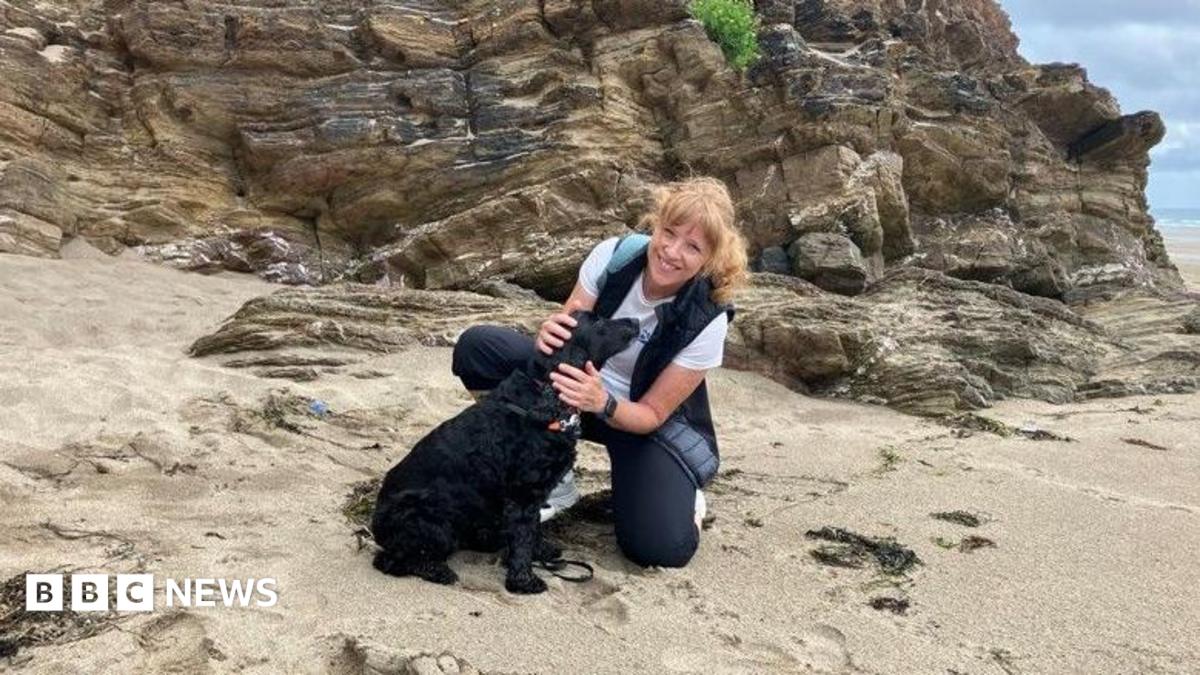
A woman who devotes her spare time to saving people in trouble in the sea says coastguard pay cuts plans could stop rescue missions going ahead.
Sarah Walker works as a coastguard rescue officer (CRO) in Cornwall, and says plans to cut her £11-an-hour payment for callouts could impact how often she can respond to shouts.
Walker said: "It could make it more stressful when we get that pager, how many will turn out? Will we have the numbers required for the rescue?"
The Maritime and Coastguard Agency (MCA) says the changes follow a Court of Appeal ruling that classed volunteers as "working" while carrying out their duties.
The issue is being debated at Westminster on Wednesday, with Shetland MP Alistair Carmichael leading a challenge. CROs from across the UK including Devon and Cornwall are planning to be in London offering support.
Walker, who lives in Cawsand and started her role in March, said: "Most of us will say 'we don't do it for the money' but it's the money that helps us do it.
"We're worried about what effect it's going to have on these strong teams we have already, with these years of local knowledge."
Walker, a self-employed endurance coach, said other CROs have said they planned to leave if the plans go ahead.
"I personally would be in that group that I would not be able to commit as much time as I am self-employed," Walker added.
She said teams were "worried" that if the pay cut plans went ahead, not enough people would turn up for rescues to go ahead.
CROs make up the majority of coastguard response teams and currently receive an hourly payment for attending incidents and training exercises.
There are about 3,500 CROs trained in search and rescue skills across the UK. They are officially classed as volunteers but can claim about £11-an-hour for responding to callouts or undertaking training.
A minimum payment equivalent to three hours, about £33, can be claimed even if an incident is resolved more quickly.
The MCA plans to remove that payment later this year following a Court of Appeal judgment in January.
The court ruled although CROs were described as "volunteers", a contract came into existence whenever they attended call-outs or training sessions for which they had a right to claim payment.
The MCA said: "After careful consideration, we are moving the Coastguard Rescue Service to a revised volunteer model to best protect the future of the service.
"This decision follows a legal judgment, which means we need to change how the service operates. This is not something we wanted to do but is a consequence of the Court of Appeal ruling."
It added: "This new model protects choice, flexibility and the ability for people to volunteer alongside their primary employment."
Following the judgment the agency said it had decided to move to the revised model, entitling volunteers to some compensation.
Volunteers will continue to receive training, equipment and operational support, as well as uniforms and PPE."
The MCA said it would work with volunteers as the changes are introduced later this year, but campaigners say they will continue to press ministers to reverse the decision.
The GMB Union said if people wanted strong and resilient coastguards for the future, the MCA must make sure those who step forward were supported and not "penalised".
GMB member Lynsay Mackay said: "When someone is lost, injured or in danger on our coastline, nobody asks whether the person coming to help is a volunteer or a worker.
"For generations, Coastguard Rescue Officers have made sure the answer to that question is 'yes'."
"If you save lives, you deserve respect. If you carry out work, you deserve rights."
Follow BBC Cornwall on X, external, Facebook, external and Instagram, external. Follow BBC Devon on X, external, Facebook, external and Instagram, external. Send your story ideas to [email protected], external.