
Crowd-funded anti-bribery portal shuts after amassing 2 lakh users in 48 hrs
NEW DELHI: Bribes.fyi began as a side project and, within 48 hours, clocked 5 million requests and 2 lakh new users. It shut down as suddenly as its meteoric rise took social media by surprise.Built by 20-year-old Delhi BTech student Aryan Nishad, it displayed a neon-red map of India for anonymous reports of alleged bribe demands.
By Aug 17, it had logged reports from 253 cities—against police, RTOs, and revenue and land records offices, and passport offices. 37% were, interestingly, marked “refused”, meaning users said they did not pay and still got their work done. The site stressed these were user submissions, not verified cases.The site then abruptly went offline, citing traffic, data security, spam, duplicate entries and misuse.
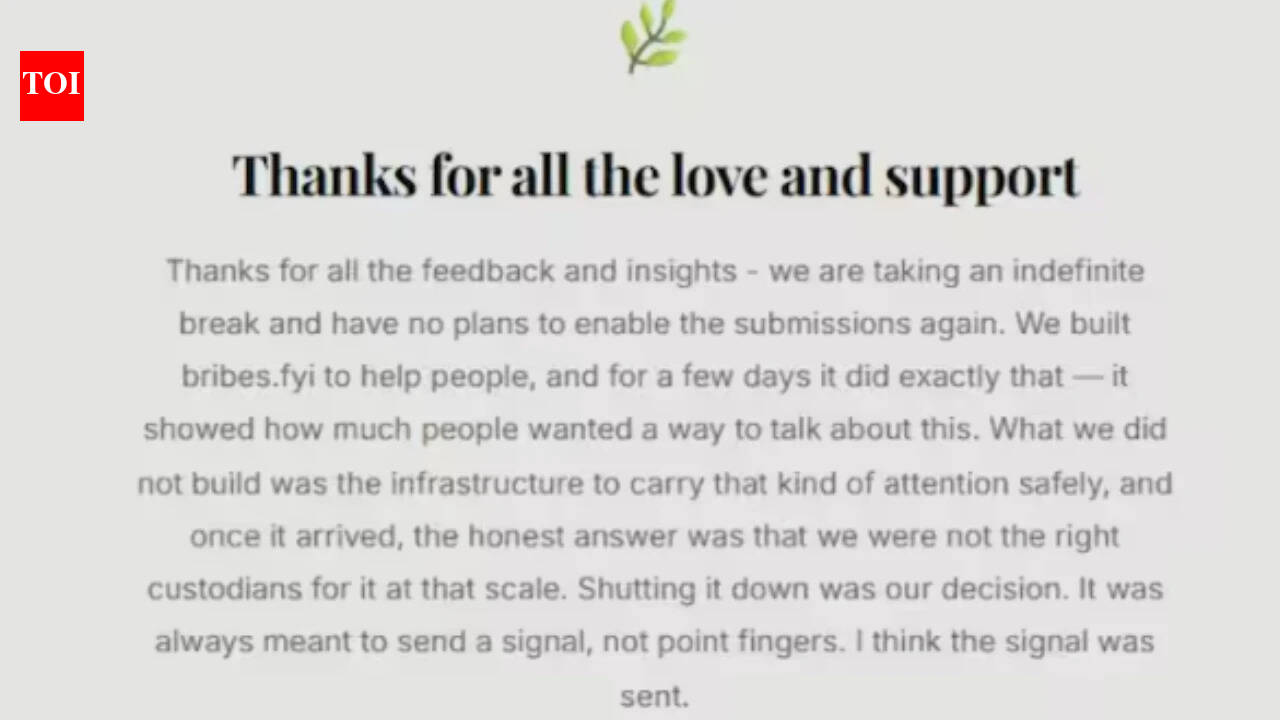
Calling the shutdown voluntary and precautionary, the team said: “What we did not build was the infrastructure to carry that kind of attention safely”. They acknowledged it was “not the right custodian for it at that scale”.In their farewell note, they said: "Shutting it down was our decision. It was always meant to send a signal, not point fingers.
I think the signal was sent."The website and the traction it got from the public has generated huge conversation, with lawyers and experts weighing in. Section 8 of the Prevention of Corruption Act criminalises giving or promising an undue advantage to a public servant, punishable with up to seven years’ imprisonment after a 2018 amendment.
An exception applies to someone compelled to pay who reports the demand within seven days. But a public admission on a website falls outside that protection.“So a person writing, ‘I paid Rs 5,000 to get my licence issued’ may be making a statement potentially relevant to their own criminal liability,” said Mishi Choudhary, technology lawyer and founder of Software Freedom Law Center (SFLC.in).
The law has a policy problem, she said, and platforms must build “anonymity and security by design... from the beginning” and “not collect identity at all”.The safest approach, she said, is to collect minimum data because complainants “can’t be punished twice for doing what the system is forcing them to do”.
Such a service is “a repository of sensitive personal data, allegations of criminal conduct and police information”, she added.The platform also raises intermediary-liability questions because it collected, moderated, categorised and mapped allegations instead of merely hosting them.“Safe harbour under Section 79 protects an intermediary that does not select or modify the information it hosts,” said Apar Gupta, founder director of Internet Freedom Foundation.
“Moderating and approving reports... is an active function” that may exceed that role, he said, citing ongoing Wikipedia litigation in Delhi. Under Shreya Singhal vs Union of India 2015, removal requires a court order or govt notification, not a private complaint, though IT Rules prescribe grievance timelines.
“A disclaimer offers no protection by itself.” Officials, he said, “complain to the police, not to the courts.”Platforms collecting names, phone numbers or IP addresses are data fiduciaries under the DPDP Act and face penalties up to Rs 250 crore for security failures, though Section 17 exempts govt agencies.
“A platform cannot promise anonymity while retaining identifying records,” Gupta said. Data must be handed over within 72 hours of an authorised request, while disproportionate demands can be challenged under Puttaswamy. Yet “there is little protection for complainants”. Gupta cited a Lokniti-CSDS survey finding nearly two-thirds fear legal action for online speech.
The Whistle Blowers Protection Act, 2014 was never operationalised.For a relaunch, Gupta recommended no accounts, no IP logs, stripped metadata, aggregate figures instead of names, referrals to newsrooms, a grievance officer and transparency reports. “Decentralisation is not a legal defence,” he said, noting BitChat and GitHub were blocked during July’s Delhi protests.Get the latest India News and Live updates.
Download the TOI app.