
Data centers near Lake Mead compared to Lake Powell as water levels plunge
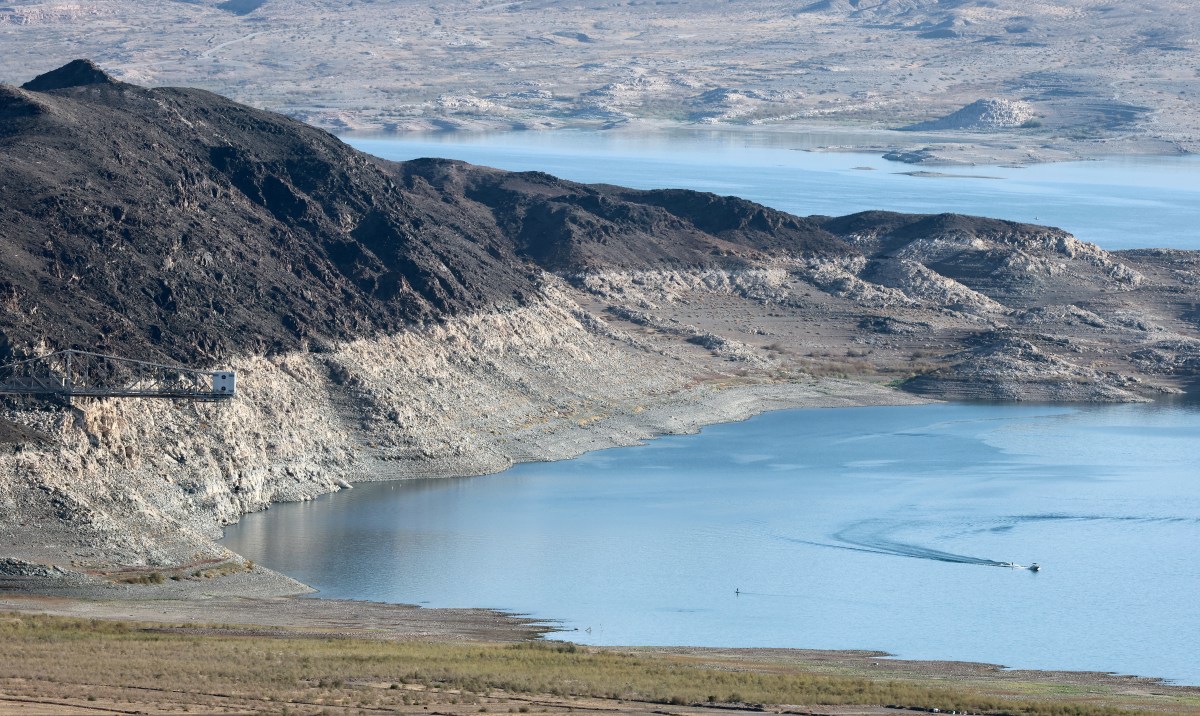
As the two largest reservoirs in the United States sink to historic lows, a growing debate is unfolding over whether the booming data center industry belongs in one of the country's most water-stressed regions.
Lake Mead and Lake Powell, the massive reservoirs that anchor the Colorado River system, have both recently reached record-low levels amid a decades-long drought, poor snowpack, overuse, and rising temperatures. More than 40 million people across the Southwest rely on the Colorado River for water, while the system also supports agriculture, recreation and hydropower generation. Lake Mead recently fell below its previous record low set in 2022, while Lake Powell also dropped to its lowest level since the reservoir was created. Experts have warned that long-term water availability in the basin remains uncertain.
Against that backdrop, websites tracking existing and proposed data centers suggest a heavier concentration of facilities near Lake Mead, particularly around Las Vegas and Henderson, Nevada, than around Lake Powell in northern Arizona and southern Utah. The contrast reflects a collision between two major trends: the rapid expansion of artificial intelligence infrastructure and mounting concerns over water scarcity in the American West.
"Drought conditions over the past 25 years, combined with expectations of continued dry conditions, have made development of future operating guidelines for the Colorado River particularly challenging," a spokesperson from the U.S. Bureau of Reclamation, which manages both lakes, told Newsweek.
"The combined contents of Lake Powell and Lake Mead have not been this low since before Glen Canyon Dam began filling in 1963, and since 2000 water use has exceeded total system inflow in most years. The Colorado River Compact apportioned 7.5 million acre-feet to both the Upper and Lower Basins based on the estimated pre-compact average inflow (1906-1921) of approximately 18 million acre-feet. However, inflows from 2000 to 2024 have only averaged 12.9 million acre-feet and the unregulated inflow into Lake Powell this year as of July is estimated to be only 3.5 maf."
Data compiled by Data Center Map and the advocacy website Brockovich Data Center Reporting show a noticeably larger cluster of existing and proposed data centers around Lake Mead and the Las Vegas Valley than around Lake Powell. The pattern likely reflects Southern Nevada's status as a major population and infrastructure hub. Lake Powell, by contrast, sits in a more remote region of northern Arizona and southern Utah with fewer large population centers and less existing technology infrastructure.
The facilities clustered around Lake Mead are concentrated primarily in the Las Vegas-Henderson area and are operated by a mix of major technology companies and colocation providers. The most notable include Google's Henderson data center campus, which supports services such as Google Search, Maps, YouTube and Google Cloud, and Switch's The Core Campus.
While the exact number of facilities varies depending on how existing, planned and proposed projects are counted, the concentration around Lake Mead is significantly larger than around Lake Powell.
No data centers are reported around Lake Powell according to Data Center Map, whereas Erin Brockovich's map shows one community-reported data center south of Lake Powell in Page, Arizona.
While the facilities are not drawing water directly from the lakes themselves, their concentration within the broader Colorado River Basin has become a focal point for critics who argue that continued growth in water- and energy-intensive industries should be scrutinized as Lake Mead and Lake Powell reach record-low levels amid a prolonged drought and increasing pressure on the river system.
Modern data centers consume substantial amounts of electricity and, in many cases, water used for cooling servers. Data obtained by the Las Vegas Review-Journal found that 23 Southern Nevada data centers were estimated to use more than 716 million gallons of water in 2024, roughly equivalent to the annual needs of about 4,395 single-family homes.
Technology companies argue that water use varies significantly by facility and cooling method. Some operators increasingly rely on recycled water, air-cooling systems or efficiency improvements designed to reduce consumption.
Still, critics note that every new industrial water user enters a basin already under pressure. The Colorado River has experienced more than two decades of drought conditions, while warmer temperatures have increased evaporation and reduced runoff. Researchers and federal agencies have repeatedly warned that water demand in the basin exceeds the river's long-term supply.
The concern expands beyond water withdrawals. Large data centers also require enormous amounts of electricity, creating additional pressure on energy systems at a time when both Hoover Dam and Glen Canyon Dam face challenges from declining reservoir levels.
Public opposition to data centers has grown as the industry has expanded.
A Gallup survey found that roughly seven in 10 Americans object to having AI data centers built in their communities. Residents have raised concerns ranging from water and power consumption to noise, heat generation and air pollution.
Southern Nevada has emerged as one of the most visible battlegrounds. In Boulder City, near Hoover Dam and Lake Mead, residents pushed back against a proposed 88.5-acre AI data center project. According to local reporting, concerns centered on water demand, electricity use, noise and environmental impacts. The Boulder City Planning Commission later voted to recommend denying the proposal.
Growing concern over the environmental footprint of data centers has prompted some states to slow or scrutinize new development.
In July, New York became the first state to impose a statewide moratorium on new large data centers, pausing permits for major projects while officials study their potential effects on electricity demand, water consumption, local communities and utility costs.
Meanwhile, Texas, one of the nation's fastest-growing data center markets, has taken a different approach. In August, Governor Greg Abbott ordered state regulators and the state's grid operator to audit data center proposals seeking connection to the power grid, temporarily halting approval of new connections until developers provide more information about electricity demand, water use, cooling systems and community impacts.
Federal officials are developing new long-term management rules for the Colorado River, with states facing the prospect of additional water cuts in coming years. As policymakers grapple with how to balance shrinking supplies and growing demand, questions about where to build future data centers are likely to become even more prominent.
Yet even as some states move to slow or scrutinize new projects, data center development continues across much of the country, including the Southwest. As demand for AI and cloud computing grows, policymakers and local communities are increasingly weighing the economic benefits of new facilities against concerns about water availability, energy demand and long-term sustainability in regions already facing significant resource challenges.
Contact Newsweek editors on this story: Jason Lemon and Sam Wilson.