
Data centers proposed on top of largest underground water reservoir in us
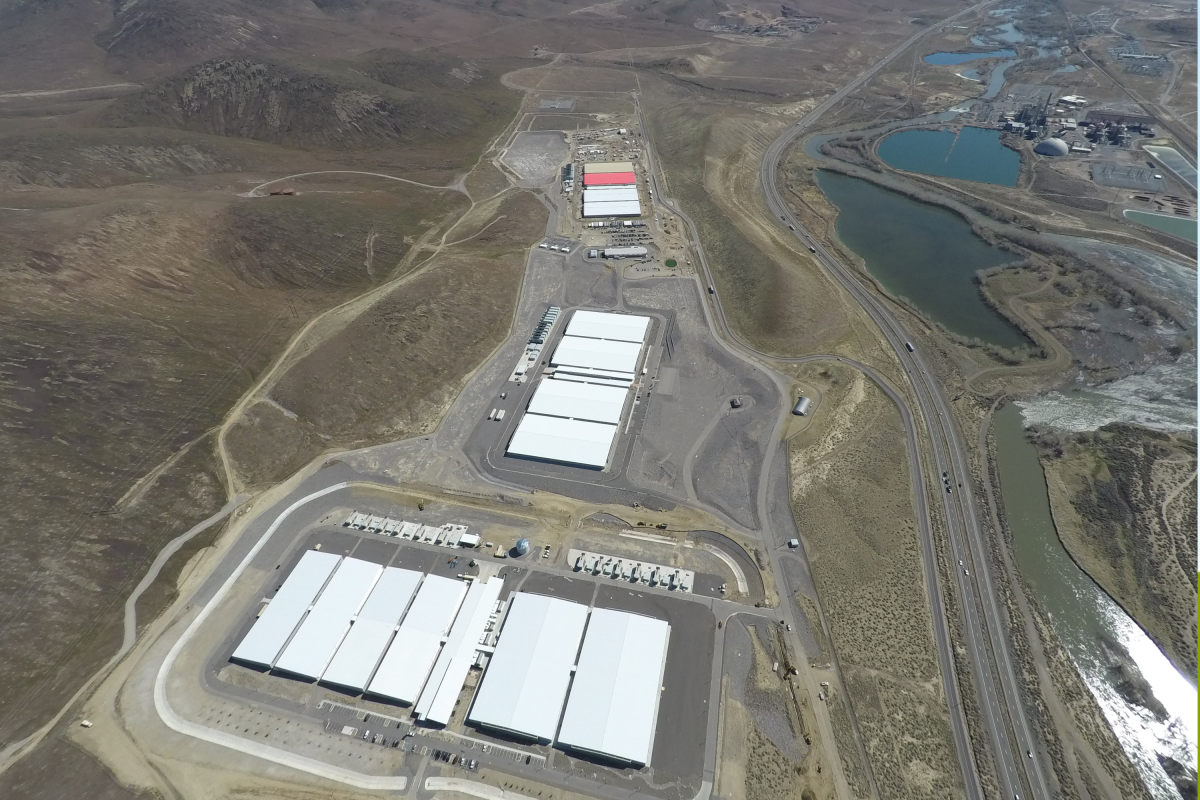
The rapid expansion of AI data centers is bringing a new environmental question to the forefront across the Great Plains: can one of America's most important groundwater reserves support both a growing digital economy and the agricultural communities that already depend on it?
New mapping compiled by Brockovich AI Data Center Reporting shows that several proposed and under-construction AI facilities are located directly above, or immediately adjacent to, the Ogallala Aquifer, a groundwater system that underpins much of America's agricultural production.
The findings arrive as local governments in Texas and Wyoming are increasingly being asked to weigh the economic benefits of AI investment against long-term concerns about water availability.
Regarding the data center Fermi Project Matador in Amarillo, Texas, Fermi Chief Site Development Officer Charlie Hamilton testified on water conservation before the Texas House Natural Resources Committee on June 24, 2026.
In Tom Green County, Texas, for example, county commissioners voted on June 2, 2026, to reject a 12-month moratorium on data center development in Precinct 4, following a massive public protest in April where over 500 residents opposed Beacon's Dove Creek project. The commissioners previously passed a unanimous resolution calling for stricter state-level regulation of high-volume water usage by data centers.
While not every facility will draw directly from the aquifer—and some projects are pursuing lower-water cooling technologies—the concentration of development across parts of the Ogallala region has intensified scrutiny from researchers, farmers and local officials.
Among the projects attracting attention are several large AI-focused campuses in Texas and Wyoming, two states that sit above portions of the Ogallala Aquifer.
Another three projects have been proposed that sit very close to the aquifer—also in Texas and Wyoming—where groundwater systems are likely to be interconnected:
Alongside the proposed projects, four data centers are already under construction, which are also located over the Ogallala Aquifer, primarily in Texas and Wyoming.
Importantly, the projects are not technologically identical.
Some facilities are specifically being marketed as lower-water designs. Related Digital's Cheyenne campus, for example, has emphasized highly efficient air-cooled systems intended to minimize consumptive water use. Air-cooled designs generally rely on fans and heat exchangers rather than evaporating large quantities of water.
Other AI campuses are expected to use advanced liquid-cooling systems to manage increasingly dense computing workloads. While liquid cooling can improve energy efficiency, water consumption varies significantly depending on whether facilities rely on closed-loop systems, dry-cooling technology or traditional evaporative cooling towers.
Several projects—including Beacon Dove Creek, Microsoft's Cheyenne expansion and Prometheus' Casper campus—have not yet publicly disclosed final cooling configurations, water sourcing plans or expected consumptive water use, making long-term impacts difficult to assess.
That distinction matters because the environmental footprint of a hyperscale AI facility depends as much on engineering design as on location.
The Ogallala Aquifer stretches beneath eight states—South Dakota, Nebraska, Wyoming, Colorado, Kansas, Oklahoma, New Mexico and Texas—and remains one of the most important groundwater resources in North America.
It supports roughly 30 percent of U.S. groundwater irrigation and helps sustain about one-fifth of American agricultural production.
Decades of agricultural withdrawals have dramatically reduced water levels in parts of the aquifer.
In some locations, groundwater levels have fallen by more than 200 feet, far exceeding natural recharge rates.
Sudeep Pasricha, a professor of electrical and computer engineering at Colorado State University, told Newsweek that "in some subregions, water losses have been sustained for decades, with depletion rates reaching over 100,000 acre-feet per year and nearly 27 percent of stored water already gone in places."
Scientists warn the aquifer is being mined, not replenished. According to Pasricha, "unlike surface reservoirs, the aquifer recharges extremely slowly," with recharge rates in parts of the Great Plains often less than an inch per year—far below the amount being taken for irrigation. This means lost water may take "centuries to millennia in some areas" to return.
Despite growing scrutiny around water use, Texas, Wyoming and other Great Plains states remain attractive destinations for hyperscale AI infrastructure.
Developers are drawn by a combination of relatively inexpensive land, access to major transmission infrastructure, available power generation, tax incentives and fewer land-use constraints than many coastal markets.
"Data center site selection depends on a combination of many factors, including the availability of energy, water, land, networking, tax incentives, etc.," Benjamin Lee, a professor of electrical and systems engineering at the University of Pennsylvania, told Newsweek.
But location alone does not determine environmental impact.
Modern AI facilities generate enormous amounts of heat and often require sophisticated cooling systems. Depending on design, that cooling may rely on municipal supplies, groundwater wells, recycled water systems or low-water alternatives such as dry cooling and closed-loop configurations.
Lee said growing concern over water consumption has made cooling design increasingly important when evaluating proposed projects in water-stressed regions.
The answer varies enormously depending on the facility's size, computing density and cooling technology.
Some hyperscale campuses consume relatively modest amounts of water, while others can rival the daily needs of small communities.
Pasricha said that "large facilities can use up to five million gallons per day, comparable to a town of tens of thousands of people."
Analysts expect both figures to increase substantially as AI infrastructure expands.
The debate surrounding the Ogallala ultimately comes down to cooling technology.
Water-saving alternatives exist, including air cooling, dry cooling and closed-loop systems that continuously recirculate water. However, those approaches often require additional energy or higher upfront capital costs.
This distinction is particularly relevant for projects across Texas and Wyoming. Related Digital's Cheyenne campus has publicly emphasized air-cooled infrastructure and minimal water use. Other projects, including Microsoft's planned Cheyenne expansion, Prometheus' proposed Casper campus and Beacon's Dove Creek project near San Angelo, have yet to publicly disclose final cooling configurations, making direct comparisons difficult.
As Lee noted, "Building data centers in these geographic locations is not inherently good or bad for water use. What matters most is the type of data center and the cooling technology that is used."
Even facilities that minimize direct water consumption can have significant indirect water footprints.
Researchers estimate that a substantial share of total water demand may occur off-site through electricity generation, particularly when power plants rely on water-intensive cooling systems.
As a result, evaluating a project's impact requires examining both on-site cooling and the broader energy infrastructure supporting it.
AI computing workloads are increasing infrastructure demand at a pace rarely seen in previous technology cycles.
A landmark study on AI water footprints led by researcher Shaolei Ren from University of California, Riverside (UCR) estimated that 20 to 50 AI queries (e.g. ChatGPT prompts) can consume about 500 milliliters (half a liter) of water—largely due to cooling systems and electricity use that rely on water-intensive processes.
Individually, the amounts may seem small. Across billions of interactions, however, the cumulative demand becomes significant.
Pasricha cautioned that the greatest concern is cumulative development rather than any single facility.
Multiple hyperscale campuses drawing from the same groundwater system, he said, could create "material cumulative effects."
Water availability is increasingly becoming a local political issue rather than simply an environmental one.
Researchers stress that cumulative impacts matter most. A single facility may have limited effect, but clusters of large campuses can create very different outcomes.
The long-term consequences will depend heavily on decisions being made now by developers, regulators, utilities and local governments.
Pasricha said likely near-term consequences include declining well levels, rising water costs and growing pressure on local supplies.
Longer term, he warned that portions of the aquifer could become economically impractical for irrigation, potentially reshaping agricultural production and rural economies.
"Placing data centers in semi-arid regions with a declining fossil aquifer is a high-risk decision," Pasricha said.
The debate is no longer simply about whether data centers use water. It is increasingly about which technologies they use, where they are built and how communities balance economic development with long-term resource security.
With multiple AI projects proposed above or near the Ogallala Aquifer, one of America's most important—and increasingly stressed—groundwater reserves, the question facing local officials is becoming more urgent: can the infrastructure powering the AI economy grow without accelerating pressure on a water source that supports a significant share of U.S. agriculture?
The answer may depend less on the number of data centers built than on the engineering, water-management and policy decisions made before those facilities come online.
Contact Newsweek editors on this story: John Fitzpatrick and James Debens.