
Did the public actually want Starmer to stay?
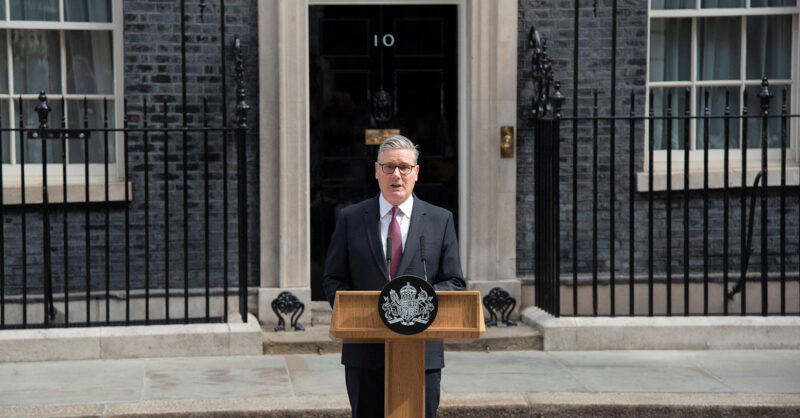
More than 100 of his own MPs wanted Keir Starmer to resign, but members of the public were less emphatic. According to analysis by Stack Data Strategy shared exclusively with the New Statesman, Starmer’s decision to quit had the backing of 62 per cent of voters – a majority, but actually the lowest support of any recent mid-term prime ministerial resignation.
Among Labour voters, Starmer’s decision to leave is viewed as the wrong one. The analysis shows that 47 per cent of people voting Labour wanted Starmer to stay on and fight a leadership election, compared to only 35 per cent that did not. That’s more own-party support than in comparable cases: 52 per cent of Conservative voters thought Theresa May was right to resign and 43 per cent thought the same for Boris Johnson’s decision. And at 70 per cent Conservative support, Liz Truss’s resignation enjoyed a resounding endorsement her party.
There is a regional element to all of this. Burnham’s candidacy is firmly based in place. The former mayor of Greater Manchester emphasises the firm northern roots of his politics. Voters in the Midlands, the North of England, Scotland and Wales favoured Starmer’s resignation much more than voters in London and southern England. For example, 49 per cent in the North backed the PM’s decision, compared to 30 per cent of voters in London.
What does this mean for the Labour Party? Well, that while MPs are keen for selfies with Burnham, the voters who put them in their jobs are less sure. Almost half of them hoped Starmer would stay on and fight a leadership campaign, Labour members are known for being loyal to the sitting party leader. (Though polling suggests Burnham could have made an exception to that rule.)
Aaron Iftikhar, director at Stack Data Strategy told the NS that “once the Westminster noise dies down” Labour could be left with a “sceptical base” and a “lot of voters potentially ready to ask: ‘What is this all for?’”. He pointed out that Burnhamremains less popular in the south of England and London. “It’s a lopsided appeal, geographically speaking,” he said, “another sign of politics fracturing along regional lines.” Iftikhar added: “that, after a honeymoon period, could net out to very little nationwide.”
Though he has made it safely back to parliament, the Downing Street’s heir apparent may still need to convince his voters what this was all for.