
DRDO Turbojet Engine : Faster drones, cruise missile boost: What DRDO’s new turbojet engine can power | - The Times of India
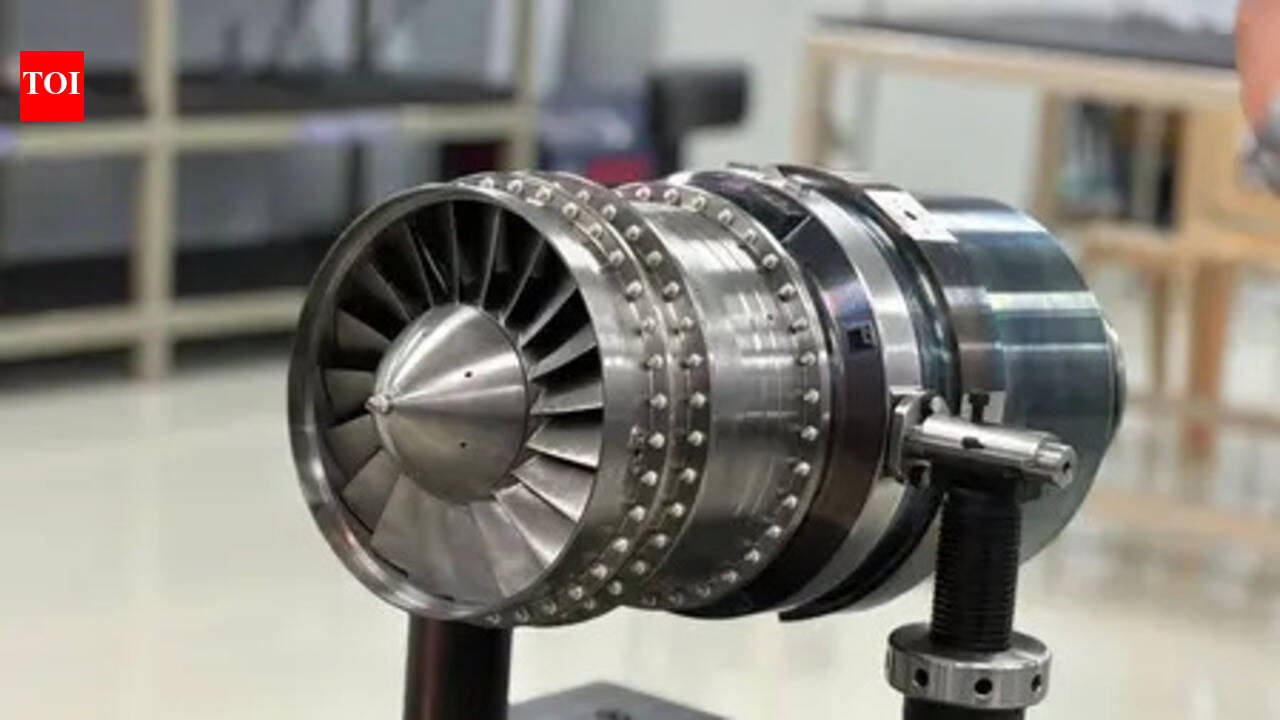
The Defence Research and Development Organisation’s (DRDO) Gas Turbine Research Establishment (GTRE) has successfully developed an expendable turbojet engine in the 350kg thrust class.Powerplants such as these are used on platforms including cruise missiles and target drones. With the advent of jet-powered loitering munitions, their use cases are expected to expand further.
Such engines have long powered cruise missiles, including the US Tomahawk.As conflicts increasingly move towards non-contact kinetic warfare, this class of jet engine is becoming crucial. The engine developed by GTRE is less powerful than the 450kg thrust-class Small Turbofan Engine (STFE) developed for the Long-Range Land Attack Cruise Missile (LR-LACM), according to a source in the DRDO.The development comes just over a month after the Army received 106 jet-powered Peacekeeper (Agniveg) loitering munitions from domestic defence firm SMPP.
The consignment comprised 100 operational systems and six training variants.The Agniveg is designed to engage targets deep inside enemy territory and has a Circular Error Probable (CEP) of less than five metres. It is designed to withstand jamming and can engage targets in jammed and spoofed environments.Since they are jet-powered, these drones fly much faster than the Shahed or Geran series used by Iran and Russia, which have maximum speeds of less than 200kmph.
The Agniveg, in comparison, is capable of reaching speeds of up to 450kmph.These jet-powered drones can be used to hit targets such as logistics hubs, fuel depots, ammunition storage facilities, command centres and radar sites. Such strategic targets can be struck without deploying manned platforms or using expensive cruise missiles.Subsonic cruise missiles such as the LR-LACM can also offer a cheaper option than supersonic systems such as the BrahMos.Manufacturing turbojet engines requires exceptional precision, advanced metallurgy and sophisticated production capabilities.
Only a handful of countries possess the ability to produce engines in this class.In India, apart from GTRE and its production partner Azad Engineering, private firms such as DG Propulsion, Nabhdrishti Aerospace and Paninian Aerospace are also working on indigenous compact jet-engine technologies.The development of such engines in India reduces import dependence, even as the country continues working to overcome its jet-engine challenges for larger platforms such as fighter aircraft.