
Drone vs drone: How interceptors are changing the cost equation of air defence - The Times of India
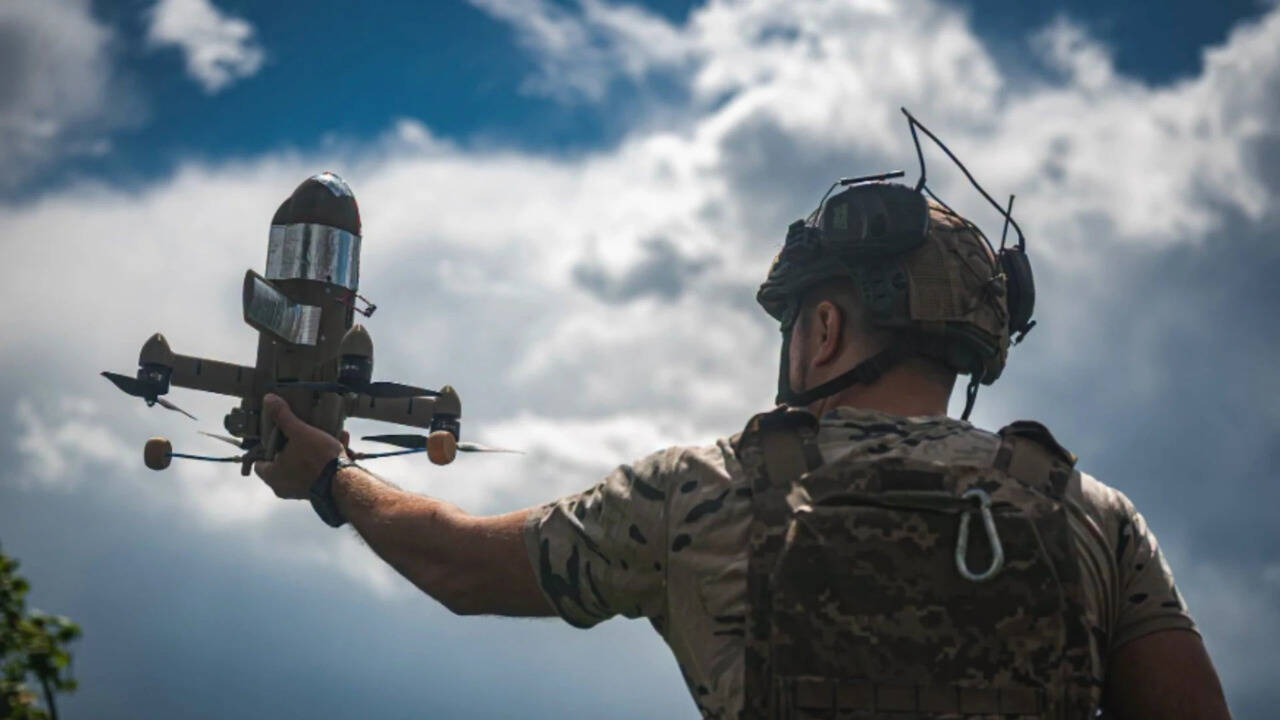
Drones have become a pervasive and prominent feature of the modern battlefield. Countries are increasingly investing in both drones and in the means to counter them. A prominent reason for the ubiquity of these systems is their relatively low cost, as compared to other systems. From the defender's perspective this brings in a new set of challenges, as most modern air defence systems are missile-based.
In recent conflicts expensive missiles costing over a million dollar have been fired at drones, such as the Iranian Shahed-136 drones, that cost roughly $30,000. Many of these cheaper drones have been fired as a tactic to overwhelm air defences, before a stronger attack using other weapons. This tactic has been used by Iran in West Asia and Russia against Ukraine.Ukraine at the forefront of large scale drone attacks from Russia, and a prominent user of drone based systems has developed a series of interceptor drones that can take out loitering munition.
Ukraine has developed these systems alongside other methods that range from using machine guns at the low end of the spectrum to using modern jammers that bloc out the communication of the drone with either the operator or the satellite guidance link in case of autonomous systems. Jammers emit powerful signals that can de detected and struck, they also come with the additional problem that they jam both friendly and hostile drones.A novel solution that the Ukrainians have come up with is the development of interceptor drones.
These drones, in terms of cost, offer the same flexibility as is offered by other drone based solutions and unlike missile can return to base and land, ready to be used again. Interceptor drones use several different methods to neutralise or destroy a hostile drone. Interceptors could eliminate the drone either by colliding with them using kinetic energy, or by exploding an explosive charge to destroy a drone or a swarm of drones.The Ukrainians have also developed a jet-powered drone killer called Griffen, which is made in collaboration with a British firm, these drones have demonstrated the destruction of the Geran-series of drones through collission, the improved version of the Iranian Shahed-136 drones.
The Griffen has a top speed of 350 kmph, which is much higher than that of the Geran, which tops at 200kmph, thus offering greater flexibility to the defenders. Because of the speed advantage, the more expensive Griffen can also be used in a second line of defence, after other more cost-effective systems aren't able to intercept a drone.Currently the Ukrainians are using two such drones, these are the Sting and the Bullet.
The Sting counter-drone system, according to its manufacturer, claims to have an over 80% hit rate against Russian Geran, Lancet and Shahed type of drones. More interestingly, the manufacturer claims that a drone operator can be trained to operate the drone in as few as six days. The bullet drone, too boasts of a similar kill probability and comes equipped with an 800 gram warhead, that can destroy a drone such as the Geran.Indian firms too are developing these systems.
Agni Strike by Stravex, Veda interceptor by Veda Aeronautics, Zombee by Indrajaal are some of the systems developed in India.