
'Magic and midsummer madness': The last of the old-school Glastonbury Festivals
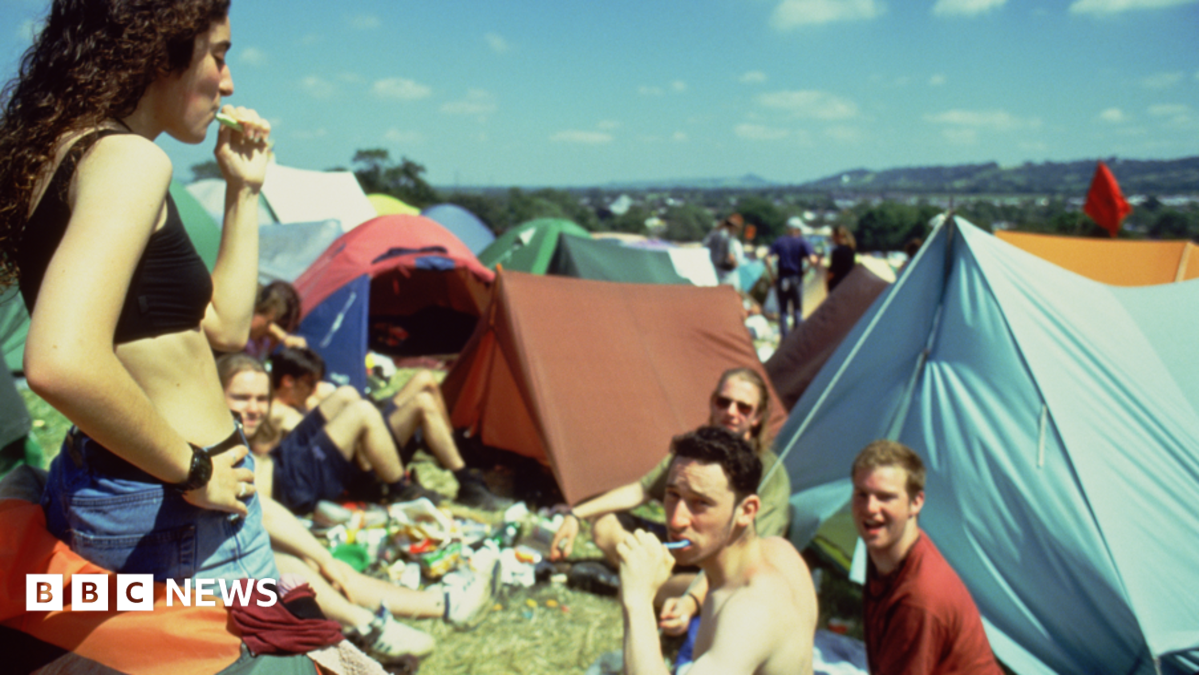
Many die-hard fans claim 1993 was the last of the old-school Glastonbury Festivals. It was before phone masts, biometric tickets and wall-to-wall coverage changed the music event forever.
To celebrate the special year in the festival's history, a digitally restored film is screening in cinemas across the UK showing scenes from 1993.
The original director of Glastonbury The Movie, Robin Mahoney, recorded footage at the event over four days, with a group of 30 young filmmakers, which has now been restored using the latest technology.
"The music, the magic, the midsummer madness. No voiceover. No talking heads. No presenter telling you how to feel. Just Glastonbury as it was," Mahoney said.
"The festival was on the cusp of being its original free-form, free-for-all, mad, chaotic environment to becoming considered a world-class music festival."
"The year was 1993 - the last of the great old-school Glastonburys, before the BBC arrived, before phone masts, biometric tickets and wall-to-wall coverage," Mahoney added.
The crew aimed to capture the spirit of fun and freedom enjoyed by the festival-goers, rather than the headline acts on the Pyramid Stage - what Mahoney described as the "real" festival.
Glastonbury The Movie was the first British feature film to receive National Lottery funding, via the British Film Institute.
It was first released in 1996 to rave reviews - the film director Mike Leigh called it "a masterpiece" and the Daily Telegraph critic, Robbie Collin, described the film as "blissed-out, almost Pasolini-esque; could almost be footage of a medieval fair that had somehow plopped through a time rift".
Originally shot in the CinemaScope format, the movie has now been digitally restored to a resolution of 4K.
Co-director Matt Salkeld said the new level of detail is remarkable.
"In a big room, on a big screen, with the Dolby system turned up, it is a unique time-machine journey," said Salkeld.
"A dewy-eyed nostalgia trip for one generation, and a pin-sharp eye-opening exploration for the next."
Mahoney said the crew was lucky enough to capture an era before fences keeping people out and no protocols surrounding performers.
"While we were there, we obviously had access, so it would be a knock on the door of a caravan, or going backstage to have a chat with the manager as a band was about to do their set.
"One of our cameramen just climbed on the stage, with permission of the band, and filmed it.
"The whole thing just came together through personal contacts and tenacity and the willingness of the performers to be in the film in the first place," he said.
In the decades since Mahoney made the movie, Glastonbury Festival has evolved into one of the most famous and celebrated music festivals in the world and draws the biggest names in the business.
But when the team of filmmakers arrived in 1993, in the days before mobile phone cameras, they were able to record a unique snapshot of the youth culture of the time.
"Just looking at the haircuts, the clothes, what people are carrying, what they're reading, what they're doing, the style of the tents and the cars driving into the site, it's a fascinating piece of British history," he said.
"The next year they started broadcasting television live from the festival site and then the BBC took it on and it was just on a trajectory to become this mega music festival," said Salkeld.
"Now there's this kind of push me, pull me of commercial interests with mainstream, big, big stages and bands broadcast to the world, compared to a much more sort of homemade DIY culture."
Mahoney said there appeared to be more interest in the movie now than when it first came out.
"Then, it was a film about a contemporary festival, now it's a piece of British cultural history; it's like an anthropological document," he said.
"One of my intentions is to get it in the national archive."
The festival is taking a fallow year this summer, allowing the land at Worthy Farm to recover and the film is opening during what would have been the festival weekend.
"It is the only version of Glastonbury available this summer," said Mahoney.
"For audiences who would normally be in that field, it is the closest thing available. For audiences who were never in that field, it is the next best thing," he added.
Follow BBC Somerset on Facebook, external and X, external. Send your story ideas to us on email or via WhatsApp on 0800 313 4630.