
Four ways the Gulf makes Iran’s Hormuz toll backfire | Opinion
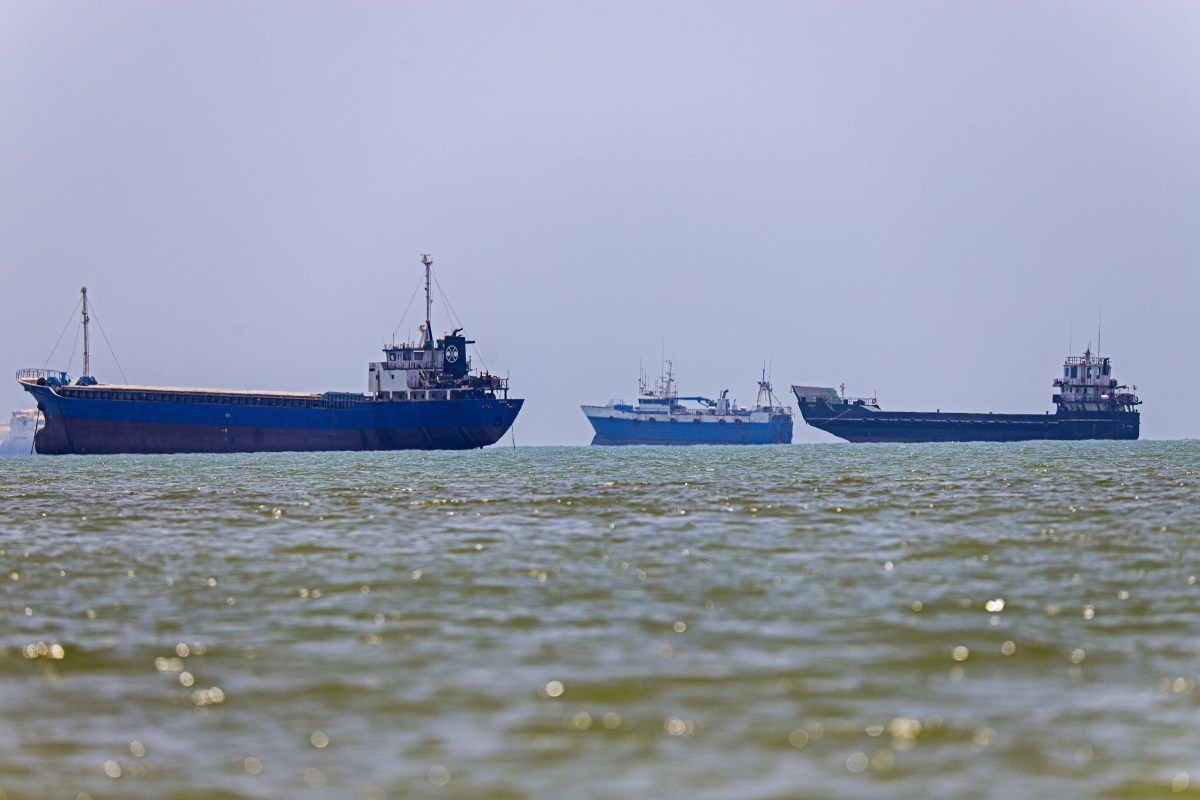
When Iran’s chief negotiator said this month that the Strait of Hormuz “will never return” to what it was before the war, it sounded like bravado from a state that had just lost much of its nuclear programme, its arsenal and its supreme leader to a punishing air campaign. It was not bravado. It was a business plan. Iran lost the war it chose to fight. It is now winning the only one it can still win: the right to price the passage of the Gulf’s wealth to the sea.
For four months, roughly a fifth of the world’s seaborne oil and gas—the lifeblood of the Saudi, Emirati, Qatari, Kuwaiti and Bahraini economies—moved at Tehran’s discretion or not at all. The June memorandum that ended the war did not resolve this. It deferred it. Iran agreed only to waive transit fees for 60 days while talks continue—waive, not abolish—and has already rejected the alternative corridor Oman set up with the International Maritime Organization, insisting ships use lanes Iran itself designates. The toll booth is built. Only the billing is paused.
And the Gulf is being set up to pay at both ends. When the clock runs out, Iran can charge a toll as the price of not closing the strait. Meanwhile, President Donald Trump has floated his own counter-fee, musing that Washington might bill the Gulf “for services rendered as the Guardian Angel” of the region. Rent to the threat, a retainer to the protector, and no seat at the table, where the United States and Iran negotiate the terms the Gulf will live by.
Refusing that arrangement is the right instinct, but it has to be realist, because the geography is permanent. Iran owns the strait’s northern shore and the longest coastline on the Gulf; no coalition or air campaign erases that. The war just proved the ceiling of force, even a combined American-Israeli assault of extraordinary intensity could not strip Iran’s ability to hold the waterway hostage. The answer is not to eliminate Iran’s leverage but to make using it cost more than it pays. Four moves would do exactly that.
First, make the corridor a collective Arab claim, not an Omani solo. Muscat’s IMO-coordinated route is the right instrument: an international, rules-based lane that denies Iran the authority to “approve” who sails. But Oman cannot carry that claim alone while its neighbors issue statements. The Gulf Cooperation Council should adopt the corridor as a bloc and anchor it explicitly in the United Nations Convention on the Law of the Sea, as the settled position of the states whose trade actually transits the strait. A rule one small country asserts is a request. A rule six states assert together is a fact.
Second, put Gulf hulls behind that rule. For 30 years the region has outsourced the security of its own jugular to the U.S. Fifth Fleet and, lately, to improvised Western coalitions. When the strait closed, the Gulf states were spectators to their own strangulation. Pooled escort and presence operations—Emirati naval technology, Saudi mass, Omani access—would not push the Americans out, but they would end the posture of waiting to be rescued. Borrowed deterrence can be withdrawn. Deterrence you own cannot.
Third, devalue the hostage. The most durable answer to a chokepoint is to need it less. The closure vindicated every dollar Saudi Arabia and the UAE have spent on pipelines that bypass Hormuz toward the Red Sea and the Arabian Sea, but those lines move a fraction of the volume and do nothing for the imports the Gulf cannot live without, from fertilizer to food. Finishing the long-stalled GCC railway, expanding bypass capacity and building real strategic reserves are not infrastructure projects. They are deterrence by other means. Every barrel that reaches a buyer without passing Iran's guns is a barrel Tehran can no longer price.
Fourth, demand the seat. The Gulf states are the war’s principal casualties and the principal stakeholders in its settlement, yet they are absent from the room. They should make co-signatory status on any Hormuz arrangement a condition of their alignment, and they hold more cards than they admit, from basing rights to the energy and investment flows both Washington and a recovering Iran will need. Sovereignty that is not asserted at the table is simply priced by whoever sits there instead.
None of this means choosing war over diplomacy. It means recognizing that the diplomacy is the war now, fought by other means, and that passivity is not neutrality but surrender by installment. The strait will be governed by rules. The only question is whose. Iran has taught the Gulf, at enormous cost, that Hormuz belongs to whoever is willing to set its terms and enforce them. The Gulf can be that party, or it can pay the toll. It cannot do neither.
Muhanad Seloom is assistant professor of International Politics and Security at the Doha Institute for Graduate Studies and a non-resident senior fellow at the Middle East Council on Global Affairs. He regularly posts on X at @muhanadseloom.
The views expressed in this article are the writer's own.