
Ebola global health emergency: Expert answers 6 key questions
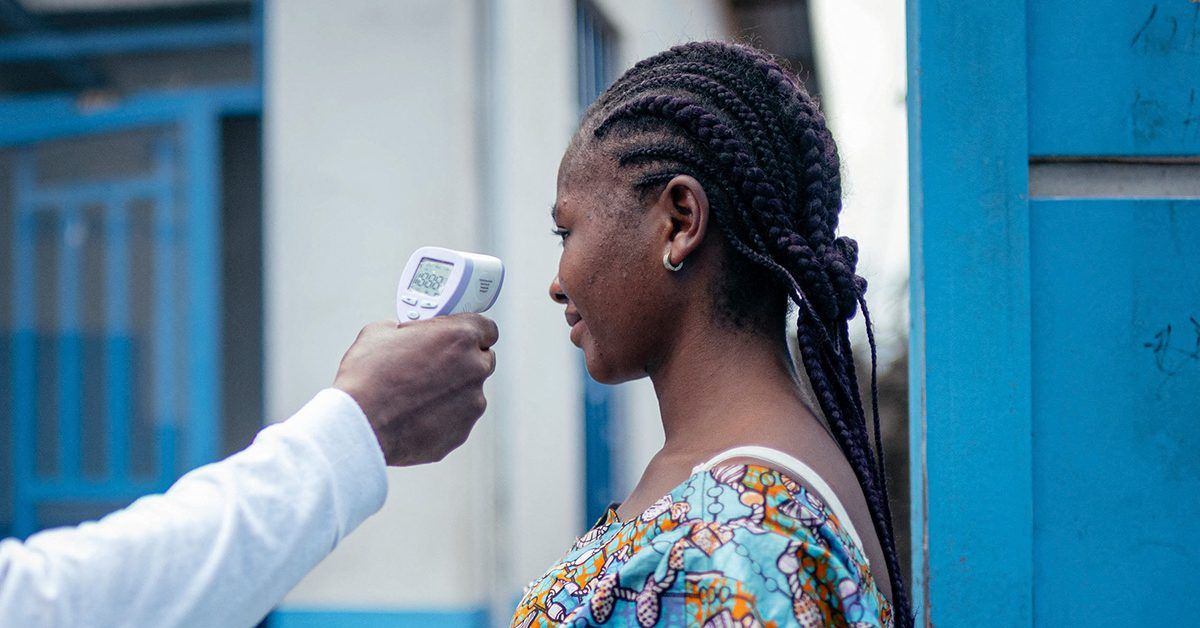
As of May 27, 2026, the World Health Organization (WHO) continues to express deep concern about the fast-spreading outbreak of Ebola in the Democratic Republic of the Congo (DRC) and Uganda.
The
At the same time, there are five confirmed cases in Uganda, including one confirmed death, and there are 101 confirmed cases and 10 confirmed deaths in the DRC.
So far, one United States national has received a confirmed diagnosis of Ebola and is currently receiving treatment in Germany. He is reportedly a healthcare professional who has been providing medical care at a hospital in the DRC since 2023.
On Sunday, May 17, 2026, the WHO declared the current Ebola outbreak “
And on May 27, 2026, the European Centre for Disease Prevention and Control (ECDC) published a press release declaring that the agency is increasing its support in Uganda and the DRC, noting that “[t]he current outbreak is of serious concern, and is in many ways not comparable with previous Ebola outbreaks.”
Medical News Today spoke with Monica Gandhi, MD, MPH, an infectious disease specialist and professor of medicine at the University of California, San Francisco, about this global health emergency.
Gandhi explains how Ebola manifests, how it can be transmitted, treated, and prevented, what it means for an outbreak to become a global health emergency, and whether the current outbreak has pandemic potential.
Ebola is an infectious disease caused by viruses of the Filoviridae family, genus Orthoebolavirus. The current outbreak is caused by the spread of the Bundibugyo strain of the virus, for which there are currently no vaccines or targeted drugs.
“Ebola is in the Filovirus family, which causes ‘viral hemorrhagic fever’ in humans and nonhuman primates,” Gandhi explained.
The disease “spreads through direct contact with the blood or body fluids of a person who is sick with or has died from the disease,” she told us.
Ebola is an infectious disease caused by viruses of the Filoviridae family, genus Orthoebolavirus. The current outbreak is caused by the spread of the Bundibugyo strain of the virus, for which there are currently no vaccines or targeted drugs.
“Ebola is in the Filovirus family, which causes ‘viral hemorrhagic fever’ in humans and nonhuman primates,” Gandhi explained.
The disease “spreads through direct contact with the blood or body fluids of a person who is sick with or has died from the disease,” she told us.
“The first set of symptoms [is] usually headache, muscle aches (myalgias), fever,” said Gandhi. These are typically “followed by abdominal pain, cough, sore throat (pharyngitis), big lymph nodes, light hurting the eyes (photophobia), red eyes (conjunctival infection), yellow skin (jaundice), pancreatitis, and central nervous system involvement.”
“Ebola is called ‘hemorrhagic’ because the infected individual experiences low platelets (thrombocytopenia) bleeding and disseminated intravascular coagulation (DIC), which essentially both lead to bleeding, organ failure and shock.”
“The first set of symptoms [is] usually headache, muscle aches (myalgias), fever,” said Gandhi. These are typically “followed by abdominal pain, cough, sore throat (pharyngitis), big lymph nodes, light hurting the eyes (photophobia), red eyes (conjunctival infection), yellow skin (jaundice), pancreatitis, and central nervous system involvement.”
“Ebola is called ‘hemorrhagic’ because the infected individual experiences low platelets (thrombocytopenia) bleeding and disseminated intravascular coagulation (DIC), which essentially both lead to bleeding, organ failure and shock.”
For those who think they may be experiencing Ebola symptoms, Gandhi advised swift action, as there is currently no vaccine or targeted therapeutic approach for the infection caused by this viral strain, so time is of the essence.
“Unfortunately, there is no current vaccine or treatment available for Ebola,” she reiterated. However, she advised that “survival can significantly improve with good supportive care provided in a hospital setting.”
According to Gandhi, “this type of care can involve blood pressure support, watching for bleeding, [and] supporting the organs.”
“Therefore, if a person suspects they are ill with Ebola, they should present to a hospital setting right away, letting the staff know immediately the possible exposure so that proper isolation along with supportive care can be initiated,” the expert emphasized.
For those who think they may be experiencing Ebola symptoms, Gandhi advised swift action, as there is currently no vaccine or targeted therapeutic approach for the infection caused by this viral strain, so time is of the essence.
“Unfortunately, there is no current vaccine or treatment available for Ebola,” she reiterated. However, she advised that “survival can significantly improve with good supportive care provided in a hospital setting.”
According to Gandhi, “this type of care can involve blood pressure support, watching for bleeding, [and] supporting the organs.”
“Therefore, if a person suspects they are ill with Ebola, they should present to a hospital setting right away, letting the staff know immediately the possible exposure so that proper isolation along with supportive care can be initiated,” the expert emphasized.
“The best preventative measures are isolation of the infected individual with personal protective equipment for any healthcare professionals caring for the individual,” said Gandhi.
“Contact tracing is also important in order to screen those with potential exposure, like the American doctor who contracted symptoms of Ebola and was flown to Germany for treatment,” she added.
“Those who have been exposed, but are not clearly infected, should quarantine, which means stay away from others for the incubation period duration, which is typically 5–10 days,” the doctor advised.
There are vaccines for other Ebolaviruses, she noted, but because they are not effective against the Bundibugyo strain, they are not currently offered to those at risk of infection.
Going forward, said Gandhi, “[t]here are some promising candidates for vaccines, but they are not available and require much more research to advance.”
“The best preventative measures are isolation of the infected individual with personal protective equipment for any healthcare professionals caring for the individual,” said Gandhi.
“Contact tracing is also important in order to screen those with potential exposure, like the American doctor who contracted symptoms of Ebola and was flown to Germany for treatment,” she added.
“Those who have been exposed, but are not clearly infected, should quarantine, which means stay away from others for the incubation period duration, which is typically 5–10 days,” the doctor advised.
There are vaccines for other Ebolaviruses, she noted, but because they are not effective against the Bundibugyo strain, they are not currently offered to those at risk of infection.
Going forward, said Gandhi, “[t]here are some promising candidates for vaccines, but they are not available and require much more research to advance.”
The WHO has declared the current Ebola outbreak “a public health emergency of international concern,” citing, among other reasons, “high positivity rates” of infection, “unusual clusters of community deaths,” as well as “significant uncertainties to the true number of infected persons and geographic spread associated.”
Moreover, the organization noted that the outbreak may spread to other countries, requiring a coordinated international response to contain it.
Gandhi explained that, when an outbreak becomes a global health emergency, “this means that the pathogen definitely is of concern to the international community but is not a pandemic,” which would involve a global spread of the disease.
“For instance, COVID was first called a global health emergency before it progressed to the pandemic stage by March of 2020,” she noted. At the same time, she said, “the mpox epidemic of 2022–23 was a global health emergency of international concern and stayed in that category.”
“This means that the WHO is very concerned and wants the international community involved in surveillance, but this is not a pandemic,” stressed Gandhi.
The WHO has declared the current Ebola outbreak “a public health emergency of international concern,” citing, among other reasons, “high positivity rates” of infection, “unusual clusters of community deaths,” as well as “significant uncertainties to the true number of infected persons and geographic spread associated.”
Moreover, the organization noted that the outbreak may spread to other countries, requiring a coordinated international response to contain it.
Gandhi explained that, when an outbreak becomes a global health emergency, “this means that the pathogen definitely is of concern to the international community but is not a pandemic,” which would involve a global spread of the disease.
“For instance, COVID was first called a global health emergency before it progressed to the pandemic stage by March of 2020,” she noted. At the same time, she said, “the mpox epidemic of 2022–23 was a global health emergency of international concern and stayed in that category.”
“This means that the WHO is very concerned and wants the international community involved in surveillance, but this is not a pandemic,” stressed Gandhi.
According to Gandhi, it is unlikely that the current Ebola outbreak will evolve into a pandemic, despite its current “international concern” status.
“Ebola is not airborne or spread by casual contact but does require prolonged contact with body fluids or secretions from an infected person,” Gandhi reiterated.
“Moreover,” she said, “a virus with a high mortality rate like 50–70% does not quickly spread like pathogens that spread with a much lower mortality rate.”
Therefore, an outbreak of global proportions is not a likely outcome, in the expert’s opinion.
According to Gandhi, it is unlikely that the current Ebola outbreak will evolve into a pandemic, despite its current “international concern” status.
“Ebola is not airborne or spread by casual contact but does require prolonged contact with body fluids or secretions from an infected person,” Gandhi reiterated.
“Moreover,” she said, “a virus with a high mortality rate like 50–70% does not quickly spread like pathogens that spread with a much lower mortality rate.”
Therefore, an outbreak of global proportions is not a likely outcome, in the expert’s opinion.