
Ebola in DR Congo: Mass gatherings banned in Kinshasa to contain spread
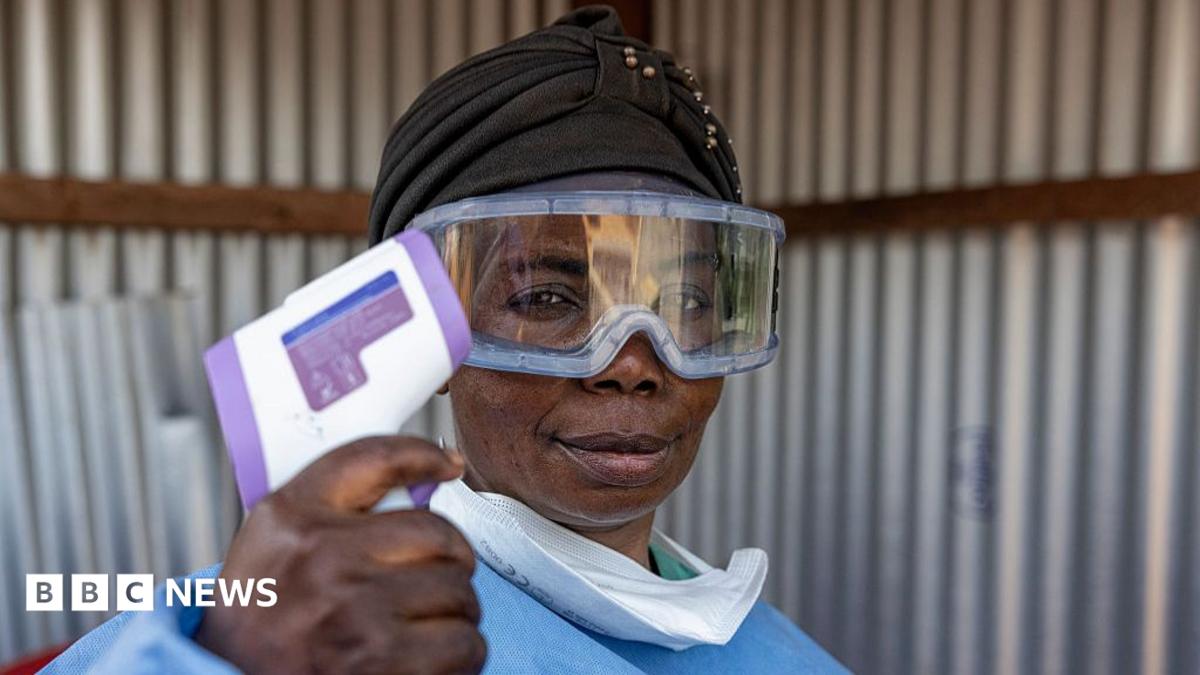
Mass gatherings have been banned in the Democratic Republic of Congo capital, Kinshasa, as well as three other areas, in order to halt the spread of Ebola, the interior minister says.
The current outbreak of the deadly disease has so far been detected in three provinces in the east - some 1,800 km (1,100) miles from Kinshasa - but the authorities fear it spreading to the city of 18 million people.
The three other provinces affected by the ban - Tshopo, Haut-Uele and Bas-Uele -border those where Ebola has been confirmed.
Prominent figures from DR Congo's opposition parties have criticised the order, alleging that it has been put in place to stifle a protest march scheduled for 8 July.
Prince Epenge, spokesperson for the opposition Lamuka coalition, said the government's decision was "political", as no cases have been confirmed in Kinshasa.
He condemned the order, telling the BBC on Monday: "It is not legitimate. We cannot accept this decision".
Rodrigue Ramazani, secretary-general of opposition party Envol, urged protesters to ignore the ban and attend the march, saying the directive "reeks of a political manoeuvre rather than a public health measure".
DR Congo's government has not responded to this criticism.
The demonstration was organised by the C64 coalition, an alliance against a proposed law that, critics say, could see President Felix Tshisekedi stay in power beyond his two-term limit.
While no cases have yet been confirmed in Kinshasa, a doctor who has tested positive for Ebola in France, passed through the city as he returned home from one of the towns at the epicentre of the outbreak, where he had been working at an Ebola treatment centre.
The day after his test was made public, the Congolese government ordered a 21-day quarantine for travellers going from Ebola-affected areas to other parts of the country.
According to the health ministry, the Ebola outbreak is currently confined to three provinces - Ituri, North Kivu and South Kivu. Mass gatherings have been banned in these regions for weeks.
Ituri is by far the worst affected, accounting for more than 90% of infections.
Interior Minister Jacquemain Shabani issued the directive on mass gatherings on Saturday, when confirmed Ebola cases across the affected provinces jumped by 47, bringing the total number of infections to 1,274. The number of known deaths increased to 360.
DR Congo's neighbour, Uganda, has also confirmed Ebola cases. The World Health Organization (WHO) says 20 people are known to have been infected there and two deaths have been confirmed.
The disease spreads from one person to another by contact with infected bodily fluids such as blood or vomit.
This outbreak was caused by the Bundibugyo species of the virus, for which there is currently no vaccine.
However, on Monday the head of the Africa Centres for Disease Control and Prevention (Africa CDC) told the BBC's Newsday programme that trials for new antiviral drugs could begin as soon as this week.
According to both Africa CDC and US public health authorities, the current outbreak has the potential to be one of the largest ever, because it was spreading for weeks before it was confirmed to be Ebola.
The WHO has warned that conflict in eastern DR Congo is making it more difficult to tackle the outbreak. The M23 rebel group is in control of large parts of both North and South Kivu.
Go to BBCAfrica.com, external for more news from the African continent.