
Ebola treatments trial begins in the Democratic Republic of Congo
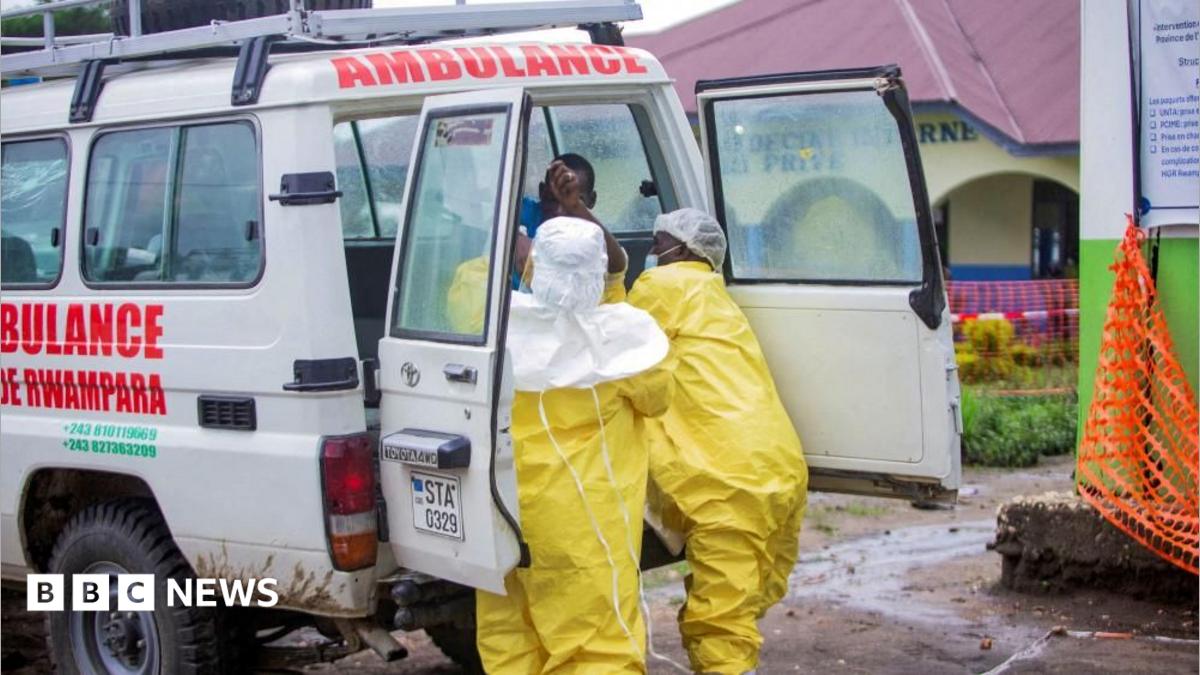
A trial of potential treatments for the strain of virus behind the current deadly Ebola outbreak in the Democratic Republic of Congo (DRC) has begun, the World Health Organization (WHO) has announced.
The first patient has been enrolled in the DRC, WHO chief Tedros Adhanom Ghebreyesus said on Thursday.
More than 1,400 cases and 438 deaths have been confirmed in the DRC alone, according to the WHO.
There are currently no approved vaccines or treatments for the Bundibugyo virus strain of the disease, which is highly infectious.
The current trial is sponsored by the WHO, and is being co-ordinated by scientists at the Institut National de Recherche Biomédicale in DRC, the Institute of Tropical Medicine in Belgium, and the University of Oxford in the UK.
Speaking to reporters from the WHO headquarters in Geneva on Thursday, Tedros said: "The clinical trial of two therapeutics began, with the enrolment of the first patient.
"Even without approved therapeutics, people are recovering from this disease, but of course, we could save many more lives with safe and effective therapeutics in our toolkit," the WHO head said.
The current outbreak of Ebola in the DRC and Uganda began in May, and has been declared a public health emergency by the WHO.
According to WHO data, there have been 1,406 confirmed cases in DRC, with 301 suspected cases and 438 deaths, as of 30 June.
There have also been 20 confirmed cases in Uganda, leading to two deaths, and one confirmed case in France, as of 1 July.
The disease is caused by a virus which attack's the body's immune systems and organs.
It normally infects animals, typically fruit bats, but outbreaks among humans can sometimes start when people handle infected animals.
People usually only become contagious after developing symptoms, and it takes two to 21 days for symptoms to appear.
They come on suddenly and start like flu or malaria with fever, headache and tiredness.
Vaccines must be developed for each individual species of Ebola, of which there are six, but only three are known to cause outbreaks.