
Eclipse: Eye pain internet searches surge 800% after Britons told avoid directly looking into solar eclipse
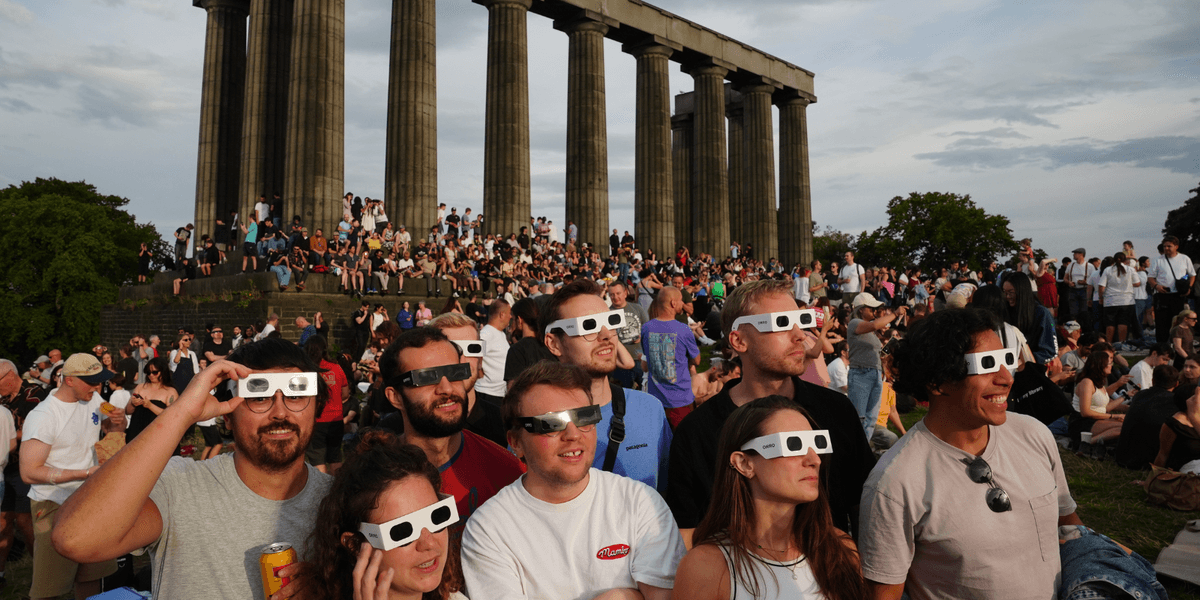
Online searches for eye pain have surged by around 800 per cent after Britons were warned not to look at last night's solar eclipse.
Interest on Google for terms including "eyes hurt" rose in the hours following the celestial event.
Moorfields Eye Hospital in Finsbury, north London, reported some people attending after the event.
However, ophthalmology experts stressed that those who came in were not suffering from anything serious.
Web searches also spiked for terms including "why do my eyes hurt" and "headache".
Nkosi Yearwood, optometrist and The College of Optometrists council member for Wales, warned the dangers may not be immediately apparent for people who looked into the eclipse.
He told The Telegraph: "In the days following the last eclipse in the 90s, around 70 people across the UK presented to eye departments with some level of solar retinopathy, and about 40 per cent of these people looked at it for less than a minute.
"It can take a few hours or even couple of days before you start feeling the symptoms."
He explained that many people do not notice damage straight away because there usually is not any discomfort associated with it, adding: "The retina doesn’t have any pain receptors, so you can do this damage and not know about it."
However, there are other signs to look out for that can range from mild to drastic.
Dr Yearwood said: "The main things to look out for is any blurring in vision, distortion, a dark spot or a change in your colour vision.
"If you experience any of these symptoms or just feel like things aren’t quite right, seek advice from an optometrist at your local opticians straight away."
Patrick Laidlaw, an optometrist based at Optegra Eye Clinic Sheffield, added: "I would also look out for any severe light sensitivity or any reduction in vision."
Any severe damage done to the eyes in this fashion cannot be treated but it can be healed.
Dr Yearwood said: "Similar to sunburn, it does in most cases does heal itself."
“The length of time to heal and how high the chance of healing depends on how long you look at the eclipse for.
"So, if you did end up staring at it for too long, you do risk permanent vision damage. If you are worried, go to your local opticians and let them assess you."
Millions of Britons turned their eyes to the skies for the best solar eclipse in decades – with crowds flocking to viewing events and shops selling out of protective glasses.
One couple even planned their wedding a year in advance, timing it to coincide with the event.
More than 90 per cent of the Sun was obscured by the Moon, the most it has been blocked above UK skies since the total eclipse in 1999.
Crowds of people could be seen at viewing spots in different locations – including the Royal Observatory Greenwich, London, Stonehenge in Wiltshire, Calton Hill, Edinburgh, and outside Queen’s University in Belfast.
Hundreds of people were at Cardiff Bay barrage with heavy traffic in the Penarth area as people tried to make it in time for the peak of the event.
Jerry and Jamie Bone, aged 30 and 25, respectively, had planned their wedding at Alpheton in Suffolk for over a year so that they could get married on the day of the eclipse.
The couple provided special glasses and filters so that guests could view the event.
Queen guitarist and astrophysicist Sir Brian May posted a video of himself on Instagram waiting for the eclipse on a hillside in Spain in which he could be seen looking at an image on an iPad and asking a man nearby “how long ’til totality?”.