
Engineer of world's tallest building has prediction on skyscrapers' future
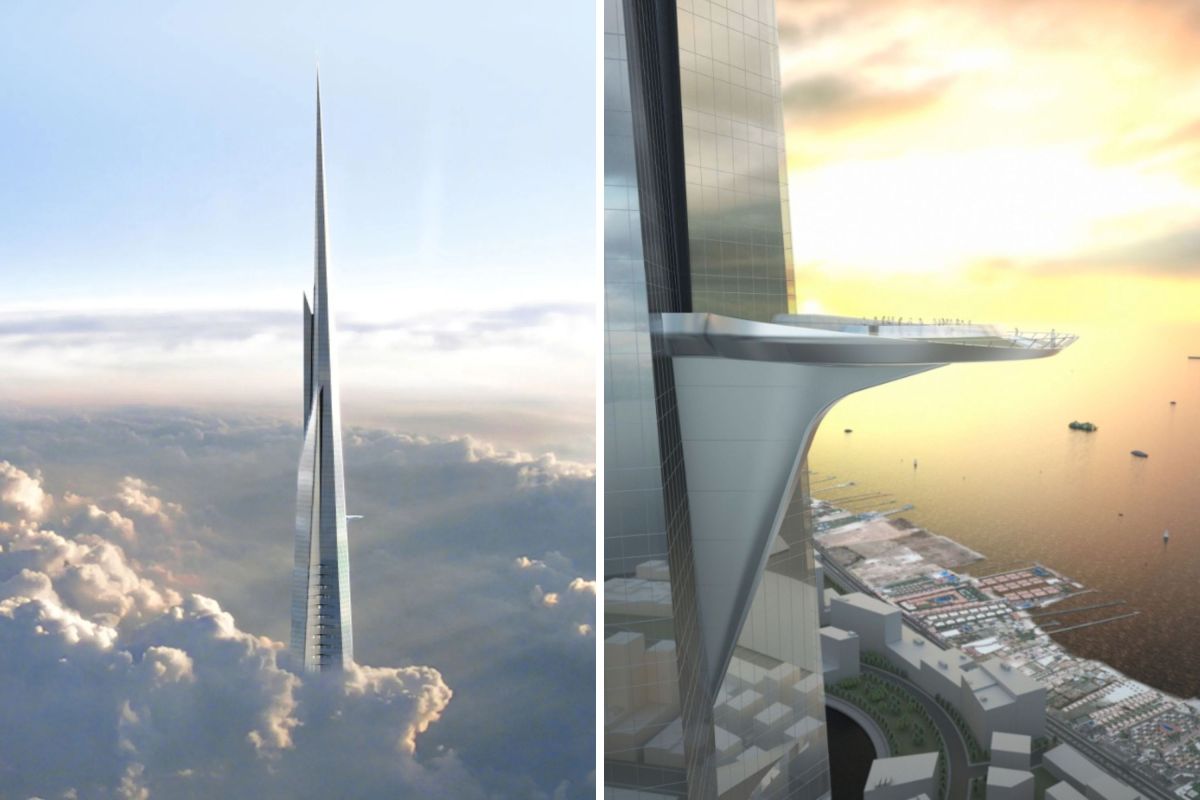
Skyscrapers could one day grow to double or even triple the height of the world's tallest building, says the engineer behind Saudi Arabia's Jeddah Tower, which will be the tallest skyscraper in the world upon its completion.
Designed by architects Adrian Smith and Gordon Gill of Adrian Smith + Gordon Gill Architecture (AS+GG), the Jeddah Tower is set to rise above 1,000 meters (around 3,281 feet), overtaking Dubai's Burj Khalifa, which currently holds the title of the world's tallest building at about 2,717 feet.
Engineer John Peronto, managing principal at Thornton Tomasetti and project manager for the Jeddah Tower, told Newsweek that buildings of unprecedented scale are already being explored behind the scenes.
“We've worked on projects of that scale in the design phase already,” Peronto said when asked whether skyscrapers could reach twice the height of the Jeddah Tower within the next 50 years. He added that some of those projects are already “fairly mapped out," but they're "not public yet,” noting that he’s unable to share any further details at this stage.
The engineer said: “I can see over the next 50 years…doubling, tripling [of the height of the Jeddah Tower]…you can engineer the solutions. We have to evolve the way we build the solutions and the materials we use.”
Peronto's prediction comes as the global push to build taller buildings continues, even as architects and engineers grapple with growing environmental concerns.
Amid groundbreaking developments such as the Jeddah Tower, questions are increasingly being raised about the environmental costs of new megaprojects, even as many existing buildings are aging.
According to the American Institute of Architects (AIA), nearly half of America's 125 million buildings are at least 50 years old, prompting a growing focus on restoration and adaptive reuse.
Earlier this month, Jeddah Tower architect Gordon Gill told Newsweek that the greater challenge for the future may not be building ever taller structures but improving existing ones. He argued that countries have an opportunity to make their building stock more sustainable while ensuring the “longevity of your stock.”
Despite the challenges, Peronto believes advances in building materials will unlock new possibilities for supertall structures.
“As concrete strength and concrete material itself really evolves and changes, those are going to change everything,” he told Newsweek.
At the same time, he said that future generations may increasingly question the purpose of building ever-taller structures. “What makes sense to do? Why do we need to go any higher?” he asked, before noting that humanity has a long history of pursuing difficult goals simply because they are challenging.
Peronto said the industry's biggest hurdles are no longer purely structural. In comments shared in a video shared by Thornton Tomasetti, he explained that engineers are increasingly confronting the practical limits of construction technology and building methods.
According to Peronto, modern materials will play a major role in overcoming those barriers, but success will also depend on collaboration between engineers, contractors, logistics specialists, and delivery teams. Addressing those challenges is key to "delivering a structure that is structurally optimal but buildable.”
Looking further ahead, Peronto suggested the conversation around tall buildings may eventually extend beyond Earth.
“I think you'll be asking different questions in 50 years,” he said, pointing to growing interest in lunar infrastructure. Rather than debating the next record-breaking skyscraper on Earth, future discussions could center on “what's the biggest building we're planning to put on the moon?”
He noted “all the excitement around putting infrastructure up on the moon,” including facilities such as data centers and projects to support future missions deeper into space, including “infrastructure that's going to be put there to maybe jump to Mars.”
As those ambitions develop, Peronto said, “It will be interesting to see where tall structural technology goes” and how it evolves.
Back on Earth, he expects urbanization to continue driving demand for vertical development. Asked whether increasingly dense cities could lead to more vertical cities in the future, Peronto replied: “I think as we densify, yes.”
Peronto added that humanity's desire to build higher is unlikely to disappear. “I don't think anyone's going to be able to stop humans from wanting to build taller. I think it's in our DNA,” he told Newsweek. “There's no limit.”
Do you have an architecture or design-related story to share? Let us know via [email protected], and your story could be featured by Newsweek.
Contact Newsweek editors on this story: Sirena Bergman and Sam Wilson.