
Ex-Google engineer says Larry Page, Sergey Brin and Sundar Pichai share the same trait—it's the lesson he swears by as a $7.2 billion AI CEO | Fortune
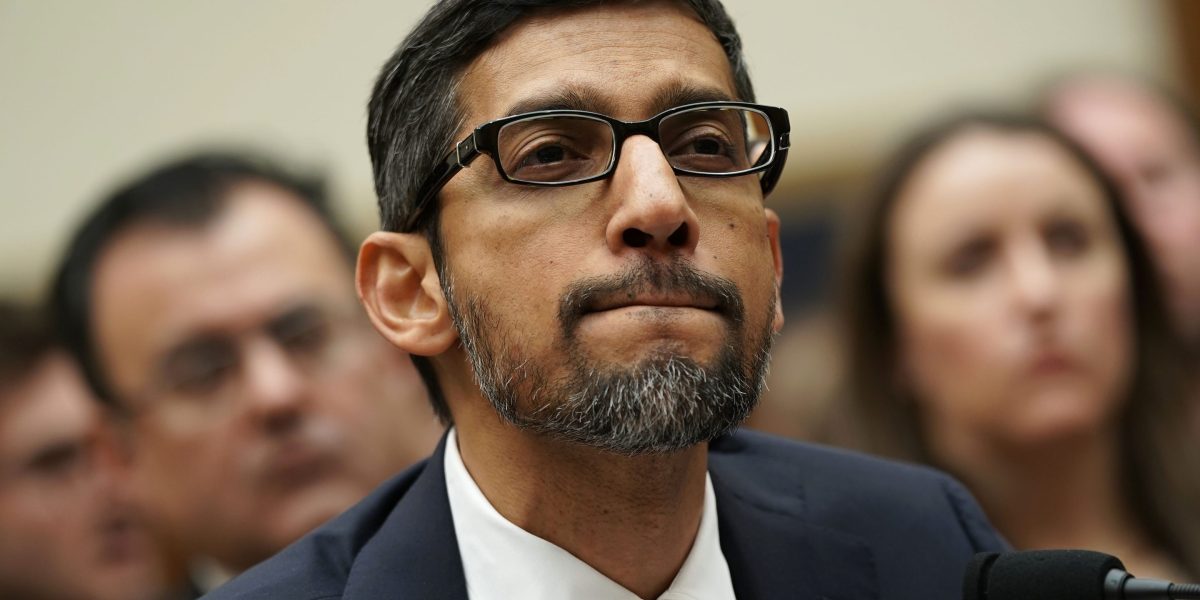
When Arvind Jain, the now co-founder of Rubrik and Glean, landed a job at Google, he felt like an “imposter”. The engineer had moved to America from a small town in India and suddenly found himself surrounded by MIT and Stanford PhDs. So he made a point of quietly studying those around him.
And one of those people was a product manager who had just joined the company. His name was Sundar Pichai.
“We were together at Google for a long time. I knew him from when he joined as an individual contributor,” Jain exclusively told Fortune.
“At Google, we had people who were brilliant, they came from the best schools, they were highly accomplished, and there were some who grew and shone, and then there were others who didn’t,” he said. “I thought that I got lucky, that somehow I got placed in this group of amazing people… And that was why I was trying to learn and observe what makes one succeed?”
Of course, Pichai ended up being one of those individuals who shone. He became CEO of Google in August 2015, just over a decade after joining the company.
“What I learned by observing him was that the same attributes kept coming up—intensity, hard work. But also the ability to think big and have confidence,” Jain revealed. “You have to think crazy.”
The moment that crystallized it was watching Pichai champion Google Chrome, at a time when the idea looked foolish on paper.
Browsers were Microsoft’s territory, Netscape had already failed, and few inside Google thought it was worth the effort. Jain included.
“I felt like that’s such a bad idea,” he admitted. “I was not thinking big enough.”
Even Microsoft’s CEO Steve Ballmer once publicly dismissed Chrome as a “rounding error.”
But of course, Chrome went on to become the world’s most widely used browser—far bigger than Microsoft’s Internet Explorer. By 2012, it had already surpassed its rivals to become the world’s most-used browser, helping cement Pichai’s reputation inside Google and paving the way for his eventual rise to CEO.
“You have to say: we’re going to do this thing which everybody thinks is stupid, maybe unrealistic, Jain learned from the experience. “That’s when magic happens.”
And says it cements the idea that thinking “crazy” is an attribute as important as grinding away—and one that Google co-founders Larry Page and Sergey Brin share with Pichai.
“They had no sort of constraints in their minds on what’s possible,” Jain added.
“So I think that those were the two main things I learned: hard work, but then the disregard for normalcy and regular constraint thinking.”
Jain left Google having quietly internalized everything he’d observed—and went on to apply it twice over.
He co-founded Rubrik, the cloud data management company that IPO’d on the New York Stock Exchange in 2024 at around $5.6 billion, before launching Glean, the AI startup that helps employees search and understand information across their entire company.
And Jain’s still taking lessons from his colleagues. This time, the CEO says he takes the most notes from his young Gen Z hires.
“Actually, I feel like I learn the most from the youngest people,” he told Fortune. “They’re the ones who have not seen the things that I’ve seen. They have new points of view.”
Orianna Rosa Royle is the Success associate editor at Fortune, overseeing careers, leadership, and company culture coverage. She was previously the senior reporter at Management Today, Britain's longest-running publication for CEOs.