
Fact vs. fiction: Tupac trial examines Duane Davis' story
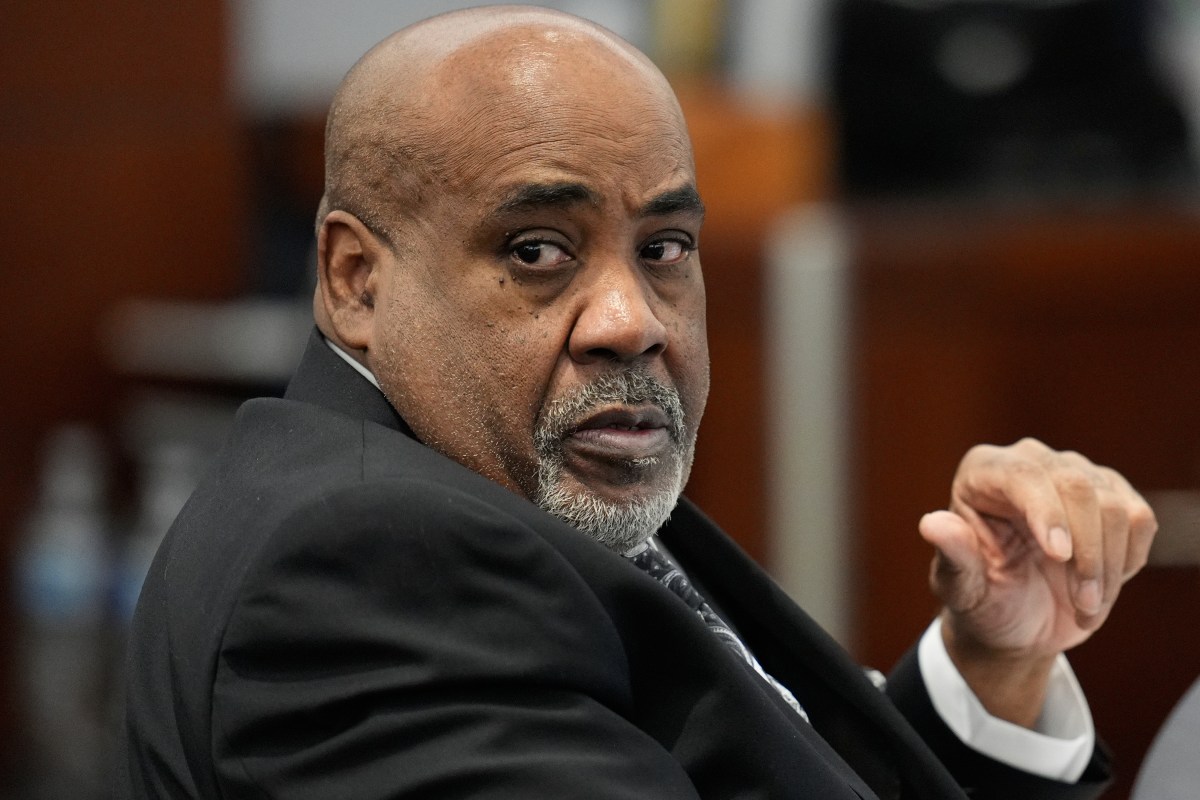
Nearly 30 years after Tupac Shakur was gunned down on the Las Vegas Strip, the murder trial of Duane "Keffe D" Davis is putting one of the case's most famous pieces of evidence under a microscope: Davis' own memoir, Compton Street Legend.
During opening statements Monday, prosecutors portrayed the book as part of a long pattern of admissions in which Davis repeatedly described his role in the retaliation that led to Shakur's killing.
Davis' defense Michael Sanft, however, argued the book is precisely the kind of unreliable, self-promotional storytelling that should not be mistaken for hard evidence.
The clash sets up one of the trial's central questions: How much of what Davis wrote and later said publicly reflects what actually happened on September 7, 1996, and how much was exaggeration, mythmaking or profit-driven fiction?
The prosecution's case is heavily built around statements Davis allegedly made over decades, including FBI interviews, public appearances, television documentaries and his 2019 memoir. Prosecutors told jurors that while portions of the book may contain "self-aggrandizement," its core account remained consistent with earlier statements Davis gave investigators.
Sanft countered that jurors must separate "fact or fiction" and not assume that claims contained in a commercially published memoir are automatically true. He repeatedly emphasized that the state's theory relies on decades-old statements that he argues were never independently corroborated by physical evidence.
That battle is important because prosecutors have acknowledged Davis was not the alleged gunman. Instead, they say he orchestrated retaliation for the beating of his nephew, Orlando Anderson, shortly before the fatal shooting. If jurors conclude Davis' public accounts are credible admissions, they could bolster the state's case. If they view them as unreliable storytelling, a key pillar of the prosecution could weaken.
During opening statements, prosecutors argued that Davis' memoir largely mirrors statements he made in private years before publication.
Prosecutors highlighted what they described as a pattern stretching from FBI interviews in the late 1990s through a 2008 federal task force interview, later public interviews and ultimately the publication of Compton Street Legend.
The state told jurors that Davis repeatedly returned to the same themes, particularly his anger over Anderson's beating and his claim that the confrontation "gave us the ultimate green light" for revenge.
Defense attorney Sanft argued that prosecutors are asking jurors to treat Davis' book as historical fact even though it was produced decades after the crime and contains stories that enhanced his reputation.
"Is what they're saying the truth or fiction, fact or fiction?" Sanft told jurors during his opening statement.
The defense highlighted several reasons jurors should view portions of the memoir skeptically.
First, Sanft argued that no independent physical evidence connects Davis to the shooting despite nearly three decades of investigation. He repeatedly told jurors that there are no fingerprints, DNA results, weapons or forensic evidence tying Davis to the murder.
Second, he criticized investigators for relying on statements in the book without verifying them. Sanft accused detectives of reading passages from Davis' memoir into grand jury proceedings as if they were established facts.
"The detective never verified the book before he reads it into the record," Sanft argued. "He treats that book like it's fact."
Third, Sanft suggested Davis had incentives to embellish. By the time the book was published, he said, several people allegedly involved in the shooting had died, leaving Davis as the only surviving participant capable of telling the story publicly. The defense portrayed that circumstance as fertile ground for exaggeration and mythmaking.
A major theme of the defense's opening statement was that investigators allegedly failed to independently confirm some of Davis' most consequential claims.
Sanft pointed to a 2008 federal task force interview in which Davis reportedly discussed the Tupac shooting while cooperating in another investigation. According to the defense, federal authorities never fully corroborated those statements through additional witnesses or physical evidence.
The defense also questioned why no murder charges were filed in the years immediately following those interviews if authorities believed Davis had already confessed to a role in the killing.
For prosecutors, however, the significance lies not in any one statement but in the cumulative record. They contend Davis repeatedly described the same chain of events across private interviews, public appearances and his memoir, creating a consistent account that jurors should view as credible.
Davis' long-awaited murder trial is being held in Las Vegas and expected to feature testimony from investigators, former associates of Death Row Records, gang experts and witnesses connected to the decades-old case.
Court proceedings are being streamed by several media outlets and court coverage channels, allowing the public to follow developments in real time as prosecutors and defense attorneys battle over who was responsible for Tupac Shakur's 1996 killing.
The trial is expected to revisit evidence that has fueled speculation for three decades, including Davis' own public statements, FBI interviews, television appearances and passages from his memoir, Compton Street Legend.
The motive behind Tupac Shakur's killing has long been tied to a confrontation that occurred just hours before the shooting. On September 7, 1996, Shakur and members of his entourage were captured on surveillance video attacking Orlando Anderson, a South Side Compton Crips member, inside the MGM Grand following a Mike Tyson fight.
Prosecutors argue the attack triggered a revenge plot. During opening statements, they told jurors that Davis, Anderson's uncle, organized retaliation for what he viewed as the public humiliation of his nephew. The state alleges that Davis helped coordinate the events that culminated in a drive-by shooting on the Las Vegas Strip later that night.
Defense attorneys dispute that narrative, arguing the prosecution is relying heavily on decades-old statements and uncorroborated accounts rather than physical evidence directly linking Davis to the crime.
Tupac Shakur was shot on the night of September 7, 1996, while riding in a black BMW driven by Death Row Records co-founder Marion "Suge" Knight. The shooting occurred near the intersection of Flamingo Road and Koval Lane in Las Vegas shortly after 11 p.m.
Shakur was struck multiple times and rushed to the University Medical Center of Southern Nevada, where he underwent several surgeries. He remained hospitalized for nearly a week before dying from his injuries on September 13, 1996, at the age of 25.
The murder remained unsolved for decades until Las Vegas prosecutors charged Davis in 2023, making him the only person ever criminally charged in connection with the rapper's death.
The rivalry between Tupac Shakur and Christopher Wallace, better known as The Notorious B.I.G. or Biggie Smalls, became one of the defining conflicts of 1990s hip-hop. The dispute intensified after Shakur was shot and robbed at a New York recording studio in 1994. Tupac later suggested that Biggie and others in New York's rap scene knew more about the incident than they admitted, allegations that Biggie denied.
As tensions escalated, the feud came to symbolize the broader East Coast-West Coast rivalry between Bad Boy Records, led by Sean "Diddy" Combs in New York, and Death Row Records, led by Suge Knight in Los Angeles. Diss tracks, public accusations and media attention fueled the conflict for years.
During opening statements in Davis' trial, prosecutors referenced connections between members of the South Side Compton Crips and people associated with Bad Boy Records, arguing that those relationships provide important context for understanding the events surrounding Tupac's killing. Biggie himself was fatally shot in Los Angeles in March 1997, just six months after Tupac's death, and that case also remains officially unsolved.
Jurors will soon begin hearing testimony from investigators, witnesses connected to Death Row Records and individuals who prosecutors say can help establish the relationship between the South Side Compton Crips, Orlando Anderson and the events leading up to the shooting.
As the trial unfolds, the jury will be asked to decide whether Compton Street Legend is best understood as an insider confession that aligns with years of prior statements or as a sensationalized memoir filled with exaggeration, incomplete memories and unsupported claims.
That distinction could ultimately determine whether one of the most famous books ever written about Tupac Shakur's death becomes a powerful piece of evidence or merely another chapter in a decades-long mystery.
Contact Newsweek editors on this story: Samantha Beech and Edward T. Cummins.