
FIFA’s $15 billion World Cup payday shows commercialization is the real tournament champion
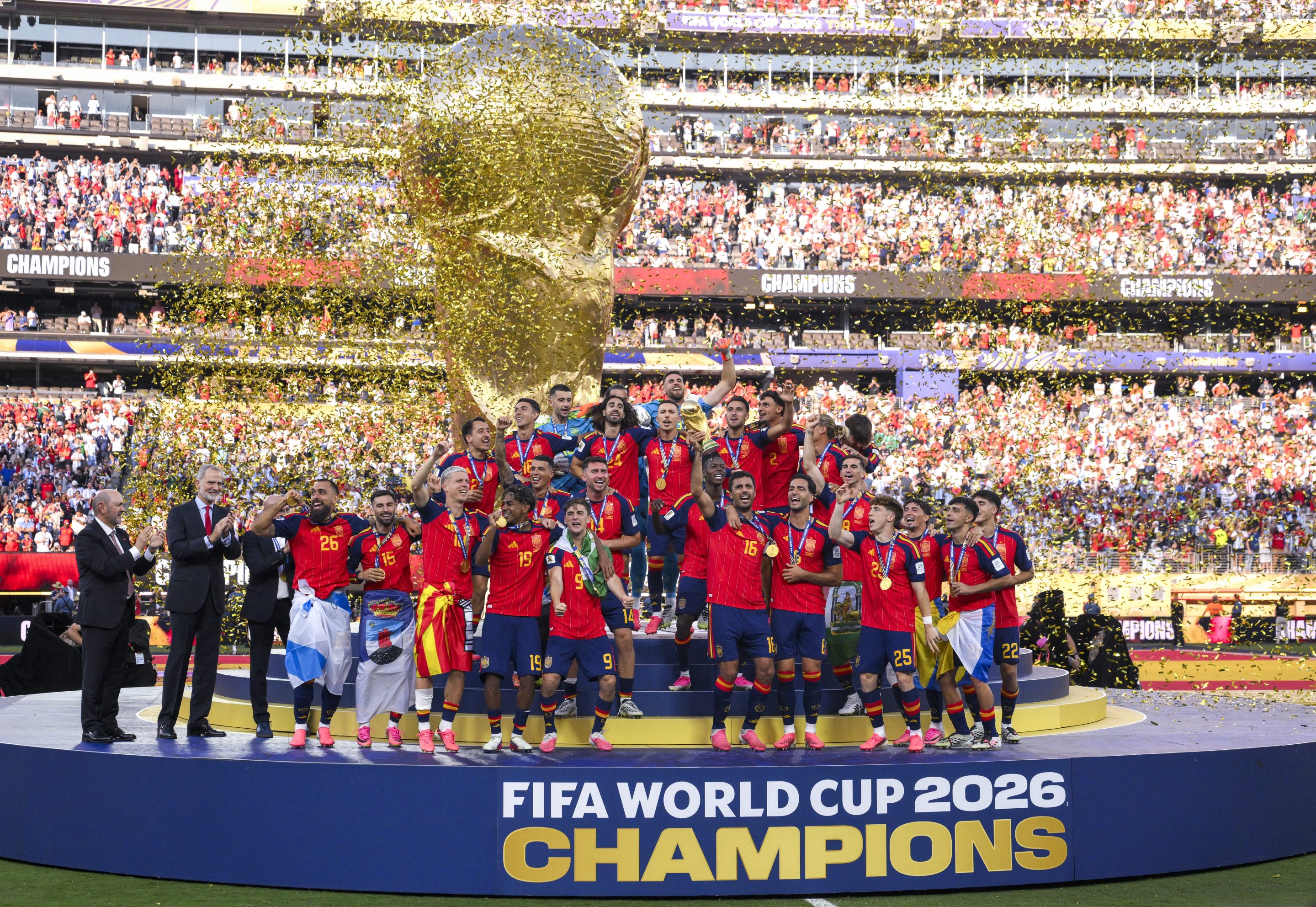
The 2026 World Cup concluded Sunday as FIFA’s most financially successful tournament ever—even after months of warnings that exorbitant ticket prices and U.S. travel restrictions would hold the event back.
Along with the usual glory and heartbreak on the pitch, this year, the world’s biggest sporting event also came with an unprecedented windfall, according to FIFA.
About a year ago, FIFA projected roughly $8.9 billion in total revenue for 2026. By April, it said the World Cup itself would generate around $11 billion, before Infantino said over the weekend that revenue for the the full 2023–2026 commercial cycle would surpass $15 billion.
On Saturday, Infantino told representatives of FIFA’s member associations that ahead of the next World Cup in 2030, the organization can do even better.
“I think I can say that this FIFA World Cup here in particular has opened a lot of doors, a lot of opportunities, a lot of possibilities,” he said.
Partly fueling the massive pay day was the tournament’s expanded format, with 48 teams playing, up from 32. That meant just under a quarter of the world’s FIFA-affiliated national teams got a chance to participate, while the number of matches increased from 64 to 104.
While some worried the format would take away from the competitiveness of the tournament, it translated to broader interest in some cases. FIFA said it received over 500 million ticket requests from residents located in all 211 countries and territories that make up FIFA’s member body. The requests came across a 33-day application window between December and January.
Antonio Di Cianni, director of advisory at soccer analytics firm Football Benchmark, said that at least in the group stage, “the utilization rate of stadiums was basically sold out, at 99%.”
Demand for tickets held up even as sky-high prices made the 2026 tournament the most expensive World Cup ever. During the group stage, FIFA was selling tickets for as high as $575, more than double the price of group stage tickets during the 2022 tournament in Qatar, which sold for $220 at maximum.
In addition, the world soccer governing body used dynamic pricing for the first time, which pushed the prices of even group stage tickets at times above $1,000. Representatives for mobile ticketing platform SeatGeek told The Athletic the average price of a ticket for the World Cup final Sunday on the platform was $12,751. At least one ticket on FIFA’s resale platform was listed at $2.3 million.
At one point during the summer, U.S. lawmakers accused FIFA of prioritizing revenue over giving fans access to the games and urged it to lower prices. FIFA then came under fire for receiving a 15% cut from both buyer and seller for tickets resold through its official platform.
The tournament also exceeded expectations among viewers at home. The U.S. national team’s round-of-32 victory over Bosnia and Herzegovina drew more than 24 million viewers across Fox and Telemundo, making it the most-watched English-language soccer broadcast in U.S. TV history.
Meanwhile, Mexico’s loss against England in the round-of-16 brought in 23.2 million viewers across Telemundo and Peacock for a match with Spanish-language commentators, setting a record as the most-watched soccer match in Spanish in U.S. media history
Those record audiences, and the financial boon that accompanied them, could make an even larger tournament impossible to resist.
Infantino confirmed Saturday that FIFA members are discussing whether to expand the World Cup again to host 64 teams, although he said the proposal would need to be discussed among FIFA’s member associations. A 64-team tournament would include nearly a third of FIFA’s member countries and would grow the number of matches to 128, from 104 this year.
Increasing the number of teams in the tournament could boost FIFA’s future television contracts, said Mark Conrad, the director of the sports business concentration and professor of law and ethics at Fordham University’s Gabelli School of Business.
“More games and teams participating means more matches and programming to advertise during and more target audiences to reach globally,” Conrad told UnHerd. He added that the 2030 World Cup’s status as the 100-year edition of the tournament could make advertising during the event even more appealing.
Still, fans shouldn’t expect FIFA’s financial success to translate into lower ticket prices.
“Prices will likely continue to be high in the next World Cup, especially with the tournament being held in different markets,” Conrad told UnHerd. “FIFA will likely take a similar approach to pricing oversight like they did in this World Cup.”