
First Wessex Water hosepipe ban since 1976 announced
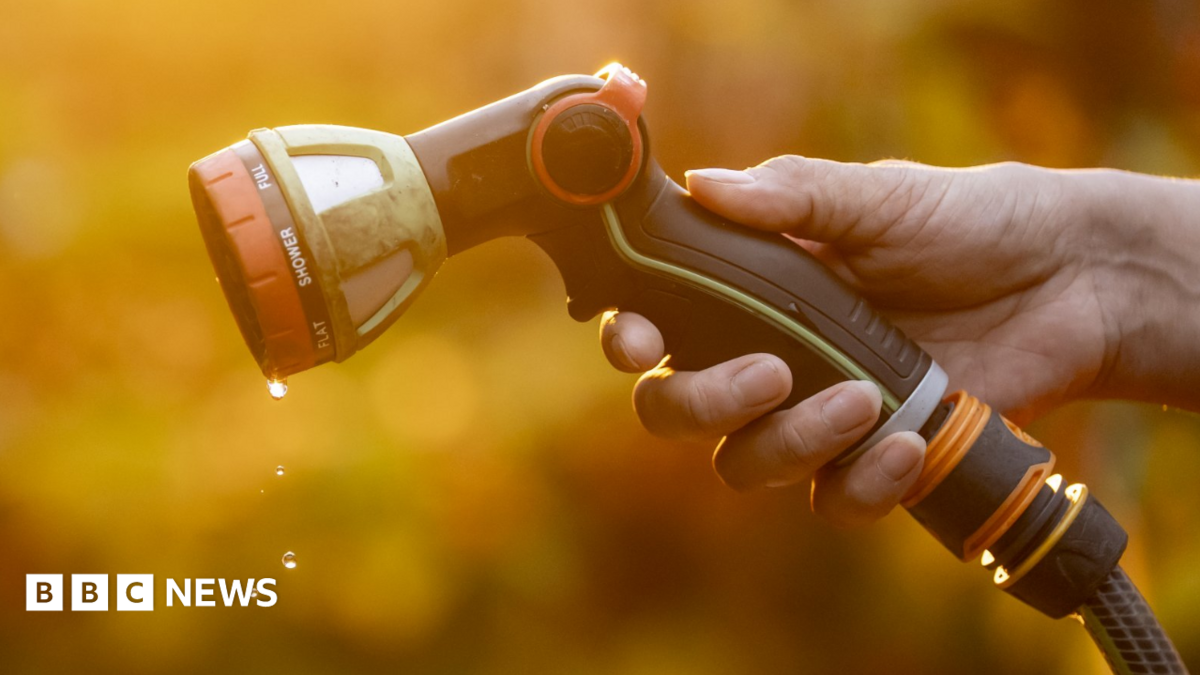
A water company has announced its first hosepipe ban in 50 years after weeks of drought and a record-breaking demand for water.
Wessex Water's ban - its first since 1976 - will come into force from Tuesday, bringing it in line with eight other water companies nationwide that have introduced restrictions over the summer.
The company supplies water to around 1.4 million customers across Bath and parts of Somerset, Dorset and Wiltshire, as well as Berkeley, Sharpness and Wotton in Gloucestershire.
"This isn't a decision we've made lightly and we're sorry for the inconvenience it will cause," said the company's chief executive Ruth Jefferson.
"The prolonged and extreme dry weather has meant demand across our region has consistently remained at more than 400 million litres per day, 30 per cent above average for this time of year," she added.
"[That's] the equivalent of almost half a million hosepipes running for a full hour every day."
July 11 saw the company's highest ever demand, with 449m litres used.
The ban means hosepipes must not be used for things like filling pools, watering plants or washing cars.
Customers who unable to make reasonable adjustments due to a health condition or disability are exempt, as are some businesses and those using them for animal welfare reasons.
Elsewhere in the West Country, Bristol Water and Severn Trent Water have yet to announce hosepipe bans. Thames Water, which supplies customers in some parts of Gloucestershire and Wiltshire, has had a hosepipe ban in place since 23 July, and South West Water - which supplies parts of Somerset - announced a ban on 10 August.
"We're working really hard around the clock to maintain service to customers," said Will Willoughby, director of water supply at Wessex Water.
"The supplies are in a stable position at the moment, 75% of our resource comes from underwater sources which are around where we would expect to see them for this time of year.
"The other 25% come from our surface-water reservoirs, so big lakes and bodies of water, and they're around the 58% mark, so where we would expect to see them."
Willoughby says the demand due to the extreme heat and dry weather has "far surpassed" the level of the 1976 hosepipe ban and the main challenge comes from moving water around the network quickly and efficiently.
Wessex Water bosses have told customers they are not at risk of running out of water, but said they had to take steps to conserve water now to minimise risk in the future.
"While we're not running out of water for essential use, our challenge has been moving water through the network quickly enough to meet these record levels of demand," said Jefferson.
"This also has an impact on our underground storage reservoirs, which normally replenish with treated water quickly."
The company says it has invested more than £16m in water supply assets in the past three months alongside other measures, including working faster to fix leaks and asking larger users to limit use:
"Hang up the hosepipe and allow the grass to grow brown, it's not dead its dormant," said Willoughby.
"Turning off the tap when you brush your teeth and keeping the car dirty [can also make a difference].
"Its not all on our customers, we don't want them to do all the heavy lifting, we as a company need to do our bit so we have teams working around the clock to maintain supplies.
"We've increased the number of staff finding and fixing leaks but the dry and hot conditions make leakages even more challenging."
Follow BBC Somerset on Facebook, external and X, external. Send your story ideas to us on email or via WhatsApp on 0800 313 4630.