
From Texas to California, US data centre protests go nationwide amid AI infrastructure boom
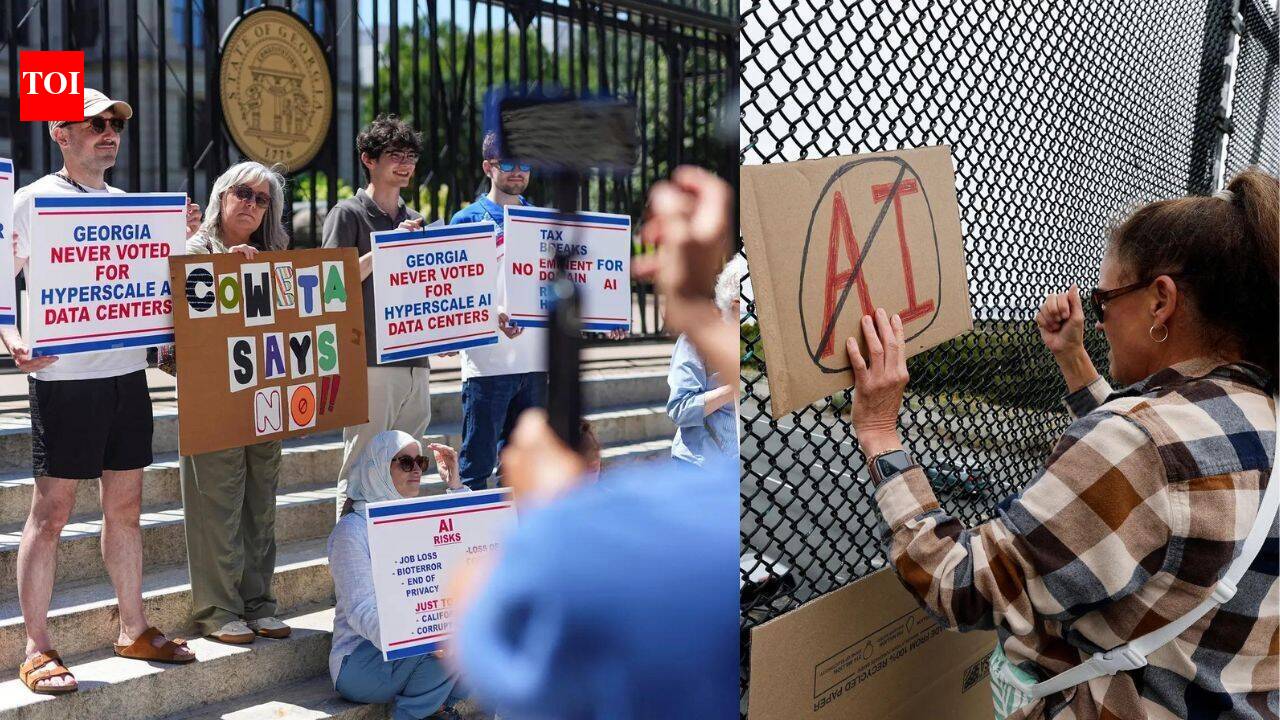
Opposition to the rapid expansion of data centres across the United States turned into a nationwide movement on Saturday as activists staged 142 protests across 42 states, marking the first coordinated national campaign against the growing AI infrastructure boom.The demonstrations were organised by grassroots group HumansFirst, whose organisers say communities are increasingly pushing back against large data centre projects over concerns ranging from water use and environmental impact to transparency, land use and local accountability.The protests come as data centres, driven by soaring demand for artificial intelligence services from technology companies including Meta, Alphabet, Amazon, Microsoft and Elon Musk's xAI, continue to expand across the US.According to a June Reuters/Ipsos poll, public support for the pace of data centre construction remains limited.
Only about one-third of Americans approve of the current rate of expansion, while just 14% said they would support a data centre being built in their own community to support AI projects.Industry says it is working with communitiesResponding to growing public opposition, Josh Levi, president of the Data Center Coalition, the industry's lobbying group, said operators are working to minimise the impact of new facilities."The data center industry is continuing to work with policymakers, stakeholders, and residents to ensure data centers strengthen, not strain, the areas where they operate — while mitigating any negative impacts to households and businesses," Levi said.Organisers said attendance figures from Saturday's nationwide protests were not immediately available.Chris Barron, president of Right Turn Strategies, which is handling media relations for HumansFirst, said a nationwide tally of participants was still being compiled.Organisers say movement cuts across party linesHumansFirst was co-founded by Amy Kremer, a former leader of the modern-day Tea Party movement, who compared the emerging opposition to data centres with the conservative grassroots movement that gained momentum in 2009.However, Kremer argued that resistance to AI infrastructure is not driven by political ideology."They just woke up one day and found out they're going to have this monstrosity in their community, and they don't want it," Kremer said.She predicted that data centre expansion would become "a defining issue" in the November midterm elections and the 2028 presidential race.Although Kremer has criticised Republicans for giving Big Tech a "free pass," she said she does not support blanket moratoriums on data centre approvals, such as the one adopted in New York.Instead, organisers are demanding greater transparency in project approvals, stronger environmental safeguards, protection of local resources, community benefits including well-paid union jobs, and mechanisms to hold developers accountable if they fail to meet commitments made to local residents.Texas records highest number of protestsThe protests were held in both Republican and Democratic strongholds, reflecting the issue's growing bipartisan appeal.Texas, one of the fastest-growing data centre markets in the country, hosted 18 protests, the highest number of any state.Georgia followed with 11 demonstrations, while California recorded eight.
Pennsylvania, Florida and Indiana each hosted seven protests.In Atlanta, around a dozen demonstrators travelled from smaller Georgia communities where major data centre projects are under construction, according to volunteer organiser Jake Watts, 26.Water use emerges as major concernOne of the most prominent issues raised by protesters was the amount of water consumed by modern AI data centres, particularly in drought-prone regions.In California's Imperial County, where a proposed data centre project could consume an estimated 260 million gallons (984 million litres) of water annually from the Colorado River, around 50 people gathered despite temperatures exceeding 100 degrees Fahrenheit (38 degrees Celsius)."It's dystopian that you would use this much fresh water for AI," said organiser Ivan DelSol, 54.Water consumption has become one of the biggest concerns raised by residents in several proposed data centre locations.The data centre industry, however, argues that its water use is relatively modest compared with many other industries and says operators are adopting technologies to reduce environmental impacts.First-time activists join movementThe protests also attracted people with little or no previous political activism.In Tyler, Texas, 31-year-old Eva Cardona, who described herself as a "political nomad," organised a protest attended by about a dozen people."I've been hearing about unregulated AI and the rapid growth was alarming me.
I wanted to do something more hands-on than just your standard Facebook post," Cardona said.The nationwide demonstrations underscore the growing political and public scrutiny surrounding the infrastructure needed to power the AI boom, as communities increasingly weigh the economic benefits of large data centres against concerns over environmental impact, resource consumption and local oversight.Catch the latest World News and Live updates.
Download the TOI app.