
Gaganyaan mission: Isro's parachute test vehicle clears first ground test
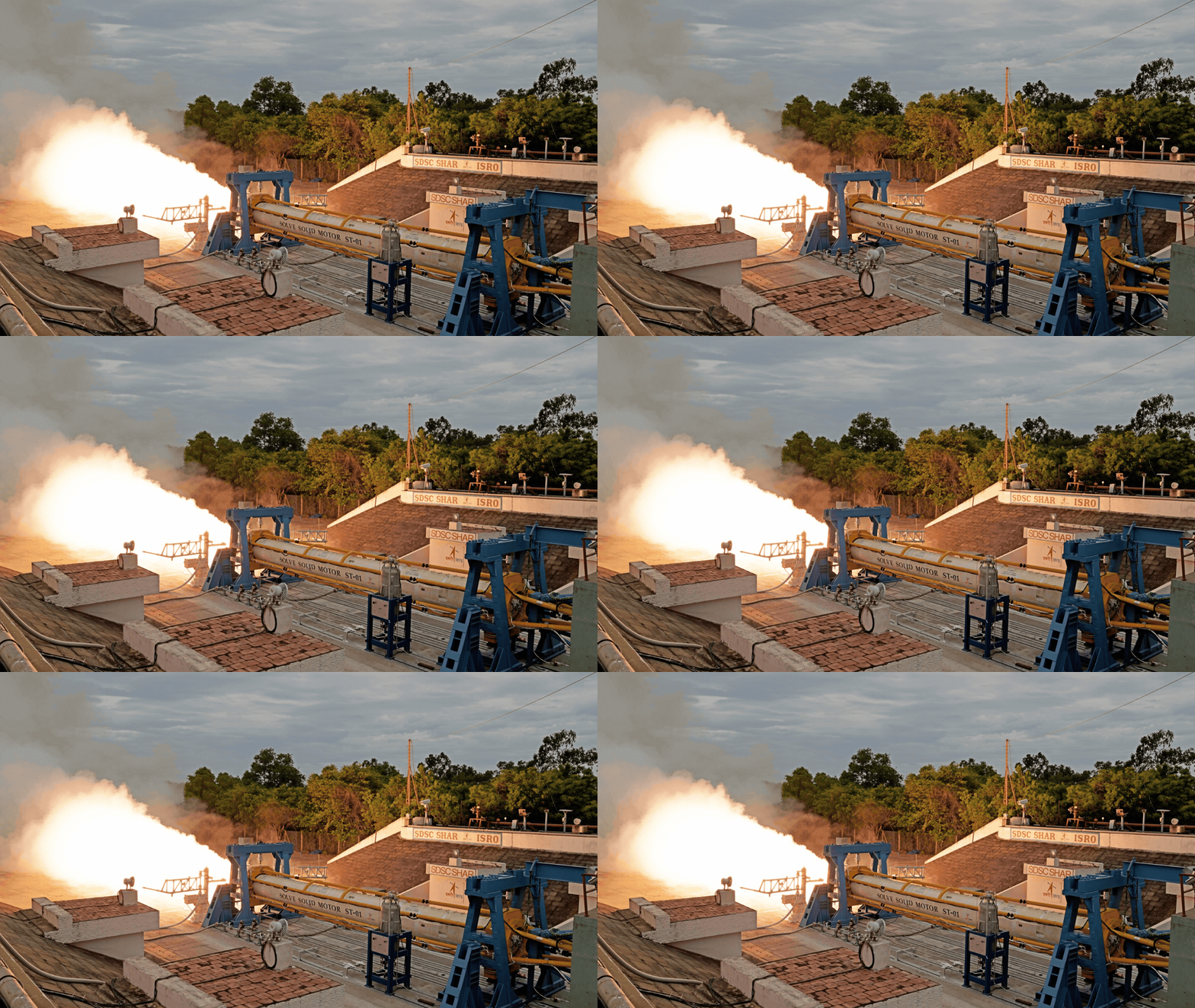
NEW DELHI: The Indian Space Research Organisation (ISRO) has successfully conducted the first ground test of the solid motor for its Sub-Orbital Launch Vehicle for Experiments (SOLVE), a new test platform being developed to support the Gaganyaan human spaceflight programme.The static test was carried out at the Static Test Facility at the Satish Dhawan Space Centre in Sriharikota on July 3 at 10 am.
ISRO said the motor performed as expected, with all key performance parameters meeting the planned objectives.SOLVE is being developed to conduct integrated parachute tests for validating the Gaganyaan Crew Module's deceleration system under different mission conditions. During these test missions, the Crew Module will be carried to an altitude of 10 to 17 kilometres before separating from the launch vehicle.
A sequence of 10 parachutes will then deploy to slow the module ahead of its splashdown in the sea.The vehicle's solid stage is derived from the Polar Satellite Launch Vehicle (PSLV) strap-on motor but has been modified to meet Gaganyaan mission requirements. The changes include a slow burn-rate propellant, a straight nozzle and a secondary injection thrust vector control system.According to ISRO, the development of SOLVE will provide greater flexibility in carrying out Gaganyaan test missions by enabling the simulation of a range of conditions expected during the crewed mission.Gaganyaan is India's first planned human spaceflight mission, aimed at demonstrating the country's capability to send astronauts into low-Earth orbit and safely return them to Earth.
Last month, ISRO Chairman V Narayanan said the space agency is preparing for the first uncrewed Gaganyaan mission this year, adding, "before sending actual human beings, we have to do 3 uncrewed missions," with the crewed mission to follow after reviewing the results.Get the latest India news and live updates.
Download the TOI App.